Showing posts with label conflict resolution. Show all posts

Show Up Anyway: What Sumo Can Teach Us About Resilience

I watch a lot of sumo wrestling. One of the things I love most about it isn’t just the strength or the ritual — it’s the raw, visible lesson in resilience.

Every once in a while, a top-ranked wrestler has an absolutely terrible tournament.

Not just “off their game.” Catastrophic by anyone's standards.

I once watched an Ozeki, 2nd highest rank in the sport, win a tournament and then come back the next tournament and lose 13 out of 15 matches. It was horrifying! 

In most professions, that kind of reversal would trigger panic, excuses, or disappearance. But in sumo, there is no hiding. He showed up every day, stepped into the ring, and fought, and lost. Yet, he kept showing up and trying his best. 

That’s resilience in its purest form.

In January 2026 one of my favorite wrestlers, Ura, had a 4–11 tournament. Four wins. Eleven losses. One of his losses was especially cruel since he should have won it. In fact, he did win it. He beat the Yokozuna Onosato. The judges overturned his win by claiming a rule that doesn't exist (dead body rule) and ruled the match was a tie and made them wrestle again. And the 2nd time the Yokozuna won.  

Imagine beating the best wrestler in the world, feeling that victory, and then having it taken away. Publicly. Officially. Final decision.  His comment when asked about it was - I can't be expected to beat a Yokozuna twice in one day. Which is an unusually direct statement of annoyance from a Japanese sumo wrestler. 

And yet, despite how clearly unfair that situation was, he showed up the next day smiling.

Not fake smiling. Grounded smiling. Ready-to-fight-again smiling. In fact, one of the reasons I like him so much, is even when he loses, he laughs it off, and just shakes his head. 

He keeps showing up. He keeps competing. He he loses a lot. But he keeps engaging fully, even when the results aren't going his way. It's one of the reasons he's a fan favorite. 

The Myth of Winning Streaks

We like stories of constant progress and uninterrupted success. They’re clean. They’re inspiring. They’re also rare.

Real performance - whether it is in sports, leadership, activism, inclusion work, and personal growth - looks much messier:

  • Strong seasons and weak seasons

  • Big wins and painful reversals

  • Fair calls and unfair rulings

  • Breakthroughs and plateaus

No one wins every match. Sometimes you don’t just lose — you lose a lot.

The question isn’t whether you’ll hit a bad stretch.

The question is: Will you show up anyway?

Showing Up Is a Skill — Not a Mood

Most people treat showing up as an emotion-based decision:

“I’ll show up when I feel confident.”
“I’ll show up when things are going well.”
“I’ll show up when I’m winning.”

But resilience doesn’t work that way. Showing up is a behavior — and behaviors can be trained.

In behavioral science terms, you don’t wait for motivation. You build the response pattern first. Action comes before confidence more often than the other way around.

Sumo wrestlers don’t get to skip a day because the last match was unfair.
They don’t get to opt out because their record is embarrassing.
They step out onto the clay anyway.

The Discipline of Continuing

There’s a special kind of strength in continuing when:

  • You know the odds aren’t in your favor

  • You feel discouraged

  • The last outcome was unfair

  • Your record looks bad

  • Others are counting you out

Continuing builds identity. It says: I am someone who engages, regardless of outcome.

That identity matters more than any single result.

The Quiet Power of Composure

What struck me most in these losing tournaments wasn’t just participation — it was composure.

No public meltdown.
No visible bitterness.
No withdrawal.

Just steady presence.

That doesn’t mean there’s no disappointment. It means disappointment isn’t in charge.

That’s emotional self-management in action — the same skill set that helps leaders navigate crisis, helps targets of bullying avoid escalation traps, and helps change-makers keep going when resistance shows up.

The Lesson

You will have seasons where things don’t go your way.

You will have stretches where you lose more than you win.
You will experience unfair calls.
You will feel the sting of reversals.

Show up anyway.

Step into the ring.
Do the work.
Engage the moment.
Keep your composure.
Return tomorrow.

Because resilience isn’t built in the victories.

It’s built in the days you show up while losing.

Leadership Takeaway: Show Up Anyway

Resilient leaders don’t wait to feel confident before they act — they learn how to regulate their emotions so they can stay engaged, steady, and effective even during setbacks. Showing up is a trained response, not a personality trait.

If you want a practical, behavioral-science approach to emotional self-management, response control, and conflict resilience, start here:

📘 Learn more: Mastering the 5 Managerial Superpowers
Learn how to control your emotional responses, interrupt escalation cycles, and stay constructive under pressure — so you can show up anyway, especially when it’s hardest.

Core skills: self-awareness • emotional regulation • strategic responding • conflict resilience • anti-bullying communication

Mastering Humanistic Conflict Management: A Path to Ethical and Compassionate Resolution

In today's fast-paced and interconnected world, conflicts are inevitable. Whether they arise in the workplace, within communities, or even in our personal lives, how we manage and resolve them speaks volumes about our character and professionalism. Enter the realm of Humanistic Conflict Management – an empowering journey that equips you with the tools to navigate conflicts with grace, empathy, and effectiveness.

My 8-hour certificate program is designed to revolutionize the way you approach conflict resolution. Gone are the days of simply reacting to conflicts; instead, we empower you to proactively address them with a blend of empathy and professionalism.

One of the cornerstones of our program is the integration of behavioral science principles into conflict resolution strategies. By understanding the underlying psychological dynamics at play, you'll gain invaluable insights into human behavior, allowing you to navigate conflicts with finesse and precision. More importantly, you'll learn how to regulate your own emotional responses, a critical skill in de-escalating tense situations and fostering constructive dialogue.

But what happens when the problem isn't conflict - but bullying and harassment? Our program doesn't shy away from the tough questions. We provide you with actionable strategies to address such challenging scenarios ethically and effectively. By learning behavioral science, you'll be equipped to tackle even the most daunting conflicts or bullying situations with integrity and compassion.

Central to Humanistic Conflict Management is the art of turning conflicts into opportunities for collaboration. Here, the Socratic method emerges as a powerful tool. By asking probing questions and encouraging dialogue, you'll learn how to dismantle barriers, build bridges, and foster mutual understanding. Conflict ceases to be a battlefield; instead, it becomes a fertile ground for innovation and growth.

Join us on this transformative journey and unlock the power of Humanistic Conflict Management. Whether you're a seasoned professional seeking to enhance your skills or an aspiring leader looking to make a positive impact, this program is your roadmap to a more harmonious and productive future.

Embrace conflict not as a threat, but as an opportunity for growth and connection. Enroll in our Humanistic Conflict Management program today and embark on a journey towards a brighter, more compassionate tomorrow.

https://humanistlearning.com/conflict-management-discount-bundle/

This course offers HRCI & SHRM credits through our learning partner Learn Formula. https://hr-credits-us.learnformula.com/course/humanistic-conflict-management-certificate-program

CPE Continuing education: 

 It also meets the standards of: PMI (Project Management Institute), CMA (Canadian Marketing Association), DMI (Digital Marketing Institute)

Resolving Conflict Between Managers

A reporter recently reached out to me to ask me how I would approach resolving conflicts between managers. Here is my response. 


1. How do you resolve conflicts between managers in the workplace?

Ideally – you shouldn’t have to. Managers should be adults who know how to resolve disagreements civilly and effectively in the best interests of the organization.  But – if they aren’t good at resolving differences and it turns into a conflict, then yes, upper management (usually HR) has to get involved.  

If I were coaching managers on how to deal with this (and I do have online courses that teach this), the first thing I do is encourage both compassion and responsibility.  The other person probably means well and if you can get out of your head enough – you can listen to their objections and help resolve the disagreement by making either a compromise or sorting it out – as adults do.  

The first approach is to always assume both parties mean well and have valid reasons for their actions – and to figure out what those are. Often – just encouraging both sides to view each other as allies and not enemies is enough to jump start the process.

If one side refuses to do this – then – you have a problem. 

2. Why do you need to resolve conflicts swiftly? 

Disagreements should not escalate into conflicts and if they have – you have a problem.  Dealing with it swiftly is important because a) you don’t want it to escalate further and b) the longer it goes on – the harder it is to bring the parties back into allyship to resolve it. Once disagreements turn into conflicts – tribal thinking takes over and people can really solidify their opinions that the “other” side is evil or insane. If allowed to fester, those biases will negatively impact all work going forward. You need you team to think of themselves as being on the same team – not enemies.

3. How can you avoid conflicts in the first place? 

Foster a humanistic workplace. Reward managers for collaboration. If you keep getting conflicts – either the managers shouldn’t be managers or your reward system within the organization is rewarding the conflicts or both.  Sears is a famous example of this.  They made managers compete with one another instead of rewarding them for collaboration and the result was disastrous.

More practically – practice and encourage – collaborative problem solving as the cultural norm within the organization. 

4. What are some other ways in which you can foster a healthy work environment?

Actively reward collaboration and happy employees.  Keep reinforcing compassion for people who disagree and the dignity and worth of every individual in the company.  Also – not everyone is cut out to be a manager. If someone just can’t handle the pressure and doesn’t know how to positively reinforce people – teach them – explicitly – how to do this. 

5. At what point does HR need to get involved in a conflict between managers? 

As soon as it becomes obvious – that this is a conflict and not simply a disagreement.  If managers can’t resolve disagreements without it becoming a conflict – then something is wrong. Get involved.  Treat both sides with dignity and recognize their worth and help them see that in each other. 

6. Is there anything else you'd like to add?

Learning how to deal with conflict, and bullying are basic management skills. Train your new managers on how to handle interpersonal problems. If you don’t train them – don’t expect them to magically – know how to handle difficult interpersonal situations. 

Learn more by taking one of my HRCI & SHRM approved courses at https://humanistlearning.com/


Resolving a dispute in the workplace

I teach the Socratic method for resolving disputes in the workplace. There is a reason this methodology has been taught for thousands of years. It works. 


This technique assumes the other person is not being a bully or abusive – but is a normal well-intention ed person who you disagree with. However, even if the other person is being abusive – this will still work – just for different reasons.

The basic idea is that – you stop advocating for what you want. You don’t – let it go – you just set it aside to do – some learning first.

And you ask questions to try and understand where the other person is coming from and more importantly WHY they are advocating or saying the things they are. Everyone in the workplace is under stress.  They may be short and just rather demanding. And they may not have explained why this crazy thing that makes no sense has to happen. When you step back – you can ask supportive questions and get that information and integrate it into your ask.  Which is the 2nd part.

Once you know – really know and understand what is driving the other person – you can adjust your side of what you want and need to incorporate everyone’s concerns and create a win win solution that will help everyone. This is what leaders do well.  It’s what makes a manager – a leader.

To do this – you need compassion – to view the other person – not as an adversary – but as a colleague who is struggling with something. And humility to understand the world isn’t just about you and your needs. Other people matter too.

And yes, this works. As soon as people do this – it transforms their conversations into things that can be collaboratively solves instead of fights to be won.  My course – by the way is called – how to win arguments without arguing. There is a reason this technique has been taught for millennia. It’s effective.

As to what happens when you use this with a bully – it disarms them. This isn’t about allowing someone to walk over you. It’s about working WITH someone. If that person isn’t capable of working WITH people – that will become clear, but don’t assume that’s the case unless they really resist. What generally happens is that you can neutralize a bully so that they stop bullying you – because their bullying isn’t working. It’s not as simple as that – obviously – but it’s often what happens. You become their ally and they start seeing you as an ally and they start treating you differently and you can – control them through niceness.

If they are have a mental health issue though – they will just spin out of control. The key when dealing with an abusive person is to get any agreement that is made through this process – in writing. So that there can be accountability later if the person is a bully and doesn’t do what they promised to do. You use that written agreement – to re-enter socratic inquiry – but – with witnesses.

Hope this helps – let me know if you have any other questions.

My course and book are available at: https://humanistlearning.com/book-how-to-win-arguments-without-arguing/

If people are dealing with a bullying boss – I have a program for that as well. https://humanistlearning.com/book-program-how-to-humanistically-handle-bad-bullying-bosses/


How can you use technology to streamline a conflict resolution process?


I provide online training on how to stop unwanted behavior like bullying/harassment using behavioral science. This knowledge can also be applied to conflict management and I have several programs which address how to do that.

The question – can a tech solution to help streamline conflict resolution is an interesting one.  Because the answer is – it depends.  It depends on what exactly is happening.

Conflict isn’t simply a disagreement. It’s a disagreement that has devolved into a personal fight – at least on one side. Often on one side. It’s an unprofessional response to a professional disagreement.

Conflict can also be a symptom of bullying. Where the bully uses conflict to justify their behavior.  Bullying often masquerades as conflicts. 

With these 2 things in mind – there are a couple of things HR can do to use tech to help them.

1.    They can use tech to help provide training to the people “in conflict” to help them learn how to better and more professionally deal with it so it stops being a conflict and goes back to being a disagreement.  This does not take the place of counseling and coaching though. It’s more – complementary to counseling and coaching. The person coaching the individuals through the “conflict” can have them read things or take an online class as part of the counseling/coaching.

2.    The other way they can use tech is as a whistleblowing/reporting  system.  Because conflicts are manifested as inappropriate and unprofessional workplace behaviors, the goal is to get the unprofessional behavior to stop. Additionally, since what looks like conflict may actually be bullying, providing staff with a way to report incidences of unprofessional behavior will help HR a) know what is going on and b) provide a record of unwanted/unprofessional behavior which can be used to justify employment action is retraining fails, which it often will if the problem is bullying. Basically – a whistleblower/reporting system can help you figure out if what is happening – is actually bullying, when used correctly.

To learn more - take one or several of my courses at: 

I am an HRCI & SHRM approved provider. 


Using Leadership Skills with Family Members

Companies increasingly value soft skills like communication, empathy, conflict resolution, collaborative ability, etc. Can we and should we use the leadership skills we learn at work to manage difficult people in our personal lives?

YES!!!!!


Leadership skills are definitely transferable. For instance you can use your leadership skills to gain consensus on holiday plans. Or even just – what movie are you going to see.  I realize I should have posted this - before the holidays, but better late than never. 

Leadership skills in particular - can help you deal with difficult people. Knowing how to work around the difficulty and get them focused on what is important is helpful. Knowing how to de-escalate conflicts to focus on the matter at hand – helpful. 

To quote Depeche Mode – people are people. Whether they are in the workplace or at home –  they are human beings and knowing how to relate to people – is an important life skills.


I teach how to stop unwanted behavior using behavioral techniques known as operant conditioning. One of the applications is how to de-escalate conflicts. The skill though - can help stop bullying and abusive behavior. It can help you remain calm when others are freaking out. I joke that I teach one thing – but apply it to a variety of very specific situations. But it’s really just one skill set.

And it is applicable in your interpersonal relationships and your work relationships. It's why I teach both kids, parents and business professionals how to stop bullying and de-escalate conflicts.  It's the same skill set. 

To learn more - take one of my online courses. https://humanistlearning.com/programsoffered/

Or purchase one of my books: https://humanistlearning.com/jennifer-hancock/

Tips to Deal with Conflicts

Ways to deal with conflicts.

Compassion:  A lot of conflict is a result of holding people to impossible standards. Viewing the other person with compassion will help ensure that when a problem arises, you don’t attack in an attempt to fix the problem. Rather you understand that problems happen and work in a collaborative way to resolve the problem.

Don’t get drawn into the drama. If the other person is freaking out – don’t join them. You can listen and be present without it being about you – even if it is directed at you. If the other person is responding to a problem with anger and frustration - accept that that is where they are and respond in a polite, calm, professional way. Focus on problem solving and not on the conflict. This doesn’t mean allowing the other person to walk all over you. It’s more about standing your ground in a compassionate, respectful way – while still working to solve the underlying problem.


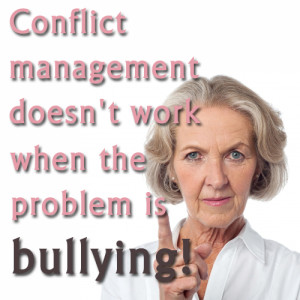
Note of caution. These techniques won’t work if the problem isn’t a conflict, but is instead bullying.


I teach how to de-escalate conflicts using behavioral science. Available as a certified online course:  https://humanistlearning.com/de-escalate-conflicts/ or as a book, ebook or audio book: https://amzn.to/2tkbl2q  or as a streaming video or DVD:  https://amzn.to/2MCaIdM

I also teach: How to handle cranky customers, using the same behavioral science techniques: https://humanistlearning.com/crankycustomers/

And why conflict resolution doesn’t work when the problem is bullying. https://humanistlearning.com/conflictresolution/

My courses are online at: https://humanistlearning.com

Conflicts and Compromise

Conflicts happen. The challenge is knowing how to deal with them effectively, knowing when to compromise and when to hold your ground.

I teach how to use behavioral techniques to diffuse conflicts and deal with harassment and retaliation.  I also teach a class on why conflict management doesn’t work when the problem is bullying.  Finally, I also have a course on how to win arguments by not arguing – called – Socratic Jujitsu.  All of these programs are science based.

Let’s assume we are dealing with a conflict that is based on a real disagreement and not with something that is actually irrational and happening because people have implicit biases that are effecting how they are interacting with others.

1)      As long as a disagreement is professional, it can be resolved.  If the disagreement is manifesting as unprofessional behavior, it can’t be. Sniping, name calling, passive aggressive behavior, interrupting, denigrating comments and more – are all unprofessional. If that is happening, what is happening, isn’t just a disagreement and those other behaviors have to be addressed before conflict resolution can occur.

2)      The key to conflict resolution is respect. Both parties must get to a point where they step back and respect that the other person is holding their other opinion for a valid reason and that once we know what that is – we can work through the differences.  Assuming there is an actual disagreement on the best way to move forward, one side can take the initiative to start asking questions so that cooperative problem solving can occur.

When should you give up? That depends. Do you feel like this is mission critical? Or not. If not – then perhaps just lodging your disagreement and then allowing whatever to go forward will be fine. Who knows, you may have been wrong and the other person may have been right. But if you are absolutely convinced this is a mission critical issue and that the project will fail if something isn’t addressed, then fight for it. Just be aware, the best way to do that is to ask questions that introduce doubt into the mind of the person you are disagreeing with.  The goal is to move from conflict to cooperative problem solving.

Want to learn more- check out these online courses:


A different perspective on conflict management

Conflict management assumes that parties to a conflict have some sort of rational disagreement. But what if the problem isn’t a conflict? Or, what if there is a conflict, but it isn’t about anything that can be rationally discussed?

We humans are tribal animals. People who are in our tribe, we like, people who are not we don’t. If we have a problem with someone’s behavior, we almost always label them as a problem and as other and as soon as we do that, everything they do, we will find a way to fault them.  This is tribal thinking and it’s REALLY common and it’s not rational, it’s instinctual.

What basically happens is – we decide we don’t like someone (often for rather arbitrary reasons) and then we find ways to rationalize our dislike by looking at what they are saying and/or doing and taking issue with it.  These then become the basis of our “conflicts.”

While the individuals involved can almost always articulate why they are in “conflict” with another person, the conflict itself is actually a manifestation of an underlying behavioral and instinctual dynamic that is playing out.  In these cases, resolving the conflict doesn’t actually resolve the real conflict.

This is why effective approaches to conflict management are designed to help the conflicted parties see each other as valid and human. It’s about bringing the “other” person into the fold of the tribe, however that is defined by them. Once that happens, the parties can usually start rationally discussing the “conflict” and resolve it by coming to some sort of agreement.

But sometimes this isn’t possible because one side or the other will just flatly refuse to see the other person as valid. When this happens, another approach is needed because, what is happening, is beyond reason. What is needed in these situations is a behavioral approach.  The goal is still to help the individuals see each other as valid. It’s just that in some cases, people’s tribal habits are so ingrained, they can’t just – overcome them rationally. These people need to a behavioral intervention to help them break the bad habit of tribally segregating people.

This is also one of the reasons why humanistic leadership is so important. The basis of the approach is to view everyone as part of the same tribe so that that we minimize tribal thinking in the first place.

To learn more – check out this online course.
Why Conflict Management Does Work When the Problem is Bullying - https://humanistlearning.com/conflictresolution/


The Limitations of Conflict Management

Conflict management techniques are really useful, but not in every situation.

Not every interpersonal problem is a conflict. Conflicts are basically people disagreeing and not figuring out how to agree. This does happen, but often, what looks like a conflict is actually something else entirely.

If someone is passive aggressive and withholding information in the workplace, then yes, they are going to be in conflict with a lot of people. There will be disagreements that are pretty much impossible to resolve. We are tempted to employ conflict resolution tactics to resolve these conflicts. The problem is that you can’t resolve a passive aggressive problems  or bullying/harassment problems with conflict resolution. Here’s why.

A passive aggressive person avoids conflict. Their aversion to conflict is great enough that they will go to great lengths to avoid seeming to have a conflict. Put them in a conflict resolution mediation situation and they will acquiesce to everything that is said, and then continue being passive aggressive. Mediation won’t change anything. Why? Because that’s how they have learned to cope. They avoid conflict and “win” and “control” what is happening in other ways.

Bullying also can’t be fixed with conflict resolution because what is happening isn’t a “conflict.” It’s bullying. Sure, the person who is being bullied might respond to the bullying by entering into a conflict with their bully. But the underlying problem is that one person is behaving inappropriately (which is why it’s bullying and not conflict) and that bullying/harassment behavior is setting of a chain reaction of bad behavior between them and their victim. Conflict resolution assumes that both sides are equally guilty. But in a bullying situation, one side is to blame and the other is responding however poorly to that bad behavior.  Conflict resolution exacerbates bullying/harassment situations so it’s critical to understand when to use conflict resolution and when not to.

I gave a talk to a group of coaches a few weeks ago and we discussed this very dilemma. For me, I don’t consider using conflict resolution until both parties are behaving civilly. Because let’s be clear. Disagreements aren’t a problem. They are to be expected in normal human interactions. It’s how we respond to those disagreements that matters. If we respond civilly, there is no problem. There is only a problem if one or both parties responds by behaving badly.

My first task is to get the parties involve behaving civilly. Only after they start behaving properly and eliminate the bad behavior (whether it is passive aggressive or outright bullying), can we consider conflict resolution.

Always deal with the inappropriate behavior first. Don’t allow people who are behaving inappropriately to get away with it under the guise of conflict. If they really are in conflict fine. You can deal with their conflict, but only if they start behaving like the professionals they are. Conflicts are no excuse to behave uncivilly.

People who are capable of being civil, will try being civil and will work with you to resolve the problem. People who aren’t, because they have passive aggressive control issues or because they are chronic and habitual bullies, won’t behave civilly because they don’t know how and this will tell you pretty much everything you need to know about what is really going on.

To learn more about why conflict resolution doesn’t work when the problem is bullying, check out this course: https://humanistlearning.com/conflictresolution/ (HRCI/SHRM approved)


What are people afraid of?


Want to know what motivates someone - learn what they are afraid of.


Dealing with a difficult interpersonal issue?  Have no clue why someone is behaving the way they are?  Are they crazy? Perhaps. But it’s more likely that they are just scared.

Consider how you behave when you are afraid of something? Are you at your most rational best when you are afraid? Of course not.  To people who don’t share your fear, you seem a bit crazy.

So the next time you find yourself wondering why someone is behaving the way they do, find out what they are afraid of. Not to use that to manipulate them. But in a compassionate way so you can understand them and help them and by helping them, help yourself.

You may just find that the more you practice compassion towards others, considering their fears as the reasons for their motivations, the more you understand how your fears impact your own behavior.

When you can see your own fears more clearly, they impact you less and you are influenced by them less. Humanism is a personal practice. Compassion for others is a personal practice. Yes, you are considering others compassionately, but by doing so, you often find more compassion for yourself.

Why don't we stand up for ourselves?


3 tools of empowerment. How knowledge and training can help you overcome your worst fears. 


It isn’t that we are meek. It is more that we just don’t like conflict. Most of us would rather avoid conflict than stand up for ourselves. And, honestly, most of the time this strategy works because most conflicts are over really rather stupid things and walking away from the conflict is the smartest thing you can do.

However, sometimes, it’s not.  Sometimes avoiding conflict makes us feel like cowards. This is especially true when dealing with a bully or someone who is causing harm to others. Knowing what the right thing to do is in any given situation isn’t easy. That’s why we all stress over it.  For instance, the other day, I called the police about a domestic disturbance in the neighborhood. Several neighbors and I were discussing whether we should call the police or not and that is when I decided it was the right thing to do. It wasn’t a violent conflict, but I realized that if it had us all worried, that it was better to err on the side of caution rather than waiting to see how things played out.

Standing up for yourself and others is never easy, but there are ways you can empower yourself to do the right thing. 
  • Make it your responsibility. Don’t wait for other people to come and save you or save that other person. Help won’t come unless it is requested. So request help. Choosing to be responsible is often all it takes to overcome your fears and spur yourself into action.
  • Get educated. Know what your options are. Many times we are stuck and allow things to continue because we just don’t know what the alternative is. If something is bothering you, find out what those alternatives are so that you give yourself options.
  •  Get trained. Knowing what to say, how to say it, when to intervene, or when to ask for help is key.  For instance, knowing CPR empowers you to save a life, if necessary. Knowing what to say to a bully and how to say it empowers you to stand up, not only for yourself but for others.

The point is, don’t just continue to suffer and feel sorry for yourself or feel bad that you didn’t act when you know in your heart you should have. Make it your responsibility to learn what you need to know in order to not sit idly by the next time it happens.

Have you ever regretted not standing up for someone or for yourself? What did you do to empower yourself? Share your story. Help us all learn how to do and be better. 

One Ginormous Family

Humanists recognize that we are all humans. Regardless of our differences. And that our common humanity matters.


Happy New Year. I don’t normally suggest resolutions for people. I tend to think that we should be changing our behavior as needed all year long. Regardless, I do have one suggestion for a resolution that  I think it would help you to adopt.

Resolve to remember that we are all one big ginormous family. You are genetically related to all the other humans, plans and animals on the planet. You are created out of the same building blocks that make up our universe.

Just like any family, there may be times when we don’t get along. However, ultimately, we do share a home with all the other life on earth and we would be wise to make the best of it and not tear down our house in an attempt to control everyone else.  After all, if we tear down our house out of spite, we will be left with nowhere to live and that would be incredibly short sited.

So, whether your current cause of angst is politics, interpersonal relationships or ecological, always remember, we are all part of one ginormous family and we owe it to ourselves to make an effort to get along.

Have you reached out to others beyond your comfort zone lately? How did it go?

Accept people for who they are


Take the time to accept people for who they are and not as who you assume them to be
For me, part of being a Humanist means that I accept people for who they are, not who I want or might need them to be.  This is what “the inherent dignity and worth” of each human means. It is also important to me because embracing reality is important to me. I know that in order to solve my problems, I first need to understand them.

Many or most of our problems have an interpersonal dimension to them.  In order to solve our problem we need other people to help us. And in in order to get them to help us, we need to understand how to motivate them to help. And to do that, we need to understand what actually motivates them.

And here is where people go wrong. They assume that other people are motivated by the same things they are. Someone who is motivated by money, tends to throw  money at the problem hoping that this will motivate other people. Others might be motivated to help the environment and so trying to give them money to agree with you isn’t going to work, just as an example.

In order to be successful, you need to take the time to accept people for who they are and not as who you assume them to be. 

Fear and Anger


Have you ever had someone get angry with you and you don’t know why?  It is hard sometimes to fathom why people act the way they do, especially when they are angry with you for no reason.

As I always say, don’t assume you know why someone is angry. Don’t just write them off as a jerk.  Understand that anger often results from fear.  When people are afraid, they can become very angry.  You know you do, so why should you expect other people to behave any differently?

When someone gets angry at you for no reason, don’t take it personally. Try to figure out why that person is so afraid they are responding with anger. The more you can compassionately help them deal with their fears, the more you can help them become less angry. This is especially important in a work environment where you can’t just pick and choose your customers and co-workers.

Whenever possible, respond to anger with compassion.

Image: "Shouting Man" by chrisroll http://www.freedigitalphotos.net/

It takes two to fight


Angry Woman" by graur codrin
  FreeDigitalPhotos.net
When I was a child and I got mad at one of my friends, my mother always reminded me, it takes two to fight. This meant she thought I was as much to blame for the conflict as my friend was. This in turn, made me consider my own contributions to the conflict and by doing so, better resolve the conflict by taking responsibility for my actions.

Whenever I find myself in conflict with another person, I try my best to review my own behavior to see how I contributed to the conflict.  I realize I might not be able to do anything to improve the current situation, but there is almost always something I can learn from the experience.  Perhaps next time I can avoid the conflict entirely.

However, the lesson I’ve learned the most from taking responsibility for my side of the conflict isn’t that conflicts are avoidable. Often, they are not.  It is more that by looking to correct my own behavior first, I do not focus on trying to get the other person to change their behavior at all.

The only person I can control is myself and even that is sometimes iffy if I am stressed or low on food energy. The point is that so often our conflicts are a result of us trying to control someone else. When we stop trying to control others, a good number of our conflicts simply go away. And that is why, it is always important to remember, it takes two to fight.

Related Posts Plugin for WordPress, Blogger...