Showing posts with label ethics. Show all posts

Why Humanism? A Compassionate and Reality-Based Approach to Living Well

In a world filled with complexity, challenges, and uncertainties, the quest for meaning and fulfillment is a universal pursuit. Amidst the myriad philosophies and ideologies that shape human thought, one perspective stands out for its profound relevance and timeless wisdom: Humanism.

At its core, Humanism is not just a philosophy; it is a way of life—an applied study of what it means to be a good human being and to live well. Rooted in the distilled knowledge of humanity, Humanism offers a compelling framework for navigating the complexities of existence with clarity, compassion, and purpose.

Embracing Reality-Based Principles

Central to Humanism is the recognition and acceptance of reality as it is—an acknowledgment that our perceptions, beliefs, and actions must be grounded in objective truths. In a world often fraught with misinformation and ideological divides, the commitment to reality-based principles serves as a guiding light, illuminating pathways to understanding, growth, and progress.

By embracing reality-based thinking, Humanism empowers individuals to confront challenges with courage and resilience, fostering a deeper appreciation for the complexities of the human experience. Rather than succumbing to wishful thinking or denial, Humanism encourages us to confront difficult truths head-on, catalyzing personal and collective transformation.

Cultivating Compassion-Based Ethics

Beyond its commitment to reality-based principles, Humanism places a profound emphasis on compassion—a recognition of our interconnectedness and shared humanity. In a world characterized by diversity and difference, compassion serves as a unifying force, bridging divides and fostering empathy, understanding, and solidarity.

Through compassion-based ethics, Humanism challenges us to extend kindness and empathy to all beings, nurturing relationships built on mutual respect and dignity. By prioritizing the well-being of others alongside our own, Humanism invites us to cultivate a more inclusive and equitable world—one defined by empathy, justice, and compassion.

The Power of Integration

What sets Humanism apart is its unique ability to integrate reality-based thinking with compassion-based ethics, forging a holistic approach to navigating life's complexities. By synthesizing these foundational principles, Humanism offers a powerful strategy for addressing difficulties, confronting adversity, and fostering genuine human flourishing.

In a world characterized by rapid change and uncertainty, the wisdom of Humanism provides a beacon of hope—a reminder that by embracing reality and compassion, we can navigate life's challenges with grace, integrity, and resilience.

Conclusion

In the journey of life, the pursuit of meaning and fulfillment remains paramount. As we navigate the complexities of existence, Humanism offers a guiding philosophy—one rooted in reality, infused with compassion, and committed to the pursuit of human flourishing.

By embracing the principles of Humanism, we affirm our shared humanity, cultivate empathy and understanding, and chart a course towards a more just, compassionate, and inclusive world.

So why Humanism? Because in its essence, Humanism represents the distilled wisdom of humanity—a timeless invitation to live authentically, love deeply, and make a positive impact on the world around us.

Learn More:

If you want to learn more - I have free and paid courses and resources at my website - Humanist Learning Systems: 

Video Courses: https://humanistlearning.com/category/lifeskills/philosophy/ 

Recommended books: https://humanistlearning.com/category/shop/humanism101/


What does it mean to be ethical?

 In a world shaped by diverse values and perspectives, the concept of ethics takes center stage. What does it mean to be ethical, and how can we navigate the complexities of our choices and actions? In this exploration of humanist ethics, we'll delve into the essential elements of honesty, responsibility, and compassion, and how their harmonious interplay can guide us through the intricate landscape of ethical decision-making.


1. Honesty: The Foundation of Ethical Behavior:

At its core, ethics begins with honesty. Being honest means more than just telling the truth; it involves a commitment to transparency, integrity, and authenticity. What is ethical starts with a sincere acknowledgment of facts and a dedication to fostering trust within our relationships, whether personal or professional.

2. Responsibility: Empowering Ethical Action:

Being responsible is the second pillar of ethical behavior. It's about acknowledging our accountability for the consequences of our actions. Responsible individuals understand the impact of their choices on others and the world around them. Taking ownership and proactively seeking solutions characterize the responsible approach to ethical decision-making.

3. Compassion: The Heart of Humanist Ethics:

Compassion completes the triad, infusing our ethical decisions with empathy and understanding. It's not enough to be honest and responsible; true ethics demands a compassionate approach. Compassion invites us to consider the feelings and well-being of others, fostering a sense of interconnectedness that transcends individual actions.

The Interplay of the Triad:

The power of ethical decision-making lies in the harmonious integration of honesty, responsibility, and compassion. Imagine a scenario where one is honest and responsible but lacks compassion. The result may be a decision that, while technically correct, lacks empathy and understanding, potentially causing harm. This interplay emphasizes the importance of balancing all three elements for truly ethical outcomes.

When in Doubt, Ask the Triad: The True Holy Trinity

Navigating ethical dilemmas becomes simpler when guided by the triad of honesty, responsibility, and compassion. When faced with uncertainty, ask yourself: What is the compassionate, honest, and responsible way to deal with this situation? This question serves as a compass, steering you towards decisions that align with humanist ethics.

Conclusion:

In conclusion, embracing humanist ethics means embracing the interconnected principles of honesty, responsibility, and compassion. As we strive to make ethical decisions in our personal and professional lives, let us recognize the significance of these three pillars working in unison. For those seeking a deeper exploration of the humanist approach to happiness and ethical living, consider enrolling in my online course, "The Humanist Approach to Happiness." This 6-hour video program offers practical insights and tools to navigate life's challenges with compassion, honesty, and responsibility at the forefront. Join us on the journey towards a more ethical and fulfilling existence.


https://humanistlearning.com/livingmadesimpler1/


Or get my book - the Humanist Approach to Happiness.  https://humanistlearning.com/the-humanist-approach-to-happiness-book/


Both will help you answer the question "what is ethical" in any given situation. 

Theory vs. Reality

 Humanism is a realistic philosophy. Sure - thinking about ethics often involves theoretical situations. But it's not unusual for something to work in theory and fail in reality.

Case in point. Do businesses need to be regulated? In theory, it's in the best interest of businesses to deal fairly with their customers. A self enlightened take on this is that we don't need to regulate businesses because businesses can self regulate. If they fail to self regulate, they will eventually go out of business.  It's a great theory. 


Compare Theory to Reality

The problem? Not everyone is enlightened.  Some people are actually criminals who don't mind harming their customers if it means making an extra buck. we can argue that this is counter productive all we want, but all our hang wringing about theory isn't going to change the reality that some people choose to be crooks.

Reality Requires Rules

The question then becomes, what should we do, if anything, about the crooks? We, the people, have come up with rules that say - if someone steals from you, or kills you or harms you, they can be held liable for the damage they do.  Some of these rules are criminal codes. Some are civil rules. All are designed to deal with the exceptions to our theoretical rule.  Sure, most people will deal fairly with others, but - for those that don't - here is how we protect people.

Do we really need rules?

Yes actually, we do. Here is why. Sure, if someone is ripping off their customers, eventually customers won't use them. But there are other problems criminals cause. The damage done might not just be monetary. It might be deadly. People sell tainted alcohol in places without regulations to ensure safe alcohol. Recently, an ice cream maker in Florida killed a customer in Illinois with tainted ice cream. Those customers can't just go elsewhere. They are dead. And if our solution is - well some people need to die in order for everyone - ethical business people and criminals included - need to be free to do whatever they want, even if what they want is to rip off people and kill them, then I think most people - in reality will disagree with that conclusion.  

If we can stop people from dying by instituting regulations and inspections, then we should. This doesn't just help make it so criminals can't operate, it also helps ensure that well meaning business people don't miss something. If you ever read the inspection reports for your local restaurants, you may never want to eat there again.  Cleanliness is super hard and customers need to know that purchasing a product or service is - basically safe. 

Trust is Everything

 If customers can't tell who is a criminal and who isn't, or they have no way of knowing whether the food they are going to pay to eat is safe or not, they start to lose trust in the entire economy. It only takes one idiot to kill them. Don't know if that ice cream is tainted and might kill you? Don't eat ice cream. 

What regulations do is help ensure that good business operate in a way that is profitable and helps ensure that anyone with ill intent can't operate at all because the trouble and expense of complying with the rules makes it hard or impossible to cut corners, then customers can purchase meat and dairy and whatever, with reasonable assurances that they won't die.

Holding People Accountable

The other things rules and laws do is that if someone does cause harm, we have the ability to hold them responsible because the regulations and laws make certain things illegal.   If there is no law that says you can't sell diesel fuel as a drink, then if someone does and kills a bunch of people, what they did  - was legal.  Terrorists, would have a field day. 

Theory vs. Reality

In theory, we should be able to trust everyone to behave in their and therefore our best interest. In reality, not everyone will. Some people harm others intentionally. And because we live in the real world and not the imagined world, we have a system of laws.  The challenge is to ensure max freedom while still ensuring the relative safety of the products we consume. 

Why Humanism and Libertarianism aren't really compatible.

While both Humanism and Libertarianism are reason based, Humanism is reality based. It's not just a rejection of supernaturalism. It's a rejection of non-reality based approaches to problem solving. What really happens. What really causes that to happen. What really works to solve that real problem we really have.

Worrying about how ALL regulations restrict freedom while ignoring the very real harms absolute freedom causes is to me, as a Humanism, living in a fantasy world and ignoring the real one.  I can agree with the theory that ideally, yes, everyone should be free. Where I diverge is in the belief that all humans will act out of enlightened self interest.  There is no evidence this is true. In fact there is plenty of evidence it's not true.

Does that mean we should give in to pessimism and regulate everything? Of course not. I think why libertarians struggle with Humanism so much is that Humanism is about balancing our rights and our responsibilities.  It balances our individual freedom with the needs of the community we are in.

It's not either or - it's both and. It's both individual rights AND community responsibility. Why? Because we humans aren't ideal creatures. We are messy and impulsive. Some of us - criminally inclined.

Any ethical theory that doesn't account for our lived reality is flawed.

Why are ethics so important?

Why are ethics so important? Because you can't make good decisions without them. 


Thinks about this. What is a good decision? Or a good solution?  Without defining what "good" means in the particular situation you are in, you cannot answer that question.

All good decision making requires the active application of ethics to decide between options. There is ALWAYS some metric being used to define good. Whether we are talking about a good hire, or a good customer or a good solution. 

If we don't actively and explicitly discuss what we mean by good, we a) have trouble creating consensus and b) often end up with bad results because we used bad ethics without questioning them.

Whenever I am on a team having a disagreement, my first effort is to ask questions. What is a good outcome? Or an ideal outcome? And most importantly - why. 

For instance, I was at a tower company, a good tower to the marketing team is a tower they can market. A good tower to the maintenance team was a tower that didn't require a lot of maintenance. A good tower to the financial team was a tower that brought in more cash flow than debt. 

Until we talked about the various differences in how the groups were defining good, we couldn't get consensus on this question. Once we did get clarity on the various versions of what good means, we could.

Now, I know what you are saying, but Jennifer, those aren't- ethics, like we think of ethics. But they are. They are closely related to them. 

Once you start discussing what good means, you can start bringing in the more moral aspects of ethics. Do this help or hurt the community? Does it help or hurt people in general? What about the climate?  These are all valid ethical considerations that should be integrated into decision making, both on a personal and a professional level.

So, stop worrying about whether you can discuss ethics. You are already. Or should be already. And don't be shy about bringing in moral metrics in addition to the business cases for what is good. Doing so will elevate the discussion. Engage people in the problem solving effort and make it collaborative. 

As always, I do have courses to help you learn this. My courses provide certificates of completion and are approved by HRCI and SHRM for continuing education credits.

Reality Based Decision Making for Effective Strategy Development - https://humanistlearning.com/realitybaseddecisionmaking/ - 1 hour business

Principles of Humanistic Leadership https://humanistlearning.com/principles-of-humanistic-leadership/ 2 hours 

Or become a certified humanistic leadership professional - https://humanistlearning.com/certified-humanistic-leadership-professional/


Need help constructing an ethical framework for yourself?

 Most people want to be ethical, and actually are ethical, but still feel like they struggle with ethics. It doesn't have to be that way. 


I get the impression when I talk to people, that they feel like they need permission to think about ethics, to discuss ethics, or to apply ethics in their lives. I spend a lot of my time, giving people permission to be explicitly ethical.

When I wrote my first book, The Humanist Approach to Happiness, my mother asked me if I really wanted the book to be explicitly humanist. After all, I did not want to proselytize.  (https://humanistlearning.com/the-humanist-approach-to-happiness-book/)   I told her that I did because I felt that it would be dishonest to talk about Humanist ethics without being explicit about where the ethics I hold come from and more importantly why.

My goal was never to convince people to become Humanists. Instead, I hoped by sharing my ethical reasoning, it would help them consider their own. Do they agree? Or not? If they don't agree, what do they think a more ethical solution would be?  

By being open about my own ethical thinking, I give permission to others to be open about their ethical thinking, even if it is different from mine.

If this is an area you struggle with, let me help you.  Often, just reading about others ethical thoughts, helps you think, do I agree or not. Once you do that, you become aware of your own ethical thinking and you can more actively start applying it to your decision making processes in all areas of your life.

I've already mentioned my book: https://humanistlearning.com/the-humanist-approach-to-happiness-book/ 

But really, any book about the Humanist philosophy will do. https://humanistlearning.com/category/shop/humanism101/

I also offer a variety of ethical life skills programs. I recommend Living Made Simpler as an indepth 6 hour program to really take you step by step through how the philosophy can be applied to every day life.  - https://humanistlearning.com/category/lifeskills/philosophy/


Do codes of conduct help people behave ethically?

 Whether and how do corporate codes of conduct for employees and codes of ethics for members of trade associations help organizations prevent or address crisis situations caused by their employees or members?

Short answer: Yes, but only if you use them.

Codes of conduct don’t prevent ethical problems from arising. They don’t stop unethical people from behaving unethically. What they do provide is a method to determine whether something is ethical or not and how to ethically deal with a breach of ethics.  Used correctly, a code of conduct is a code of ethics. If there is a problem people should invoke the code and ask, what is the ethical thing to do here. What is the ‘good’ outcome.  It is only possible to have an ethical discussion if there is some agreement on what constitutes good.

In order to be useful, codes of conduct have to be used. Not as a bludgeon, but as a way to focus a discussion on what is ethical and what is good and what to do about things aren’t are neither ethical nor good.

I am the founder of Humanist Learning Systems and a board member for the USA chapter of the International Humanistic Management Association. I am an ethical philosopher who teaches people how to apply their ethics in their daily lives and in their businesses.   

https://humanistlearning.com/


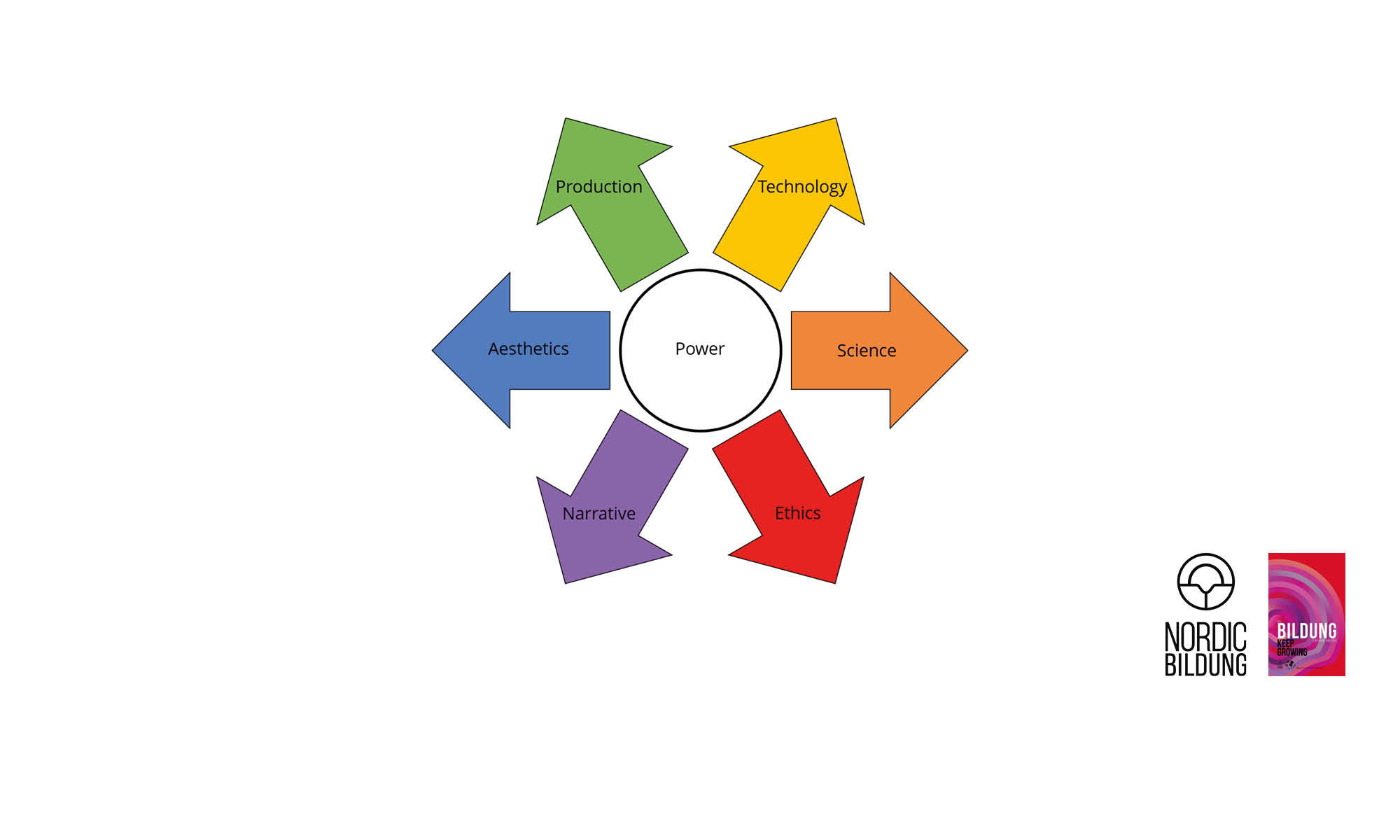
Moral Independence and the Bildung Rose Model

 I got to interview Lene Rachel Anderson of the Bildung Rose Group about her moral model, the Bildung Rose. 

Bildung is the German idea of self cultivation.  It's a model of human moral development.  The Bildung Rose is a tool developed by Lene Rachel Anderson as a way to help us all think about the moral interconnections between different aspects of society, culture and corporations.  In other words, it's a really cool way to think about applied humanistic management. 


Here is a link to the video and to the resources Ms. Anderson talked about during our interview: http://humanisticmanagement.international/using-the-bildung-rose-as-a-strategic-diagnostic-tool/

My takeaways:

Basically, our moral development as humans moves from childhood, where we are largely emotional beings to our teens where were become rational beings to adulthood where, ideally, we become morally independent beings. 

It is when we become morally independent that we get TRUE freedom. Before then, we are limited by our emotions and the limits of our reasoning. Think of becoming morally independent as a state of enlightenment where are emotions and our rational selves are fully integrated and we can think independently of others about what is moral and not be swayed by immoral people. Freedom!

The Bildung Rose is a really helpful to me for organizing and integrating my thinking by helping me to explicitly list all the various things I should take into account when engaging in moral reasoning.   Here is a link to the website and the rose: http://bildungrose.com/  She explains it in the video which is linked above. 

The cool part her model was the fractal nature of the rose she uses to illustrate the tool. This can be you as an individual, you in group, the group in community/company, the community in state, state in country, country in world.  At all levels, the elements of the rose are in play. The challenge is, to balance them. 

What helps integrate the elements of the rose is the bottom part, narrative and ethics. It is what helps us want to make sure our thinking is inclusive and holistic. And this in turn, helps us create better outcomes and better more holistic solutions and yes, this is directly applicable to workplaces and problem solving in a business context.

The other thing I liked is that she is sure that when talking about ethics companies should bring in philosophers to help lead these discussion.  So – bring in me!


Why, What, and How

Can asking some questions, like WHY, WHAT, and HOW helps us get past the current divisive moment we find ourselves in?  Yes.

I am a very opinionated person. I am an active citizen in a democracy. I take my responsibility to be aware of what is happening and to weigh in on solutions very seriously.  We clearly live in a very divisive time. And while I could and have opined on how we are being conditioned to not listen to each other. What I want to talk about today - is HOW we can actually start bridging these divides. 

All of us need to take responsibility for our side of this problem and engage with compassion and reason to fix it. In other words, what we all need is a big heaping dose of humanism and a willingness to ask ourselves and others - some questions. Reasonably and compassionately.

I have a lot of friends from a variety of political viewpoints. What I notice when we argues is that we rarely disagree on WHAT we think should happen. We are disagreeing about HOW to fix the problem. But we don’t know that we agree on WHAT because we are so busy disagreeing on the HOW.

When we disagree on HOW – it's easy to assume the other person doesn't agree on WHAT or maybe they don't even care. But in most cases - we actually do agree on WHAT - we just don't know that. And I find this to be true on even the most contentious issues - whether we are talking about abortion or immigration or health care or even racism! 

The fix is to realize when we are disagreeing on anything, we are probably disagreeing about HOW. To get us to rationally discussion HOW we need to get back to the WHAT by asking WHY.

WHY do we want to do whatever it is that we are discussing? WHAT do we really want to accomplish by doing that? We will almost always get to an agreement on WHAT ideally we want to happen. We are then able to have a rational discussion on HOW to do it.

For instance, I was discussing the death penalty with someone just the other day. WHY do they want the death penalty? WHAT exactly does society look like if they fix whatever problem it is they are hoping the death penalty will fix?  Chances are - I agree with them on WHAT it looks like when we fix the crime problem. The debate over the death penalty isn't a debate about WHAT - which is a society without violence. It's a debate about HOW - to create that society. Once we understand that - we can have a rational and compassionate and science based discussion on HOW.

The method? 

Ask WHY to fully understand your ideal WHAT. Only then should you start discussing HOW.

When you are fighting with someone over HOW – end the fight by asking WHY questions about the HOWs to understand and get consensus on the WHAT. Once there is consensus on WHAT – the arguments usually go away.

This method – works – for work, politics, religion and - well - EVERYTHING! 

How do we get there – by reminding ourselves that most humans actually do agree on the WHAT.  So don’t let disagreements and arguments over HOW derail discussions or cause unnecessary divisions. We really do have more in common than we realize.

Relevant programs/books:


Video Lessons


I make videos about Humanism.  Lots of them actually.  Check out these topics. 


Don’t lose sight of your values when making your goals: https://www.youtube.com/watch?v=_djCmfecfvM

Don’t take it personally: https://www.youtube.com/watch?v=KgedZn7fnL8

Dealing with cranky people compassionately: https://www.youtube.com/watch?v=WaJp1BiXq_A

Focus Your Thinking by Thinking Outside the box: https://www.youtube.com/watch?v=RzxfGqW1_ew

A science based approach to bullying/harassment: https://www.youtube.com/watch?v=RNmapUBQpeY

The most important part of decision making: https://www.youtube.com/watch?v=2FRnxa6zIzk

Ethics based on verifiable consequences: https://www.youtube.com/watch?v=X7f12m3WRTg&t=96s

Treating other people fairly: https://www.youtube.com/watch?v=MjNSObQgtT8


What are the shortcomings of Humanism?

There are 2 things about the philosophy people have difficulty with. And these are things most Humanists consider essential.

The first is that it is a secular philosophy. The second is that ours is a situational ethic.

Lots of people believe in supernatural things. Humanists, reject supernaturalism as an ineffective unproven field of inquiry. If something happens, you can prove it happens. There is no need to appeal to supernaturalism. People who like thinking in supernatural terms, don’t like this aspect of the philosophy.

But for Humanists, the rejection of supernaturalism and our focus on all things secular, is critical to the practice of our philosophy. We are mostly concerned with solving our real problems here and now. Appeals to supernaturalism don’t help us with that. In fact, in many cases, they make solving the problem impossible. Our focus on secular matters and rejection of supernatural - is pragmatic.

The other area people have problems with is that we approach ethics situational-ly. Our value system is based on compassion. Our goal is to do the most good and the least harm - in any given situation. There are no hard and fast rules. Our ethics requires active thinking, critical thinking and a willingness to make difficult decisions.

There are many people who prefer absolute ethics - where you have a rule that is always applied, but we humanists view that as an unrealistic ideal. In the real world, our values compete with each other. For instance, it’s not ok to kill someone. But what if killing that person would save thousands of lives? There is a great quote in the Hindi movie Faana. I’m going to paraphrase. Morality isn’t about choosing between good or evil. It’s about choosing between the greater of two goods or the lesser of two evils. Every situation is different and we are called on to make difficult decisions where the “right” solution that will do the most good and least harm - isn’t clear. Humanists view situation ethics as essential precisely because we understand we live in the real world - where what is “good” isn’t always clear and because - we are willing to do the hard work of thinking through those problems to come to a “good” solution and because we accept the responsibility to do this - is ours.

Practicing Humanism When You Are Angry


Being a good person is sometimes very hard. Especially when mad. The point of morality though, is to do the right thing, even when under stress.


This is why I describe Humanism as a practice. Yes. It’s a philosophy. But it’s also a moral framework through which I make decisions. This framework is only useful – if I actually use it.
Most of the time, that is easy. But sometimes it isn’t. Like when I get mad. It’s very hard to see the humanity in people who scare me and make me mad. Because let’s be clear – we get mad when we get scared.


Knowing this about myself and about everyone really, helps me to step back from my anger and think about the fear that is driving it so that I can think more rationally and therefore compassionately about the situation I find myself in.

Sure, I could blame the people scaring me. Or … I can remind myself to put my Humanism into practice and practice what I preach.   Sometimes this is easier to do than others.  But it is always eventually doable if I keep reminding myself that I should act in accordance with my values.

Do I do this perfectly? Oh heck no. No one does. This leaves all of us open to being called a hypocrite. And we all are. Every one of us. The next time you go all holier than thou on someone and you are ready to call them a hypocrite. Don’t. Look in the mirror first.  In order to claim the moral high ground, you must first be moral.  And that means, stepping back from your anger, reminding yourself of your values and making a conscious decision to use your values in deciding how best to respond to the situation that is scaring you and making you angry. The goal is to not kill your values with the very hands you use to defend them.  It’s a challenge to be sure, but taking on that challenge is what it means to be a moral person.

To learn more about how to more effectively live by your values – take my course – Living Made Simpler.


Being an Ethical Nag

I have realized recently that people actually like being nagged.

My most popular posts are where I nag and rant about ethics.  A lot of what I do can be described as ethical nagging.  Here is the moral thing to do, here is why it works, there is no reason not to be good. We all need this sort of reminder from time to time I think.

What I have realized is that people want to be good and sometimes they just need someone to remind them to do the right thing. I was nagging my neighbor the other day about resting after surgery. I nagged him. He thanked me because he wasn’t taking care of himself the way he knew he needed to.  It’s like my nagging gave him permission to rest and recuperate.

And it is hard to do the right thing. We all have competing demands on our time and competing pressures to do different things. Making the time to slow down and consider the moral implications of our actions gets lost in the day to day struggle of living.

Having someone lecture on ethics and morality – helps us to re-prioritize them in our lives.

Another thing I have noticed is that we live in a culture that likes to be outraged especially if that outrage has a moral component.  What I want to caution you is this.  Just because someone is morally outraged doesn’t mean they are speaking the truth. People get outraged about things that aren’t true all the time.

Humanism isn’t just about being a moral person. It’s the recognition that our good intentions can be harnessed to do bad things if we don’t also commit ourselves to critically examination of the situations we find ourselves in.  It isn’t enough to be moral. If what you think is true isn’t true, your moral outrage can and will be harnessed for evil.

So beware people peddling moral outrage. They are manipulating you.  Keep on being moral, but also dedicate yourself to thinking critically. The two mindsets are complimentary. Consider yourself nagged for today.

Prejudice against prejudice?!?!?

Discrimination is a problem for all employers. Recently, we are starting to see a legal argument being made that discriminating against people who want to discriminate is a form of unfair discrimination. I was asked about this on Quora and I wanted to share it here for humanistic leaders and managers to help you understand why despite a person’s plea that you accommodate their prejudices, you shouldn’t.


Question:
Is it acceptable/wrong to be prejudiced against prejudiced people? In society, prejudice and discrimination is deemed as inappropriate and morally wrong, be it in the form of racism or ageism or so on. However, even people who accept this as a fact of life are prejudiced against those in the society who are prejudiced, making them hypocrites. Is such prejudice ok?

Answer:
I am very intolerant of intolerance. So I understand why you feel this way. However, let's start by defining prejudice, which is a preconceived opinion that is not based on reason or actual experience.

If someone is prejudiced, they cause harm because their actions aren't based in reality. In other words, these opinions are not based on experience and/or reason.

Prejudiced people discriminate against other people for no good reason and discrimination causes real social and economic harm and sometimes physical harm as well.

Because people who are prejudiced cause real harm to real people for no good reason, the real people who are really harmed by prejudice reasonably start judging people who are prejudiced as dangerous, because they are.

Judging people who are prejudice as dangerous ignoramuses isn't prejudicial because that judgement is based on real experience. If you are being harmed by prejudice, being upset by it and disliking people who are prejudiced is totally reasonable.

I understand why prejudiced people don't want to be socially ostracized because of their prejudice. Social ostracism causes real harm. Which is the entire point.  But if you act like a jerk you should expect people to treat you like a jerk.  Don't want to be socially ostracized for being a jerk? Don't be a jerk.

All our actions have consequences. If you act in a way that harms other people, other people will start to avoid you and employers will fire you to protect the other employees and their customers. This avoidance behavior isn't prejudiced because avoiding people who hurt people is reasonable judgement, not prejudice.

So, to answer your question, no: people who dislike and avoid prejudiced people are not prejudiced and they aren't being hypocrites. They are taking reasonable actions to protect themselves and others from the harm prejudiced people cause.

Ethics in the Workplace

I teach humanistic business management and am a Humanist. Ethics is central to everything we do.


Whether your ethics are explicit or not, you have a set of ethics you live by and these ideas of what is right and wrong help you make decisions. All the time.  Little decisions and big decisions. The problem in a workplace or group setting is that different people in the group have different ethics. And, we humans are herd animals, meaning, we observe what the social norms are and we go with them to not stand out. Obviously, there are individuals who don’t go with the flow, but most of us can be convinced to say 2+2 equals 5 if we are in a group of people who seem to fervently believe that is so.

This go with the flow instinct we have impacts how ethics manifest in the workplace. If what we observe is people being unethical, we assume that is accepted in this social group. It is therefore super important for people who care about values to do 3 things.

1)      Make the values of the organization explicit. Meaning, sit down and think about what you value in person to person relationships and make that explicit. How are we going to make decisions? What are we going to value in our decisions? How much money we can make? Whether or not we are helping the company? Whether or not we are helping our boss? Whether or not we are helping our customer? Whether or not we are helping the environment? What do we do when our values come in conflict? Which values should dictate our decision?

2)      Actively make decisions based on your explicit value statement!  Where most companies go wrong isn’t in the creation of a value statement, it is in the fact that they don’t actively use their values in decision making. When they don’t, it becomes clear to everyone that the value statement is just a piece of paper, but that the organization doesn’t really make decisions that way. You can change that by actively invoking the values in every day decision making. If someone is gossiping, the response is – we treat people with respect. When deliberating on a decision – the question asked out loud is – how do our different options relate to our values statement? What is the ethical decision to make? Do this – and the culture starts to change. It also means that we should not tolerate bad interpersonal behavior or “cheating” just because someone is a manager or a high performer. You either actively value your values or you don’t. This has to come from the top.

3)      Change management. There is a science to this and it involves changing the herd norm. You don’t need everyone to be on board to get this started. You just need some core people to implement it and create a new cultural norm of ethical decision making and interpersonal relationships. Their job is to discuss and make active the values and to enforce them through social discussion and decision making. Once people see that – yes, these values are actually valued, they will start to self-enforce these new ethical norms. Probably the most difficult part of this is being willing to let go of the people in your organization who are unethical and don’t change. If you keep them around, they will continue to exert social pressure towards unethical behavior and instead of having an ethical company – you will continually be fighting them. They aren’t worth it. If they can’t behave ethically, let them go.


Business Ethics are Human Ethics

The rules are pretty simple really. Treat other people fairly. Don’t cheat, steal, lie or cause harm to another person.


Most people play by these rules. They are good rules.  If other people are honest in their dealings with you, things are pretty good.

The reason we have to keep clarifying what is ethical and the reason we have to discuss it is because some people like to cheat to gain an unfair advantage. They view life as a competition and compete. And that’s not an entirely bad thing.  A competitive streak helps us strive to be better and to do better.

But even if we are just playing a game of Candyland, even the most cutthroat game of Candyland (and yes my family plays by our own rules - http://stuffjenlikes.blogspot.com/2012/07/hancock-house-rules-candy-land.html), we still have rules we have to follow.

The rules make sure everyone is treated the same and has the same chance of success. People who cheat rob others of the chance to succeed. It does real harm. Well, not if you are playing Candyland, but real harm if it’s in business. You get my point.

Ethics only really becomes complicated when people bend the rules a bit to see if they can get away with a little cheating. If caught, they argue, well, it wasn’t exactly against the rules, even if it was against the spirit of the rules. We as a society then have to employ lawyers and judges to judge and rule whether what happened was technically against the rules or not. (I don’t entirely understand the lawsuits involving the NFL at the moment, but my husband assures me, it’s about this sort of skirting the edge of the rules to gain an advantage sort of behavior by all parties.)

What I want to encourage you to do, as a human being, is to understand this: business ethics are human ethics. If you would consider it unfair if it happened to you, it’s unfair and therefore unethical, even if it’s technically legal.

And no, I do not respect those who bend the rules to their advantage. Just as I would consider such a person a cheater if I was playing a board game with them, I consider them a cheater and unethical if they employ such rule bending tactics in the world of business. Such behavior robs other people of the opportunity to succeed.  If you can’t win by playing fair, then maybe you don’t deserve to win.

Talking to teens about dangerous relationships

7 tips for teens dealing with difficult relationships.


I have a book – The Humanist Approach to Happiness: Practical Wisdom. The book is used by parents to jump start important conversations with their children about ethics and decision making in everyday life.

I have a chapter called “Run for the Hills.” It occurs just after the chapter on dating and relationships and it is designed to help kids recognize people they are better off avoiding, people who are harmful for you to be around.

7 types of people to avoid:

1)     People with excessive drama. It’s not bad luck, it’s who they are.

2)     First Date Confessions – if someone tells you everything that is wrong with them on a first date, something’s wrong with them.

3)     Bad Boys and Poison women – animal magnetism often hides an incredibly narcissistic personality and once you get past the initial sexual high, you realize, not only is there no there there, they are incredibly annoying and sometimes dangerous to be around. After all, if they are in the habit of having “dangerous” sex, they may very well have picked up a disease along the way.  Don’t put yourself in that situation no matter how “liberating” it may seem. Thinking before copulating is always a good idea and it doesn’t ruin the sex. And if it does, well, that tells you A LOT!

4)     Basic Maintenance. People whose lives are falling apart need compassion and help accessing resources that can help them, but the average teen can’t help someone whose life is falling apart.  Help them get help, but don’t become romantically involved.

5)     Fools Rush In – a big humongous red flag is someone who falls head over hills immediately. Someone who pushes for a full commitment right away. These are the folks who often end up being the most controlling. So while its “romantic” to be pursued the way these people pursue you, in reality, you should run for the hills in the opposite direction (note – in order for this advice to make sense, you do have to have a discussion about how average/normal relationships progress from dating to relationships and what the difference is – don’t assume kids understand the difference, they don’t)

6)     Exceeding your minutes – someone who calls, texts or checks in with you constantly or in the middle of the night when they should be sleeping, isn’t romantic. They are insecure. This is one of the tell tell markers of abusive relationships. They aren’t just thinking about you. They are worried you have forgotten them or are with someone else and they are calling to reassure themselves. That insecurity often turns violent in very short order and someone who is excessing in contacting you in EXTREMELY SCARY!

7)  Anger Management. If someone gets angry a lot (not necessarily with you, but with others and with inanimate objects and with the world in general), they aren’t deep, they have anger management problems and those problems WILL turn on you. Run for the hills.

Ok old farts – time to chime in – what sort of advice would you give a teen about dating?

The High Cost of Being Unethical


Why pretending that you don’t need to prioritize ethics is hurting you.


I’m pretty lazy. I don’t like to do things that cause me more work.  This is one of the main reasons why I prioritize being ethical.  It saves me a lot of grief. I avoid scandal (unless someone else draws me in against my will). I avoid mistakes that were easily avoided. Plus, being responsible for my actions makes me work harder and I feel like I get more done. My ethics don’t allow me to excuse myself for not doing what I’m supposed to do.

All these benefits also transfer over into the workplace.  A study by the Josephson Institute reports on the cost of unethical behavior in the workplace is eye opening (see: http://josephsoninstitute.org/pdf/Report_HiddenCostsUnethicalBehavior.pdf)

Here are a few of the costs associated with unethical workplace behavior:

Lost sales
Costs associated with legal fees resulting from scandals and problems
Employee fraud (estimated at $600 billion/year)
High employee turnover is pretty expensive
Costs associated with intentionally sabotaged projects
Costs associated with poor problem solving resulting for poor communication and withheld information

So the question we need to ask ourselves is – is allowing our ethics to lapse for expediency really expedient?  I don’t think so. It’s like anything. There is always a cost associated with your actions. Choose your actions wisely, prioritize your ethics, and make your life a little bit easier and better as a result.

It’s not about what others do


Why focusing on your own morality is more important that focusing on the behavior of others.


As you may know, I have a thing about shopping carts. I believe it is moral to return them for a variety of reasons. It helps keep parking lots clear of carts, reduces damage to other people’s cars, it makes the job of the cart jockey’s easier and it’s just a nice thing to do. Plus, I could use the extra exercise, even if it is just walking 2 spots over to return a cart.

The other day I was very excited to see a guy at a market pick up a cart from the lot that wasn’t put away and take it with him to the store, thus making one less cart left in the wrong spot in the lot.  I felt like giving him a high five of solidarity.  I didn’t. I thought it might be a bit weird, so I just put mine back in the cart return and headed home.

Of course, he could have asked me for my cart, because sometimes people do that, but I realized it was actually better that he took the one that had been left out. If he had taken mine, the other would still have been left out and would have been a hazard. With him and me together, that was two carts put away properly instead of one.

Here is the thing though; he did not know that I am the sort of person who returns my cart. For all he knew, I was going to leave my cart out too.  He took that cart without expectation that anyone would notice or care. He did it because he thought it was the right thing to do, even though it might have been undone immediately by the next person.

To me, this speaks to the heart why I choose to be a Humanist. It’s not about what others choose to do. It is about what I choose to do, regardless of what others do.  And this for me is what makes Humanism so powerful. Yes, it’s about morality, but it’s actually more about how I choose morality for myself. Not to be a self-righteous jerk dictating how others should behave. But because this is who I want to be for me.

Think about how you feel

In order to be a force for good in the world, you have to be able to translate your emotions into rational thought. It isn't easy and that is why Humanists spend so much time learning how to think critically.


We humans have a problem. And that is, in order to solve our problems well, we have to think. The problem is that we usually don’t think well because we aren’t just thinking beings, we are also feeling beings.  We don’t just think rational thoughts, we also feel our sometimes rather irrational emotions.

Despite the difficulties, Humanists strive to integrate our emotions with our critical thinking so that our problem solving with do justice to both our emotions and our ability to think clearly and critically.  Let me break this down for you on how this works.

Critical thinking helps us solve our problems. However, compassion helps us improve our interpersonal relationships. Being ethical infuses our lives with meaning and purpose.  The thing is, in order to be compassionate, you have to think about being compassionate. In order to be ethical, you have to think about being ethical. To ensure your problem-solving is guided by your good emotions, you have to think.

The desire to be good is the easy part. Thinking well is the hard part, which is why, we Humanists spend so much time focusing on learning to think well. Because it is only when we think well that we can properly harness our emotions.

What do you struggle with the most when it comes to controlling or harnessing your emotions?

Ethical Reminders


We need to remind ourselves to be ethical.
We need to remind ourselves to be ethical. It isn’t something that happens automatically. We have to think about our ethics in order to be ethical. This is why Humanists are always encouraging people to think before you act.

I know for myself, my initial gut reaction to things I experience can sometimes be quite negative. In order to be ethical, I have to interrupt my negative thinking and replace it with more ethical and compassionate thinking.  I have to remind myself to behave in a more ethical way.

This isn’t easy to do because it requires practice and, well, thinking. And it’s hard to think well when we are experiencing negative emotions.  This is why we need to be reminders to be ethical. This is why it benefits us as humans to talk about and discuss ethics with each other.  Every time we read about or talk about our ethical values, we are reminding ourselves to do better and to try harder to be the best most ethical person we can be.

The reward for our ethics is that if we can bring ourselves to behave better we will not only get better results, we will also feel better about ourselves in the process.  Is it hard? Yes. Do you have to constantly remind yourself to be a better person? Yes. Is it worth it? Yes.
Related Posts Plugin for WordPress, Blogger...