Showing posts with label problem solving. Show all posts

Diversity, Critical Thinking, and the Question: What Don’t You Know?

Asking better questions builds better teams. Diversity helps us see what we don’t know and avoid costly blind spots before they happen.


I wanted to share this hilarious case study with you. I was recently offered a Gonift certificate through ParkMobile. So naturally, I did what any reasonably curious person does: I went online to find out what Gonift actually is.

And what I found made me laugh out loud. Like, hysterically. Because there are really only two possibilities here—and neither one is great. Before I explain why, here’s what Google helpfully summarizes (and I’m keeping this quote intact for a reason):

"Gonift" can refer to two very different things: a Hebrew/Yiddish term for a thief or swindler, or it can refer to GoNift (Nift), a digital platform that offers personalized gift certificates for products and experiences like food, beauty, and fitness, often through partnerships with other apps. The context usually makes it clear which meaning is intended.

1. Goniff (Hebrew/Yiddish)
Meaning: A thief, swindler, cheat, or generally dishonest person.
Pronunciation: GAH-niv.

2. GoNift (Nift)
What it is: A service that provides personalized gift cards for various merchants (restaurants, apparel, spas, etc.).
How it works: You receive a code (via email, app, etc.), enter it at GoNift.com, specify your interests, and get matched with a certificate for a local business.
Purpose: To help users discover new local businesses and services.

Now, back to those two possibilities.

Possibility #1: They Knew Exactly What the Word Meant

If the founders or decision-makers knew that “goniff” means thief or swindler in Hebrew/Yiddish and went with it anyway… then I’m not particularly interested in trusting them with my data, my time, or my money.

Even if the business itself is legitimate, that choice signals something important: a comfort with irony that relies on other people not knowing what the word means. That’s not clever branding - it’s a trust problem.

Possibility #2: They Had No One on the Team Who Could Tell Them

This is the more likely, and more instructive, scenario.

It means:

  • No one involved recognized the word AND they didn't bother to google it. 

  • No one thought to ask, “Does this name mean something in another language?”

  • Or worse: someone did know and wasn’t listened to

And that is where diversity and critical thinking intersect.

Diversity Isn’t About Checking Boxes. It’s About Catching Blind Spots

This isn’t a story about hurt feelings or cultural sensitivity for its own sake. It’s a story about unknown unknowns.

Critical thinking isn’t just analyzing what’s in front of you. It’s asking:

  • What might we be missing?

  • Who would see something here that I wouldn’t?

  • Who should I ask before we finalize this decision?

If you don’t have people around you with different cultural backgrounds, languages, life experiences, or perspectives, you are far more likely to make avoidable mistakes—and not even realize it.

A five-minute conversation with one Yiddish-speaking or Jewish team member (or consultant, or friend) could have stopped this dead in its tracks.

How Smart Teams Actually Use Diversity

The real value of diversity isn’t representation photos on a website. It’s access to knowledge you don’t personally have.

High-functioning teams:

  • Encourage people to speak up when something feels “off”

  • Reward questions like, “Should we double-check that?”

  • Actively ask people who might know more than they do

That’s not political. That’s good risk management.

Why I’m Not Accepting the Gift Card

At the end of the day, I chose not to accept the Gonift certificate.

Not because I think everyone involved is malicious—but because this naming decision signals either:

  • A comfort with deception, or

  • A lack of curiosity and due diligence

Neither inspires confidence.  Seriously - they don't seem to have even - googled the term! 

The Takeaway

Diversity matters because you cannot Google what you don’t realize you should question.

Critical thinking requires humility and the willingness to admit:

“There are things I don’t know, and people who know more than I do.”

The smartest organizations don’t just tolerate those people.
They actively seek them out AND listen.

Because sometimes, the difference between a clever brand and an embarrassing mistake is simply having someone in the room who can say:

“Uh… you might want to rethink that name.”

Why Do We Want Money? A Socratic Dialogue on Real Needs

A Humanistic and Socratic exploration of why we chase money, what our true needs are, and how to think critically about both personal and societal systems that shape that chase.


Socrates: Tell me, my friend, why do you want money?
Student: Because I need to pay my bills.

Socrates: And why do you need to pay your bills?
Student: Because if I don’t, I’ll lose my home, my food, my health care.

Socrates: And why would that be a problem?
Student: Because without those things, I could die.

Socrates: So what you truly need is not money itself, but food, water, shelter, and health.
Student: I suppose that’s true.

Socrates: Then why do you focus so much on money?
Student: Because that’s how I get those things.

Socrates: Is it the only way?


This is where Socratic questioning gets interesting.
When we take time to “go Socratic on ourselves,” we begin to separate real needs from proxy problems — the things we chase because we think they’ll solve the real problem.

Money is a proxy. It’s a means to an end, not the end itself.
When we forget that, we risk optimizing our lives around the wrong goal.


Thinking Beyond Proxies

When we ask why enough times, we eventually reach bedrock — our core human needs: survival, safety, belonging, purpose. Once we know what those needs really are, we can start thinking more creatively about how to meet them.

For example:
If the goal is water for your field, what can you do?
You could pray for rain.
You could irrigate the field.
You could do both.

But if you only pray and take no action, you leave the outcome to fate — and that is not the Humanist way. Humanism is about taking responsibility for outcomes through reason, compassion, and evidence-based action.  We don't care if you pray - as long as you also take action to fix your problems, whatever they are. 


Thinking Beyond the Individual

Once you apply this kind of questioning to your personal life, it’s natural to extend it to society.

Why do people lose their health care when they lose their jobs?
Because our system ties health care to employment.
Why do we tie health care to employment?
Because we’ve decided that’s how it should work.

Can we decide differently?
Yes.

That’s the power of Socratic questioning — it helps us see that many of our systems are not inevitable. They are choices we made, and we can make different ones.

This is just an example. My main point is that we need to know we have options if we are to seek those options out. Will those options be better than what we have now? I don't know. This is about exploring options and using critical thinking to help us think outside the box of the here and now to propose possible futures. 


The Humanist Lesson

If you want to become more effective in your life — and as a citizen — practice this:
Ask why.  

Why are you working on this problem?  Why did you answer the way you did? Keep asking why until you identify what you are really trying to do and why you are trying to do it. You can stop when you get to the - if I don't do this - bad things will happen. That's when you've identified your real problem. 

Follow the logic to its roots.
Identify your real need.
And then, take reasoned action to meet it.

The more we do this — individually and collectively — the better we get at solving real problems instead of chasing proxies.  I use this method as a way to teach people the critical thinking skills they need to be more effective and strategic in their actions.

Critical thinking isn't just about making sure you are being logical and using science, though that is important. It is also the practice of self interrogation, so you can be more effective by helping focusing on your real problems

When we think critically and act compassionately, we don’t just survive — we thrive.

Master Reality-Based Decision Making: Empower Your Strategy Development Skills

 In today's fast-paced and dynamic business environment, effective decision-making is more critical than ever. Whether you're leading an organization, managing a team, or striving for personal growth, the ability to make reality-based decisions can significantly impact your success. Introducing our transformative online course: "Reality Based Decision Making for Effective Strategy Development."

Image of woman looking thoughtful with the text: Reality Based Decision Making for Effective Strategy Development

Embrace Reality, Drive Success

At the heart of our course lies a humanist approach to critical thinking. We believe that by anchoring decisions in reality, individuals and organizations can navigate complexities with confidence and clarity. Our program equips participants with invaluable skills and techniques to hone their strategic acumen and foster a culture of informed decision-making.

What You'll Learn

Focus on the Real Problem: Learn a simple yet powerful technique to identify and address the core issue at hand, ensuring that your strategies tackle the root cause rather than surface-level symptoms.

Critical Thinking Skills: Explore the six essential critical thinking skills necessary to ground your strategies in reality. From analysis to inference, our course empowers you to dissect information, challenge assumptions, and arrive at well-informed conclusions.

Scientific Evaluation of Alternatives: Discover methodologies to objectively evaluate alternatives, employing scientific rigor to assess potential outcomes and mitigate risks effectively.

Learning Objectives

By enrolling in our course, you'll achieve the following objectives:

Master Organizational Change: Gain insights into developing, influencing, and executing strategies for managing organizational change, enabling you to navigate transitions with agility and foresight.

Strategic Decision-Making: Acquire the expertise to actively participate in strategic decision-making and due diligence activities, contributing valuable perspectives and insights to your organization's growth trajectory.

Strategic Planning Proficiency: Develop a comprehensive understanding of the strategic planning process, from design to implementation and evaluation, empowering you to drive impactful initiatives aligned with overarching goals and objectives.

Elevate Your Decision-Making Skills Today

Whether you're a seasoned executive, a budding entrepreneur, or an aspiring leader, our course offers unparalleled value in enhancing your decision-making prowess. You'll gain practical insights and actionable strategies to navigate the complexities of modern business landscapes with confidence and conviction.

Earn Continuing Education Credits

For professionals seeking continuous growth and development, our course offers the added benefit of earning continuing education credits, ensuring that your investment in learning yields tangible rewards both personally and professionally.

Conclusion

In a world defined by uncertainty and ambiguity, the ability to make reality-based decisions stands as a hallmark of effective leadership and strategic vision. Join us on a transformative journey to unlock your full potential, drive meaningful change, and chart a course towards enduring success. Enroll in "Reality Based Decision Making for Effective Strategy Development" today and embark on a path of discovery, innovation, and unparalleled achievement.

Are you ready to shape your reality and shape your future? Enroll now and embrace the power of informed decision-making.

https://humanistlearning.com/realitybaseddecisionmaking/

Available as a certified online course, streaming video, book and audio book. 

Will punishment fix the problem, or make the problem worse.

 A parent on a parenting board I am on asked a question that I think has relevance to humanistic leadership and - management in general. 


Let me set the scene. Her child, who was e-learning because of covid, got all As and Bs, except in one course, where they got an F. The course was an elective, not a core course.

Obviously the parent knows their kid is capable of passing the class. They asked the group: should they punish the kid?  Or take another approach?

Once I recovered and picked my job up off the floor, I responded, no - they should not punish. They should instead, be compassionate with their kid and see what they have to say about it.  I was a straight A kid, I only ever failed 1 class and it was because the teacher hated me. It wasn't my fault. These things happen. But it definitely shook my confidence to have a teacher literally harass me every time I sat down in their class. And when I say harass, I mean, the teacher would sit behind me during tests, eat corn nuts loudly and whisper to me - don't bother - you are going to fail anyway.  Yes, I did get my parents to help and yes, they did support me.

My point is that - a kid failing a class happens. If your kid is otherwise performing well and they have a problem, punishing them for having a problem isn't going to help them fix the problem.

Which is where this starts moving from humanistic parenting into humanistic leadership. The question I always ask people to consider when talking to them about solving a problem is - will this action fix the problem or make it worse. It's amazing how many people NEVER ask themselves this.

Almost always – punishment will make the problem worse and won’t fix the problem at all. The only thing that fixes the problem is fixing the problem.  And yes, there is science to back this up.

Our instincts to punish come from our own anger and frustration and impotence. But punishment won't help a good kid or a good employee do and be better. Helping them fix whatever their problem is - is what will fix the problem.

This often requires a reframing from a you centered approach to an us centered approach. You are thinking about them, from your perspective. The reality is you don't know what happened or why. Without knowing what happened and why, you have no chance of fixing the problem. 

So be nice. Be supportive and be compassionate and approach the problem as an exercise in collaborative problem solving. If they could have fixed the problem on their own they would have. Clearly they couldn't and they need help. Supportive help that actually fixes the problem.

The challenge comes when people are too proud to ask for help or to receive help. At that point, you may have to be creative to figure out a way to help them while still validating their dignity and worth. 

I have a fifteen year old. He hates asking me for help. He still needs help though. Part of what I have to do to help him is convince him to let me help. Threatening him with punishment has never once worked to get him comfortable with me offering assistance. And yes, this requires balance and patience. And it requires balance, patience and dignity when you are dealing with employees too.

Just - do me a favor, the next time you think of punishment as a solution to a problem, don't. Just stop. Remember that punishment doesn't solve problems. And reframe, get your ego out of the way and focus on being supportive instead.  It is amazing what you learn when instead of being accusatory, you listen. And keep listening until the person trusts you enough to tell you the truth. 


Humanism and Problem Solving

 One of the recurring themes that come up as people ask me about Humanism is how do Humanist solve problems. One of the reasons I am a Humanist is precisely because it helps me solve my problems effectively. 


There are several elements of problem solving I find Humanism in particular helps me with.

1) Identifying the real problem. 

Humanists use critical thinking. In fact, most Humanist teachers, teach critical thinking as a critical life skill. Why? Because if you can't think critically, you may misidentify the problem you have and work on solving a problem you don't have and end up not fixing the problem. 

For instance, do we have a labor shortage because we are paying people to remain unemployed? Or have people found better employment for more money working in other industries? It is a labor market after all. Unless you know why we don't have enough workers to take low paying jobs (ie: jobs that don't pay enough to live off of), we may end up solving the wrong problem and causing more hardship and hurt our economic recovery.

A Humanist challenges their own assumptions and looks for evidence to figure out if what they think is so is really so. Only after figuring out what their real problem is do they start trying to solve it.

2) Ethical Reasoning

Humanists don't just want to solve our problems. We want to solve them well. That means, we have to have some idea of what a good solution is. This is why ethics are so important. If you do not have a clear idea of what your ethical principles are, then you won't have a good idea of what a good solution even is.  I have no idea how people engage in problem solving without actively referring to their ethical principles.  Once I know what problem I want to solve, the very next thing I do is I spend some time thinking about what an ideal outcome would be. How can I accomplish as many of my ethical objectives as I can while solving the problem.

Want to be an effective problem solver? Actively invoke your ethics as part of the problem solving process.

3) Science based solutions that work


The next step in problem solving is figuring out what will really work to really solve your real problem. To do that, you not only need to know what your real problem is, you also need to know what actually works to solve it. 

I teach people how to stop bullying using behavioral science. Not only does it work, it is the only thing that does and we have 70 years of science to back that statement up. 

Again, critical thinking and scientific literacy are key here. What does science say works. What are the known problems implement that? 

4) Plan for Reality

One of the benefits of being a humanist is that we are dedicated to dealing with reality as it is. Yes, it would be nice if the world would accommodate us. But it won't. We can't just wish our problems away.  Accepting reality means being able to plan for reality. That way, we have contingencies for known problems we expect to occur. When those problems occur, we deal with them as we planned to deal with them using the best science at our disposal. 

5) Personal Responsbility

This final bit is key. There is no friendly hand in the universe to guide or help me. Praying doesn't fix problems. Wishing on stars doesn't either. If something is going to change, someone has to do it. Part of accepting this reality means, I take responsibility to get things done. 

If you want to learn more - I have a book/course that will teach you these techniques in more detail. It's called Reality Based Decision Making for Effective Strategy Development. 


Why are ethics so important?

Why are ethics so important? Because you can't make good decisions without them. 


Thinks about this. What is a good decision? Or a good solution?  Without defining what "good" means in the particular situation you are in, you cannot answer that question.

All good decision making requires the active application of ethics to decide between options. There is ALWAYS some metric being used to define good. Whether we are talking about a good hire, or a good customer or a good solution. 

If we don't actively and explicitly discuss what we mean by good, we a) have trouble creating consensus and b) often end up with bad results because we used bad ethics without questioning them.

Whenever I am on a team having a disagreement, my first effort is to ask questions. What is a good outcome? Or an ideal outcome? And most importantly - why. 

For instance, I was at a tower company, a good tower to the marketing team is a tower they can market. A good tower to the maintenance team was a tower that didn't require a lot of maintenance. A good tower to the financial team was a tower that brought in more cash flow than debt. 

Until we talked about the various differences in how the groups were defining good, we couldn't get consensus on this question. Once we did get clarity on the various versions of what good means, we could.

Now, I know what you are saying, but Jennifer, those aren't- ethics, like we think of ethics. But they are. They are closely related to them. 

Once you start discussing what good means, you can start bringing in the more moral aspects of ethics. Do this help or hurt the community? Does it help or hurt people in general? What about the climate?  These are all valid ethical considerations that should be integrated into decision making, both on a personal and a professional level.

So, stop worrying about whether you can discuss ethics. You are already. Or should be already. And don't be shy about bringing in moral metrics in addition to the business cases for what is good. Doing so will elevate the discussion. Engage people in the problem solving effort and make it collaborative. 

As always, I do have courses to help you learn this. My courses provide certificates of completion and are approved by HRCI and SHRM for continuing education credits.

Reality Based Decision Making for Effective Strategy Development - https://humanistlearning.com/realitybaseddecisionmaking/ - 1 hour business

Principles of Humanistic Leadership https://humanistlearning.com/principles-of-humanistic-leadership/ 2 hours 

Or become a certified humanistic leadership professional - https://humanistlearning.com/certified-humanistic-leadership-professional/


There is a difference between making money helping people solve problems - and selling people solutions they don't need and that don't work


I meet a lot of people. Many - are focused on making money. They don't care how they make it - only that they make it. And I get it. I've been there. I've struggled to make ends meet. We qualified for medicaid at one point when both my husband and I were unemployed. I don't EVER want to go there again.

The problem with focusing on how YOU make money - is that it is very hard to run a business that is based on YOU making money. And the reason for that is because - if you focus on you - you aren't focused on your customers.

I have nothing against the profit motive. I am motivated by profit. It's just that - I also understand that asking people to purchase any of my fine courses - because I need money - isn't going to make them purchase my courses.

If I want them to take one of my courses or to hire me - I need to help them solve a problem THEY have.   Bonus - if I actually help them solve their problem well and ethically and at a fair price.

I don't sell people things they don't need or that don't work. That's what charlatans do. They disdain their clients as rubes and exploit them. THAT is not the Humanist way.

A Humanist approaches capitalism and the market - with fairness in mind. The exchange between customer and supplier - is fundamentally - fair.  As Maya MacGuineas, the president of the Committee for a Responsible Federal Budget wrote in a recent Atlantic article, "In a well-functioning market, consumers have the freedom to act in their own self-interest and to maximize their own well-being. Prices are transparent, and people have a basic level of trust that exchanges of goods, services, and money benefit all parties." - https://www.theatlantic.com/magazine/archive/2020/04/capitalisms-addiction-problem/606769/

A sense of transparency and fairness for both the consumer and the seller - is crucial. Yes - there are lots of sellers that violate that trust and do - on demand pricing to maximize that profit.  If you go to my website -you will see - I post all my prices. I do offer group discounts - but that is also transparent. I give individual discounts to existing customers as a thank you for supporting my work. https://humanistlearning.com/programsoffered/

If you are honest with yourself - you want to work with sellers who are honest, compassionate and will treat you fairly and who will give you a good service that will really solve your problem.

So be that business for others. It is possible to both make money AND run an ethical business. That is what we should all be striving for.   Don't exploit your customers and don't exploit your employees.  Make your money by helping people solve their problems, honestly and fairly.

And if you are in the market for professional and personal development training or harassment/bullying training that is based in science and compassion and that will actually work - check out the programs I offer. Thanks.

https://humanistlearning.com/programsoffered/


How does humanism help people solve problems?


Humanism encourages a science based approach to solving problems. We look for the real problem we need to solve, we look for the real causes of those problems and we look for real solutions that will really work. Scientific literacy takes work, but it pays off in more effective problem solving.


There are 3 main ways Humanism helps people solve problems. 


Rejection of supernaturalism. A hallmark of the philosophy is that we reject supernaturalism. We do this for mostly pragmatic reasons. If something can’t be proven to work as a solution to a problem then there is no point in us wasting time, energy and money on it. We look for solutions that have proven their efficacy - and so reject supernatural solutions. For instance, is the reason it isn’t raining because of weather patterns beyond your control? Or did a neighbor put a curse on you? How you answer that question may be a matter of life or death. It’s important to get it right. If you think there is a curse, you are going to put your energy into lifting that curse. That is energy probably better spent - on finding other ways to irrigate your fields.

We judge solutions based on compassion. A solution is deemed good if it helps people and bad if it hurts people. We want to create the solutions that do the most good for the most people and do the least harm. We are not looking for solutions to get revenge. We do not look for solutions that help us and hurt our community. We are looking for win win solutions. This focus - tends to yield better results - not just for our community - but for ourselves as well.

We recognize our fellow humans as being fully human. This helps with problem solving because - most of our problems involve other people and the solutions require the help of other people. Treating people with dignity - helps us to avoid common thinking mistakes that result from dehumanizing other humans and discounting their knowledge and perspectives. The result is - we are slightly less likely to fall prey to certain fallacies that involve dismissing knowledge because you don’t like the person sharing the knowledge. Additionally, because we attempt to check our biases, we also do better at including people and making people feel valued and this helps them want to help us collectively solve our problems.

Critical thinking and free thought. Humanists are dedicated to this as a fundamental skill for problem solving.

Is hate a weapon we can use to deal with the people we don't like?

Hate isn’t a weapon. It’s an emotion. It’s an outgrowth of anger and it’s part of our emotional toolkit for a reason. It helps us know when there is a problem that needs to be fixed because bad things are occurring.
Using hate as a weapon, is not generally a good way to actually solve the problem that needs fixing though. It’s just a signal that we need to fix something. It’s much better to use strategic thinking and compassionate thinking to actual fix the problem that anger has identified.
Anyone who has ever served in the army will tell you - the angry hot head - the person who hates, is a danger to the group because they tend to act rashly instead of strategically. It is for this reason that hate - as a weapon - is counterproductive.
Yoda (from Star Wars) said, Fear leads to anger. Anger leads to hate. Hate leads to suffering.
What mature people do - is they recognize that under the hate is anger. And under the anger is fear. And they focus on fixing the thing they are afraid of. Not on hating the people they view to be the cause of the thing they fear. This tends to yield better results that acting out on hate.
There are very few instances of hate based decision making ending well for the hater. So while it is entirely possible to use hate as a weapon to deal with people you don’t like. It’s not likely to fix the underlying problem which will remain.
Instead, the suggestion from pretty much every major philosopher throughout history is to acknowledge the fear underlying the emotions of anger and hate and use those emotions as a motivation to take action, but to actually approach to the problem solving in a rational and compassionate way.

That's my perspective as a humanist. 

House Hunters International, the Rule of Threes and Reality Based Problem Solving.

I have a guilty pleasure. I really like watching people move to foreign countries and figure out where to live. My husband and I have started watching House Hunters International. It dawned on me one of the reasons I like the show is because of how they utilize the rule of threes to help the participants choose where to live.

Image result for house hunters international

I have been editing a new book for a publisher on applied humanism for business management. We don't have a release date yet (Feb 2019) - but feel free to look it up as it should be available later in the year. 

Anyway - one of the sections has to do with reality based decision making and critical thinking. And in that section I discuss using the rule of threes to help both expand your thinking and simplify your thinking simultaneously.  I have been using this technique for decades and yes, that does age me.

My point is that if I have a difficult decision to make - I list at least 3 requirements of a good solution, and I consider at least 3 options to find a solution that will meet my criteria.

I find this helps me simplify my thinking quite a bit and yields good results.  I can also use this to engage in brain storming, but that is outside the scope of this post and if you want to learn more - then check out my course, book and dvd - Reality Based Decision Making for Effective Strategy Development - and yes - I do do group training on this topic. https://humanistlearning.com/video-reality-based-decision-making-for-effective-strategy-development/

In House Hunters International - they use the rule of threes, exactly as I do. And the participants are almost always super happy with the results, or at least they say they are.  So how does this work?

We have 2 people looking for housing in some city somewhere in the world. They meet with a realtor and list 3 things they really want in a property. This could be a yard, or a view or a washer and dryer or a specific location close to city center and of course price. Whatever the criteria is - there is at least 3 criteria against which they are going to judge their housing options.

They then view 3 different properties. Some of these properties meet more of the criteria than others do. Some might have a yard but be farther away from their ideal location. Some might be in the ideal location, but more expensive than they want.

The participants then have to weigh the three different properties against their three stated criteria and pick the property that they feel will best meet their needs based on their criteria.  Once a decision is made- we get a 3 months later update on how they are adjusting to their new home. 

I realized that the reason this appeals to me is not only that it allows me to live vicariously through other people  But I also like it because it's such a logical way to go about making what is really a life altering decision.   And I get to think along and consider what decision I would make given the criteria the people set for themselves.  I have learned that I am willing to let go of some of my like to have - to stay within budget. That is super important to me.

Which brings me to another thing I like about the show - participants have to weigh the things they value - against each other. And this is a lot like ethics. We have things we value. When we can't get an ideal solution which of those values is paramount?  I LOVE thinking about what I think is most important in any given situation and I think practicing making decisions - is a good thing to practice because the more you practice the better you get. 

If you are interesting in learning more about how I use the rule of threes - check out the course/book etc - https://humanistlearning.com/video-reality-based-decision-making-for-effective-strategy-development/ 

And just so you know - I would love to live in Valencia Spain or Kobe Japan so if anyone has work for me in either location - let me know. 

Empower Yourself

Empowerment is solving your problem - not waiting for someone else to solve it for you.

We all do it. We all take the lazy route. It is easier for us to wait for someone else to solve our problems, then to solve it ourselves. The problem is - our problems rarely get solved this way.

The other day, in an online group I'm part of, someone asked if anyone suffers from misophonia and how they deal with it. The woman in question has gotten to the point where she can't stand to hear her husband eat. She wanted to know if there was a way to get her husband to stop eating so loudly.

She was viewing her problem all wrong. She was putting the onus on solving her problem - on her husband - who honestly - wasn't doing anything wrong.  If she took responsibility to solve her problem, she might have been able to fix it  - without putting pressure on him.

First, lots of people have misophonia. For instance, I can't stand the sound of people eating gum near me. Especially if they are standing behind me. Drives me nuts. 

My mother also has misophonia. She couldn't stand the sound of my father eating.  Her solution?  Aircraft earmuffs. The type that are so heavy duty - they block out the sound of aircraft engines.  At mealtime, she would don her earmuffs and eat with the family - in peace.

Her solution was empowered. She solved her problem. She didn't wait for someone else to solve it. And this is especially important because - eating noises happen. If you can't stand them - take responsibility  - and use technology - to block out the offending noise.   THAT is what EMPOWERMENT is. Taking the power and responsibility - for yourself - and solving your problems - in a way that doesn't harm anyone else.

This is similar to the situation in the car - http://humanisthappiness.blogspot.com/2018/05/have-compassion-driving-edition.html   Have compassion. Make it your responsibility. Solve your problems in a way that don't cause problems for someone else. 

Diversity is the Key to Effective Problem Solving

To me, humanistic management is about recognizing each individual - as an individual.  The good news is that doing this, is good for business and for society in general.

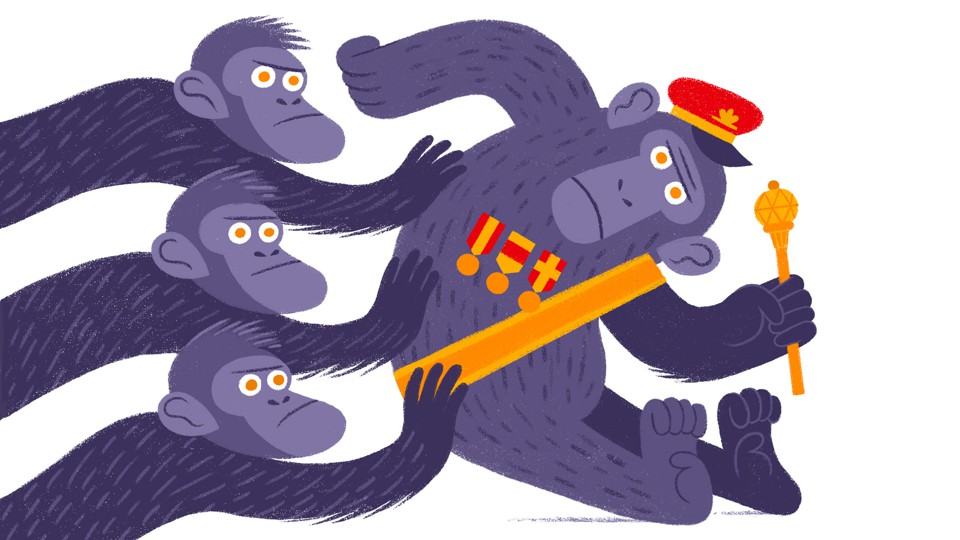
https://www.theatlantic.com/magazine/archive/2018/05/how-to-sway-a-baboon-despot/556892/ 
I was speaking with a friend the other day about science and humanism. Humanism encourages us to use science to better solve our problems and the science keeps validating taking a Humanist approach.

Diversity is a case in point. Problem solving is difficult. To do it well, we need diverse opinions. Because when we don't have the full range of options available, we end up choosing the best of bad options. 

The Atlantic Magazine had a short article about this - titled: How to Sway a Baboon Despot, which is about democratic decision making in the animal kingdom. And yes - lots of animals make democratic decisions, including ones ruled by despots - like baboons.  https://www.theatlantic.com/magazine/archive/2018/05/how-to-sway-a-baboon-despot/556892/

The 2 big take aways from the the article are this:

1) Lack of diverse options leads to bad decisions and bad outcomes for the group, and 
2) "Group decisions need not come easy—in fact, clashing perspectives may lead to superior outcomes. ...As long as animals share the same broader goal, a diversity of viewpoints does not tear their society apart but strengthens it, leading to better results for all."

When democratic decision making goes wrong, it's because there was a lack of diversity in proposed solutions. The article uses bees deciding where to make a nest as the main example, but it's clear - this is true in all species. 

The lesson? We need diversity and democratic decision making to get good results. And the key to making diversity work - is having shared goals and objectives.   Sounds A LOT like Humanism to me.

It isn't just animals who make better decisions with diverse democracy. It's Humans too. 

The same day I read the impact of democratic decision making and diversity on animal decision making outcomes. I also read an article about why democracies seem to be unable to deal effectively with income inequality.  

This is an opinion piece in the NY Times and it is well worth reading the entire thing because, it ultimately has to do with democratic decision making and the impact lack of diversity has on outcomes, which is what we are talking about here.  It is long - but worth the read. https://mobile.nytimes.com/2018/02/15/opinion/democracy-inequality-thomas-piketty.html

As a Humanist, I desire a society where everyone has the ability to thrive. This is not about equal outcomes, but about equal opportunity, which in turn requires a stable foundation on support. 

There has been a lot written about the negative impacts income inequality have on our society and on our economies. I'm not going to go back into that here and will instead, just provide a link to a couple of my articles on the subject. 

The point is - we, as a society, need to be less unequal in order for our society, economy and individuals to thrive.  How we do that - is a problem that requires solving.  We have not only not solved it, our attempts to solve it - have made it worse. 

What are we doing wrong and how can we fix it? 

The article does a good job of discussing this from a variety of scientific and sociological perspectives. The consensus is though, that poor and marginalized people aren't having their voices heard. 

I want to point out that this is not a partisan problem. It's not one party vs the other party. There are a variety of reasons why this is happening and there is not one single fix to the problem. This is what is called a "wicked problem." There are a lot of dimensions to why diverse viewpoints are not being taken into account in our democratic deliberations. There is the fact that money amplifies voices.Racism and bigotry. Propaganda and false information. Partisan/tribal thinking and more. The point is - this lack of diversity is causing bad problem solving on a wide variety of topics on a societal level.

The solution, is to make sure we not only make space for more diverse viewpoints, but that we demand that diversity. Because the lack of diversity - is hurting everyone, which is why everyone is upset. 

Taking a Humanistic approach - is not only scientifically validated, it's also a moral and pragmatic necessity. Take diversity seriously.


Because creating diverse work teams is difficult, we also need to take a scientific approach to dealing with the barriers to creating a diverse workforce - where everyone is respected. To that end - check out my training on how to use behavioral science to help with conflicts, harassment and more.

And yes - I do do group trainings.


Valuing Diversity

One of the first things companies need to do is understand that diversity is value. Yes – it comes with some difficulty, but the benefits outweigh those costs.


In order to have a diverse workforce, you have to value a diverse workforce. So – what value do you get with a diverse workforce? Better decision making.

All businesses are in the business of solving problems. Better problem solving leads to better solutions and better businesses.

How do we get better at problem solving? Improve our decision making/problem solving processes.

Diversity helps with this because instead of getting like minds together– to think about how to solve a problem, you bring in other viewpoints. Those other viewpoints may yield insights a homogeneous group didn’t think of and can’t think of.

Additionally, diversity helps ensure that stupid mistakes aren’t made because – more diverse experiences means more experience on how things can go oh so horribly wrong. We want that and should want that as it helps us solve problems more effectively.

Once we decide diversity is good and we value diversity specifically because of the input diverse people bring to a problem solving situation, we need to protect those diverse viewpoints so that they can be heard.

People who are used to dominating, are now being asked to collaborate and listen and take into account a diverse viewpoint in the problem solving process. This is bound to cause a reaction. Which is actually predicted to occur if we consider this a behavioral issue.

What we want is people to learn how to work together. This takes time, part of the process is extinguishing the old habits of how decisions are made in a homogeneous group and replacing those behaviors with a more collaborative model.

This is a change management problem coupled with a bullying/harassment problem. Behavioral science should be applied to help our teams adjust so that all voices are valued in the decision making process.


To learn more about how to use behavioral science to create change - consider taking the online course: Why is Change so Hard: https://humanistlearning.com/change1/

To learn more about how to stop bullying and harassment which is used by people to dominate decision making processes - take my online course: How to End Harassment & Retaliation in the Workplace: https://humanistlearning.com/retaliation1/


When someone lies – leadership edition


For me there is nothing more frustrating and disappointing than an employee who lies. 


Not only has the person proven to me they are untrustworthy, they also prevented a problem from being solved. I’m not sure which is worse.

 I have zero tolerance for liars in the workplace.  Once I have verified that they lied to me, I fire them. I don’t have the time or energy or money to fix the problems they create. It is already hard enough to fix the problems our company solves, whatever that is, without having to do double duty fixing the additional problems caused by someone who lies.

 I don’t care what the lie is. If they didn’t finish a project or can’t – tell me so we can work around it and fix the problem. Don’t tell me its going to get done and then not do it and then lie about why you didn’t do it.

 How should a leader handle this?  Professionally. First, trust but verify. Don’t assume they are lying. Find out. Do your diligence. Find out if what they are telling you is true or not. If they are telling the truth, deal with the problem and ask them to come to you for help so these things don’t get out of control.

 If they lied, say goodbye. 

But what if it’s a co-manager. Not someone who works for you but one of your colleagues?  Then you have a real problem. This is very common with passive aggressive people. I again, take a trust but verify approach. It’s all about documentation so that they can’t get away with their lies anymore.

If you have a verbal agreement, write it down and ask them to confirm via email your understanding of the agreement. That way – when they don’t do what they said they were going to do – you are no longer in a he said she said situation. 

I like to approach this as me trying to fix a communication problem. I don’t call them out as a liar. It is entirely possible I am the problem. So – I confirm and double check and put everything in writing so that the communication problems we are having are sorted out before too much work gets done. If they lie – they will be caught. And I don’t have to argue with them or accuse them of anything. I just let them dig their own hole if that’s what they want to do.

Never stoop to their level. Never make it personal. It isn’t. Either people are professional (which means ethical, honest and responsible) or they aren’t. If they aren’t, do what you need to do to protect the work (not yourself – the work), because solving problems ethically, responsibly and honestly is what good leadership is all about.
I have a short program on the principles of Humanistic Management for $15 if you are interested in learning more about the what and whys of how professionalism impact collaborative problem solving. https://humanistlearning.com/?p=2237


Mental Health Care vs. Jail

We need to rethink our criminal justice policies because 65% of kids in Florida’s juvenile justice system are developmentally disabled!!!!

My local paper ran a story on disabled teens in our juvenile justice system. What I read infuriated me! http://www.bradenton.com/news/local/crime/article133971964.html

It turns out that 65% of kids in juvenile system are developmentally disabled. Instead of providing services to these kids, we are putting them in jail.

Why?  The state of FL has only 350 beds statewide for delinquent youths with cognitive impairments or severe mental illness. When those beds are used up, the kids end up in detention without the care they need.

Why do we have inadequate resources for developmentally disabled kids? Because we refuse to fund mental health care.

What we are willing to fund is prisons. Specifically, private prisons.  Private prisons who lobby our legislators to guarantee we put people in jail so that the private prison companies can make enough money to make running our jails economically successful. In other words, they need to make a profit so we put developmentally disabled kids in jail.

I sometimes wonder what would happen if the public health sector and the mental health sector were privatized maybe then they would have a lobby large enough to convince our elected officials to spend our tax dollars actually helping instead of just locking people up for profit.

What is clear is that our current system of incarceration for profit is bad for society, bad for the kids who need help and bad for their families.

Critical Thinking in Decision Making

Do you know the elements of good decision making?

Good leaders make good decisions. If a leader is charismatic and can get people to do what they want, that’s good. Getting them to do what is needed to get good results? That’s great!

It isn’t enough to know how to motivate people if what you are motivating them to do is counterproductive and stupid. All you will have done is wasted people’s time, energy and money fixing a problem that either doesn’t exist or not fixing a problem that does.  As my father always said, that’s not too B R I T E!

A good leader makes sure that what they are asking people to do will yield the desired results and not waste anyone’s time with pointless busywork.

Here are the elements of good decision making.

1) Understanding the problem that needs to be solved. The amount of time wasted on what I like to call proxy problems is astonishing. I’ve seen leaders just spin everyone’s wheels on problems that aren’t really problems. In order to make sure you don’t waste time solving problems that aren’t really important or critical to your success, you HAVE to think critically and ask the question – WHY AM I WORKING ON THIS?

2) Knowing what will actually work to solve your actual problem. Assuming you know the problem you want to solve AND that the problem is a real problem that’s actually worth solving, you now need a solution that will actually work to solve it. Again ... critical thinking will help here. Consider all your options and use critical thinking to evaluate those options to choose the one that is most likely to help you succeed. Fail to do this step, usually means failure.

3) Plan for problems. Knowing what is going to cause you problems before you start a project is a good way to not fail.  Hoping for the best isn’t a strategy. Considering what all could go wrong and having a plan for how to avoid or deal with those things happening is a strategy. All this step takes is a little bit of time thinking! I know it’s hard, do it anyway.

4) Be open to being wrong. Sometimes, despite our best efforts, we make mistakes. We analyze. We consider, we plan and then, things still don’t work out because there was something we didn’t know we needed to know before we started. When this happens to a good leader, they regroup, reconsider and adjust their plans accordingly. Usually all that’s required is a slight tweak. Don’t force your team to trudge on when it’s obvious what you are doing isn’t working. Nothing kills respect for a manager like sending a team on a pointless death march.

If these 4 critical thinking skills are new to you, consider taking my personal development program – Planning for Personal Success. While the course is for personal development, it does cover how to make good decisions so you give yourself the best change at success.

Critical Thinking and Humanism in Business

If you have a job, your job is to solve a problem. Solving problems effectively requires critical thinking skills.

All business are in the business of solving customers problems. People are hired to work for the company to help the company better solve these problems and to solve the problems that prevent the staff from solving the customer’s problems.

Eventually companies get big enough where they need to hire HR professionals to solve the problems that come with having people on payroll. Like how to pay people efficiently and make sure they get the benefits the company provides and to correct paychecks that have errors. HR also has to ensure that all paperwork is in compliance and that people are legally allowed to work for the company to preemptively ensure that legal problems aren’t created through ignorance of the law. Eventually companies get big enough that they also need to hire HR professionals dedicated to dealing with the problems of employee relations, which is a fancy way of saying, interpersonal problems that can cause legal liability for the company if not dealt with properly.

Since every aspect of a business is related to solving a problem, learning how to solve problems is an essential skill for any job. This is why critical thinking is so important.

A humanistic approach to business is a way of understanding the interrelated nature of the problems we are solving and the people for who and with whom we are working. We are never simply solving one problem. All the problems of the company are related. We don’t want to fix one problem and create another problem if we can avoid it.

Humanistic business management is a holistic way of viewing the business of business. Critical thinking is central to this approach because it is impossible to weigh all the various elements at play unless you know how to think clearly.

Critical thinking is useful precisely because it requires the challenging of assumptions. The question why – why are we doing things this way? What exactly are we trying to accomplish? What else and who else is impacted by this decision? By asking these questions we can see the big picture and how our piece of the puzzle relates to everything else that is going on within the company.

It is mind expanding. Like viewing the complexity of the cosmos within the inter-dependent web of employees that is your company.  I find this connected and yet holistic viewpoint inspiring and motivating.  And while it make seem like a lot to take in, by taking the time to think about how things work together, you actually are able to gain a clarity that helps focus on the problems that really matter.

Critical Thinking and Humanism in Business. It’s a powerful combination.

Related Posts Plugin for WordPress, Blogger...