Showing posts with label diversity. Show all posts

The business case for more diversity

 The 20 most diverse companies in the WSJ study had an average annual stock return of 10% over five years, versus 4.2% for the 20 least-diverse companies. - BRIAN STAUFFER

One of my investment banks just sent me a notice that included a link to this WSJ article. It's about the business case for more diversity. https://www.wsj.com/articles/the-business-case-for-more-diversity-11572091200

The followed by saying that they now demand companies they invest in show them their EEO data and that they actively have a diverse board of directors.  They are clearly taking this very seriously.

You should too.

The Benefits of Inclusion

The biggest benefit of inclusion is improved decision making. We all have blind spots. No one knows what they don't know and they don't even know they don't know it.

Inclusion policies make sure there are enough people with enough diverse experiences in the room so that when decisions are made, they benefit from the collective knowledge of the group. 

The Challenge of Inclusion

The challenge is creative diverse yet cohesive work groups. We humans are tribal by nature and we don't like not getting our way and one of the ways we ensure that we can dominate a tribe, is by excluding the people who don't agree with us. This is often done through bullying or harassment or even passive aggressive sabotage.

This is one of the main reasons why my Certified Humanistic Leadership Professional program has so much information on how to stop bullying, harassment and discrimination, even when it's in the form of passive aggressive sabotage.  

Challenging assumptions

The problem, honestly, isn't diversity. The problem is exclusion. Even if you took a homogenous group of people, someone will still try to exclude someone else from the group.  The challenge isn't how to embrace diversity. The challenge is how to stop social exclusion. 

I teach a LOT of EEO  programs. Often, I get asked to do a diversity training. They want someone to provide information on - diverse groups of people. But that request includes an assumption. The assumption is, if we just teach people that other people are human, they will start treating each other with dignity and include them.  Spoiler: it won't.  

If you want to change the culture and you want to create an inclusive culture, then focus on teaching people HOW to be inclusive and what to do if/when someone is actively excluding a member of the team. Because, it's going to happen. 

That is why my programs are about how to stop unwanted behavior, like bullying and harassment. Bullying and harassment are done to exclude people. That's why bullies do it. If you want an inclusive culture you MUST stop the bullying otherwise you will NEVER address the root problem you have, which is that some people get power over others by excluding people from a group.

Let me help you:

Most of your staff is sick of the bullying. They are sick of the exclusion that occurs. They are terrified that they will be next. If you want to change things, hire me to teach them how to stand up and make it stop using behavioral science and compassion. Your employees will thank you.

And yes, I can provide your Prevention of Sexual Harassment (POSH) training for you.

https://humanistlearning.com/category/bullyingharassment/


Beauty in Similarity and Diversity

 Leslie Jamison wrote an essay for The Atlantic on an exhibition of the "austere" artwork of Donald Judd and how her daughter helped her see beyond her own question to understand the "meaning" of Judd's work and allow herself instead to "feel" the work.  To get a sense of his work, check out this photo below.


To be honest, I have no idea what this installation is called, but it's clearly - boxes.  

I know I’ve must have seen his art before, and thought it beautiful and interesting and also ... structurally pleasing.

But I also understand her query, "why?"  What is the artist trying to tell me or what statement are they making by displaying boxes, on the ground?   

Her essay (https://www.theatlantic.com/magazine/archive/2020/10/leslie-jamison-donald-judd/615505/) is about how she has pondered these questions over the years every time she has viewed his work and how she started to rethink whether she was even asking the right questions when she took her toddler daughter to a retrospective exhibit and her daughter was totally obsessed with the work and wanted to touch, everything and climb in and interact with everything, which is a problem because the art is actually really delicate.

The ending of the essay in particular is what I want to focus on. She discusses her new understanding of his work in the context of Covid. 

For instance, the above photo is a series of boxes, all the same, but all – slightly different. Like the passing of days in quarantine.

She talks about how embracing the beauty of life without holding on to it too tightly or requiring it to be something it is not is ... enlightenment.

I agree with this and that's pretty much how I go through live. I don't expect or require novelty. I actually like the sameness and the amazing diversity that occurs in the sameness of days.

My family's experience with Covid is that we have contracted quite a bit. We don't go out and when we do, we take out. But the lack of commitments we have, allows us to explore more. We have more time for mundane things, like biking around the neighborhood for exercise.  Even that, has diversity. Depending on the time we go, we may run into neighbors, or have to dodge cars, or maybe we will be out at the magic hour that the bats are out hunting for bugs. The days are all the same, and yet, all different. Noticing the little differences and taking joy in those little differences, does feel a lot like enlightenment. 

It's the same with humans. We humans are astonishing alike, and yet, totally different from one another. We all have the same basic emotional toolkit, and yet, our life experience are totally different.

It is a mistake to try and fit an individual human into a preset box. Trying to do so will result in failure. Which is probably why Judd's work has always resonated with me. All the boxes are basically the same and yet, different. Infinite diversity in infinite combinations. 

In a very oxymoronic reality, structure and templates provide the space for diversity to be created. To create novelty, we don't have to throw out our templates or what came before, we can create novelty out of the commonplace. 

My challenge to you, my fellow humanists, is to seek out the beauty of each individual human you meet. We follow the template for human, but there is infinite diversity in how we actually manifest as humans. 


Diversity v. Inclusion - what's the difference?

Just because you have diversity - doesn't mean you have inclusion.  


Diversity means you have variety.  In the workplace - you could have a variety of people of different genders. You could have a variety of people from different ages. You could have a variety of people from different income groups. You could have a variety of people with different skin tones. A variety of people from different religions.  Think of diversity - as variety.

There is a reasons companies like to recruit in diverse people. And it's not just that they don't want to get sued for discrimination. It's also because that diversity is great for critical thinking and decision making.  

You  don't know what you don't know. Diversity gives you a better chance at uncovering the things you don't know so that you can plan for them and adjust your strategies so they are more likely to be successful.

In order for diversity to benefit your organization though - it's not enough to have diversity - you must also have inclusion.

What good is having a math wiz - if you never ask them to do math for you?  What good is it to have a epidemiologist during a pandemic - if you don't take their advice?  What good is it to plan for education during a pandemic if you don't include teachers in the planning discussions? Not good at all.

In order to benefit from diversity - you have to make sure people with diverse knowledge and experience - are included in decision making process. Otherwise, you are making decisions in the dark and that's exactly what were trying to avoid by recruiting in diverse people.

So - how to ensure people that are diverse create positive collaborative work groups where everyone is included and everyone can contribute equally?  That is literally - the billion dollar question that seems to defy solution.

It turns out we humans are really tribal. We don't trust others and if we don't trust - we don't collaborate.  Also - some people have learned that - they can get their way if they just - exclude those pesky others who have different ideas.  

In order to create a culture of inclusion- you have to simultaneous build up trust and get rid of the people who dominate through bullying and other obnoxious behavior.  This is why my book - The Bully Vaccine - is subtitled: How to inoculate yourself against bullies and other petty people.  https://humanistlearning.com/the-bully-vaccine-book/ 

Recruiting in diversity is actually fairly easy once you decide to do it. The harder part is how to make sure those diverse people are nurtured and included so that they can be their best and contribute to the organization - instead of being marginalized by your other employees.

To help you with that - I offer a variety of training programs that teach you and your staff - how to stop bullying using behavioral science and how to manage humanistically - so that you can finally - have that inclusive supportive organization you always dreamed of.  Details at: https://humanistlearning.com/programsoffered/


Group Decision Making - Inclusion and Psychological Safety

Are there ways for companies to improve their group decision-making? Here are some practical tips on how to plan/implement best practices as well as psychological elements that should be taken into account.


I teach humanistic leadership, behavioral science techniques and have over 30 years in executive leadership.

1st - Good decision making. “Good” is a moral value judgement. You have to define what good means to the group.  What is a good outcome?  Only then you can look at your options and weigh them against the ideal.  This step – helps eliminate a lot of conflict in group decision making. Often what happens is different people have different ideas of what good means. When you get everyone into agreement on what a “good” result is – you can more easily gain consensus. 

Let me give you an example. I used to work in the tower industry. What constituted a “good” tower to maintenance – was a tower that was in good shape and didn’t need much work.  What constituted a “good” tower to marketing was a tower in a good location for their customers.  What constituted a “good” tower to accounting – was a tower that was generating more cash flow then debt.  Until you get all 3 stakeholder groups into agreement on what a “good” tower is – there will be squabbling.  And yes – this is a real example from my past – it was finally agreed upon that if we were generating more cash flow then debt – then costs to upgrade the tower were irrelevant as we were already net positive.  If there was less cash flow than debt – then we needed to consider whether there was any marketing growth at this location and how much maintenance costs we would have to put in to get that growth. Consensus through integration of all concerns– made all the other decisions easier. We grew to be a half billion-dollar company.


2nd – Involving ALL stakeholders. It is very easy to make decisions alone. In fact – there is a reason why many people do this. Getting consensus among people with different ideas of what “good” is – is hard.  But it’s a mistake.  You don’t know what you don’t know and not knowing things leads to poor decisions. Bringing in all the stakeholders (from lowest to highest paid) helps ensure that everyone is on board with the plan. It also helps ensure that you aren’t blind to major issues. Diversity is good for decision making.


3rd – Dealing with diversity problems in decision making. Having a discussion on what is “good” with a diverse group of people is often quite difficult. We all have blind spots.  We think our opinion is the most important opinion. Sorting all that out – takes humility, patience and dignity.  Dignity is an interesting word. You have to act with dignity yourself and give dignity to people you disagree with.  Most people aren’t really capable of this – or rather – they don’t have a lot of practice – acting with dignity and giving dignity to others. But it’s key to sorting out differences and helping a diverse group – become cohesive – while allowing space for all those diverse opinions.

So … how do you do this? Pragmatically? 

By acknowledging dignity violations. Everyone has been hurt at some point. Some  - more than others.  People coming from marginalized backgrounds (whether it’s gender, race, disability, poverty – or whatever), probably have felt like their dignity has been violated more than others.   Creating space for and acknowledging those violations – helps people feel heard. Helps them feel like their dignity is being acknowledged and helps them move past the past violations so that they can work collaboratively in the present. 

This really does work. But to do it – you first have to acknowledge your own feelings of hurt. Understand that you are in charge of your own dignity. No one has the ability to take it from you. You either act with dignity or you don’t. Claim your dignity. Then – help others claim theirs. Then – the first conversation about what constitutes a “good” outcome – becomes much easier.

Let me know if you have any questions.  In the meantime, if you want to learn more - I have a variety of professional development courses that can help you learn these skills for yourself. 

Creating an effective diversity program


I teach how to stop harassment in the workplace using behavioral science as well as implicit bias that affect diversity.


There are several reasons why diversity trainings fail to create diverse work groups.  So it’s helpful to think of processes that prevent diversity – rather than training to encourage it.

The research on the efficacy of diversity training is that – it really doesn’t matter the methodology of the training. The training will raise awareness of diversity issues, but is unlikely to result in behavioral change. The reason why is – behavioral change requires behavioral conditioning which is a process that takes place over time and is impacted by real events in the workplace. A training is a great way to start that process, but it’s only a start. If the processes don’t support diversity – the initiative will fail because – the pro-diversity behaviors will not be rewarded if the processes aren’t changed.

To create diverse workforces, you have to accomplish 3 things.


1.    Eliminate bias in personnel decisions
2.    Eliminate social exclusion/bullying
3.    De-escalate conflicts to create social cohesion


If we don’t eliminate bias in personnel decisions than our hiring, promoting and development programs will socially exclude people. It’s just a fact of life. There are things we can do in hiring to promote diversity by eliminating bias for instance. Salary negotiations can be eliminated and salaries normalized. These can all help improve the diversity coming into an organization through new hires AND ensure that everyone is treated equally in the organization – at least within the employee development system

If we don’t eliminate social exclusion through bullying/harassment – we will continue to have diversity issues.  One person has the ability to kill a diversity initiative if we don’t shut down bullying. A good diversity training must include a harassment/bullying program that teaches people how to actually shut down the unwanted bullying behavior to create space for the targets to actually stay and thrive instead of being driven out by small minded people committed to racism/sexism/whateverism.   This sort of enhanced harassment training is important because – as long as we people are socially excluded from groups for being different by bullies, your organization won’t be able to create diverse yet cohesive workgroups.

Finally, creating cohesive work groups are hard because, people with diverse backgrounds often disagree. The challenge of creating a cohesive team out of diverse people should not be under-estimated.  Helping people learn how to de-escalate conflicts so that they can engage in dignity based disagreements is essential.

My ideal diversity program would first, analyze the processes and tweak them to eliminate bias.

Then my training program would include bias elimination, diversity awareness, behavioral based harassment/bullying elimination training and a training on how to de-escalate conflicts effectively and ethically.  I would start with management and then move on to staff.  And I would have a plan for what to do about managers – that – turn out to be anti-diversity.

You can read my white paper on: Combining philosophy, science and education to create more diverse workforces – here:  https://drive.google.com/file/d/1SAQXj5aogXTA44QZtOQfI_y74e_m9d6L/view?usp=sharing


: Combining philosophy, science and education to create more diverse workforces.


Purpose: To move forward the discussion on how to use science, humanistic philosophy, and education to help workplaces reap the benefits of diverse workplaces while avoiding the problems caused by diversity.


Abstract:

This paper will discuss the benefits and challenges of employing a diverse workforce and discuss ways we can use behavioral science and humanistic philosophy to help businesses reap the benefits of a diverse workforce while avoiding the problems that arise when working with a group of diverse individuals, specifically focusing on how to use science to eliminate problems with discrimination, harassment and retaliation which make the creation of truly diverse workforces so difficult to achieve.

To successfully change corporate culture to be more inclusive, we need philosophy to provide people with adequate reasons why it benefits them personally to embrace a diverse workforce. This is a challenge that is best addressed through the use of humanistic philosophy. Once a work team has decided to embrace diversity, they then need to learn specific skills and techniques to defuse the conflicts that arise and how to effectively deal with harassment and discrimination so that all employees feel protected in the workgroup. These skills and techniques are best addressed by applying behavioral science techniques to the problem behaviors.


Discussion:

Diverse workforces benefit employers and employees[i], but attempts to create diverse workforces are hampered by a myriad of problems.

People coming from diverse backgrounds have different life experiences, different triggers, different world views, different assumptions and different goals. How we talk to one another respectfully and further, understand what is being said, is not always easy. We all have implicit biases[ii] that may prevent us from accurately perceiving the other person and their motives.

Our difficulty in seeing other people accurately and without bias is hampered by the fact that humans, as a species, are tribal animals. We instinctually feel safe around people we perceive to be like us and are frightened by those we perceive to be “other.” [iii] There are a variety of ways our tribal instincts can be triggered, but once they are triggered, creating a cohesive group out of diverse individuals becomes exponentially harder.

Humanistic philosophy can help us bridge those differences. It helps us bring the “other” person into a common tribe which helps us to override our tribal instincts so we can view the other person as “ethical.”  Humanism also provides us with a common moral language we can use to create consensus and resolve differences.
Diversity problems in the workplace manifest in a variety of ways and stem from a variety of causes. This is why diversity is such a “wicked” problem to solve.
A combination of humanistic philosophy and applied science can help us fix these problems so that we can reap the benefit of diverse workforces.

There are 3 major problems we need to solve to create diverse yet cohesive work groups. We need to hire more diverse workforces. We need to solve the problem of social exclusion that prevents diverse work groups from creating cohesion and leads to harassment and discrimination in the workplace. And we need to help people more effectively deal with and resolve disagreements so that our tribal instincts don’t kick in and turn what should be a rational disagreement into an irrational divisive conflict. 

The Challenge of overcoming implicit and explicit bias in personnel decisions.

We now know that our ability and willingness to hire diverse workforces is complicated by our implicit and sometimes explicit biases.[iv] We all have biases and that our biases impact our hiring decisions, firing decisions, promotion decisions and more. We cannot fix our diversity problem without better understanding of how implicit biases work so that we can take affirmative action and hire people we wouldn’t normally hire because of our biases. Otherwise biases will continue control hiring decisions and our businesses will suffer as a result.

Humanistic philosophy can help us work past our biases and science can help us develop techniques so that we can work to ensure our biases don’t negatively impact our personnel decisions.

The Challenge of Eliminating Social Exclusion


Social exclusion is the process in which individuals or people are systematically blocked from (or denied full access to) various rights, opportunities and resources that are normally available to members of a different group, the “ingroup.”

Social exclusion can happen for a variety of reasons. Sometimes it’s a result of bias, but it can also be a result of competition for resources in the workplace where individuals may dehumanize their co-workers through bullying, a technique that helps them gain access to resources and minimize the influence their target has in the workplace.

For example: social exclusion appears to be the main aim of workplace bullying or harassment. Evolutionary psychologists[v] have shown that bullying is adaptive behavior. Bullying can be thought of as a tool of group control.  People who can control access to a group through social inclusion and exclusion wield a lot of power.

Humans have an instinctual need to “belong” to ingroups and exclusion is felt as physical pain[vi]. Our instinctual fear of being socially ostracized allows bullies to manipulate group dynamics and control them. The bully might not be biased against their target, they are merely using the threat of social exclusion to control a group. They do this by marking their target tribally as “other” to encourage social exclusion of the target. Anyone who is perceived as different can be marked as “other” this way. Since no one wants to be excluded, our instinct is to seek inclusion in the form of currying the favor of the person perceived to have the power to include or exclude people from the group.

To create a diverse yet cohesive workgroup, social exclusion cannot be tolerated. The challenge is how to make social exclusion behavior stop. Currently 152 countries have laws prohibiting discrimination in the workplace. Several countries and state jurisdictions mandate harassment training and yet, harassment and discrimination continue, and vulnerable people are excluded from our workplaces as a result. Laws prohibiting discrimination are not enough.

Solving this problem will require a combination of humanistic philosophy and behavioral science. Humanistic philosophy will help us resist efforts by bullies to marginalize and label people as “other.” Behavioral science will help us extinguish the unwanted exclusionary behavior. 

Scientists have known for decades how to stop unwanted behavior including exclusionary behavior, like bullying and harassment.  Specifically, the science of behavioral extinction not only explains why attempts to stop this behavior results in an escalation of behavior otherwise known as retaliation, but it provides us with the tools we need to get it to stop. We need to start applying these techniques to the problem of bullying, harassment and discrimination in the workplace so that diverse individuals are no longer subjected to social exclusion in the workplace.

The challenge of De-Escalating Conflicts to maintain group cohesion


Diverse workgroups means that there is diversity of opinion. Problem solving is never an easy task. People with different skills sets, knowledge bases and experience, approach problem solving differently. This can lead to disagreements that if they remain unresolved, can cause conflict.
When we find ourselves in conflict our tribal biases kick in making resolution of the disagreement harder. Unfortunately, some people have learned that if they use bullying and/or aggression to stigmatize the other person, it increases the chances of their viewpoints being adopted. This technique, while a successful strategy for the person employing it, negatively impacts the problem-solving process and is experienced as harassment and discrimination by the person on the receiving end of this sort of bullying behavior.

Thomas and Killman describe five approaches humans take to resolving conflict.[vii] Two of these approaches are considered counterproductive. The three remaining ones form the basis of most of the advice on how to resolve conflicts.

The first step in any conflict management program is to attempt to get both sides to see each other as part of the same tribe so that the tribal aggression and defenses that are preventing rational discussion from taking place are eliminated. Humanistic philosophy is essential to this effort.
Humanism can also help us develop communication strategies to help us find common ground in the problem-solving process and to resolve disagreements by using a shared set of values and moral approach.

Science should also be employed. We can use the same behavioral techniques we use to eliminate bullying and harassment to de-escalate conflict behavior to set the stage for humanistic communication strategies to take root. We can also use what is learned from sociology on group dynamics and decision making to help us better manage disagreements so that they don’t devolve into conflict. The goal is to help teams focus on collaborative problem solving as a team instead of allowing the team to fracture into warring tribes.

Transformative approach


Philosophy on its own is not enough and science on its own is not enough. Combining philosophy, science and education can create positive social change in corporate culture

Humanistic philosophy helps us tweak our thinking so that we can overcome our biases, see our colleagues as members of our in-group/tribe and encourages us to be compassionate and patient with them when disagreements arise. It also provides us with the motivation and the knowledge we need to resist attempts by bullies to manipulate us through social exclusion.

Science can provide us with a complimentary toolset needed to resist our biases so they no longer control our decision making processes. We can use behavioral science strategies to establish new cultural norms that reinforce respectful behavior in the workplace and collaborative problem solving. We can also use behavioral science to help eliminate social exclusionary behavior that prevents diverse work groups from becoming cohesive.

A holistic approach that combines the best of humanistic philosophy with applied science can help us transform our approach so that the promise of social inclusion becomes a reality.


[ii] Greenwald et al (1995), Implicit social cognition: Attitudes, self-esteem, and stereotypes.  Retrieved from http://psycnet.apa.org/record/1995-17407-001
[iii] Daniel Druckman (1994), Nationalism, Patriotism, and Group Loyalty: A Social Psychological Perspective. Retrieved from https://academic.oup.com/isr/article-abstract/38/Supplement_1/43/1813806
[iv] Catherine Ellis (1994), Diverse approaches to managing diversity. Retrieved from http://onlinelibrary.wiley.com/doi/10.1002/hrm.3930330106/full
[v] Kevin MacDonald (1996) What do Children Want? A Conceptualisation of Evolutionary Influences on Children's Motivation in the Peer Group. Retrieved from http://journals.sagepub.com/doi/abs/10.1177/016502549601900105
[vi] G. Novembre, M. Zanon, G. Silani. (2014), Empathy for social exclusion involves the sensory-discriminative component of pain: a within-subject fMRI study. Social Cognitive and Affective Neuroscience. Retrieved from https://academic.oup.com/scan/article/10/2/153/1652379  
[vii] Kenneth W. Thomas and Ralph H. Kilmann (2015), An Overview of the Thomas-Kilmann Conflict Mode Instrument (TKI). Retrieved from http://www.kilmanndiagnostics.com/overview-thomas-kilmann-conflict-mode-instrument-tki


Struggling with diversity ethics.

This is a problem with promoting diversity. And that is - in order to create diverse groups, we must not tolerate the intolerant. But - that makes us intolerant. Right?

I was giving a talk in Tallahassee at the beginning of August and this question came up. How do we stay true to our values while defending our values. It's not an easy task.  Albert Camus once cautioned a friend - "when fighting for your truth, you must take care not to kill it with the very arms you are using to defend it." - Preface to Algerian Reports

How do I think through this as an ethical dilemma?  For me - the key is our understanding of moral values.  All moral value systems consist of a variety of values. It is very common for these values to be in conflict. When that happens, we have to decide which value is paramount. The typical way this is described is - is it ok to steal a car to save someone's life.  Both are wrong, but one is clearly worse. 

Morality isn't about choosing between good and evil. It is about choosing the lesser of two evils or the greater of two good. It requires moral judgement.  Which is why most people have no problem with this question. Yes, of course, stealing to prevent a murder is ok. Both are wrong – one is more wrong than the other.

When we bring this back to the issue of tolerance.  Yes - I value tolerance - because I LOVE diversity.  If I am intolerant of intolerance - does that make me bad?  Or as bad as the people who I am intolerant of?  Only if you think all values are equally important, which they aren't.

Intolerance and racism/sexism/religious bigotry causes real physical and material harm to people. I don’t tolerate intolerance because – protecting people from physical and material harm – is more important to me than tolerance.

I recognize my intolerance of intolerance is a form of intolerance, which is generally bad. But just as stealing is less bad than murder, not being tolerant is less bad than allowing physical and material harm to be done to people. So - to promote diversity and protect diversity - I'm intolerant of intolerance.  I chose the lesser of two evils and recognize that as a choice.

And like all choices - we have to use judgement for individual situations. That is why we have to use critical thinking for our moral judgement.  We shouldn't be blase about being intolerant of intolerance. Recognizing that we made a moral choice between two "evils" helps us not go down a slippery slope of killing our truth with the very arms we use to defend it.

The truth is - diversity is good and intolerance not only prevents us from achieving diversity, it also causes material and physical harm to people. To create good - we have to be intolerant - of certain forms of intolerance.

Am I rationalizing intolerance? No - I'm engaging in moral reasoning based on testable outcomes.  I am asking myself the question - which action creates the most good and least harm? Allowing intolerance  - or being intolerant of intolerance? To me - the answer to this question is as simple.


Evidence Based Solutions for D&I in the workplace

Anyone involved in HR and Diversity Issues knows - what we are doing isn't really working. We still have bias. We still have discrimination. We still have problems with inclusion. And none of the initiatives seem to make a dent. Some do, it specific cases, but as a problem plaguing society and our workplace, it's pretty sticky.


This is why I want to share the Evidence Based D&I HR Magazine article: https://www.dropbox.com/s/amz5hisptr6d036/Evidence-Based%20D%26I%20HR%20Magazine%20May17.pdf

We need to use more science to help us solve these problems.  One of the ways we try to solve D&I problems is by compiling reports about experiences of black, asian, minority and ethnic people in organizations to ask about their experiences. And these stories are useful to help us understand the impact of the dynamics and experiences that people are having in an organization.

What this doesn't do is help us come up with solutions to fix them. It is simply not enough to tell stories to try and get people to care. There are other sciences we can bring in to help us. Like, behavioral science, or sociology or psychology.

Another thing that won't work is "solutioneering" which I refer to as proxy problems. Where people decide that the problem is we have not instituted a particular solution. When that might not be the problem at all.

One of these "solutions" is unconscious bias training. But the evidence is that this training doesn't actually change behavior. (http://humanisthappiness.blogspot.com/2018/11/does-unconscious-bias-training-work.html) There are several reasons why that is the case - one of which is what I teach - the science behind how behaviors are actually changed. https://humanistlearning.com/change1/

The advice they give is please don't just act so you can be seen to be doing something. Do something that will actually work. This requires decision makes to be conscientious, explicit and judicious in seeking out and using evidence to design your intervention. 

FYI - I will be interviewing Rob Briner (one of the co-authors) regarding using evidence based management practice. https://www.eventbrite.com/e/evidence-based-practice-to-make-better-decisions-humanistic-professionals-lunch-and-learn-tickets-53964850320

And if you want to learn some of the science on how to actually get behaviors to change - contact me for a training. https://humanistlearning.com/contact-us/

Fostering Diversity: Why is diversity so hard?


I teach humanist management and how to use behavioral science to stop things like harassment. Both are at play when we are dealing with diversity issues.

First question: Ways for a leader to foster diversity, inclusion, and acceptance within their unit/department/organization.

Leaders and teams need a variety of inter-related skills to help ensure diversity is achieved.

1. Understanding the value that diversity brings to the team (which is better problem solving)  REALLY  - BETTER PROBLEM SOLVING!!!!!
2. Philosophic understand of how to cope and change their thinking about other people so that they don’t respond negatively – or if they do – they can work through it.
3. Mission focused and intentional integration of viewpoints.  As long as the team is focused on collaborative problem solving, issues with disagreements can be resolved rationally and not devolve into tribal conflicts which then use harassment and bullying to socially exclude a rival idea.
4. Behavior based approaches to bullying and harassment that actually fix the problem. It isn’t enough to say – it’s illegal – don’t do it. It’s not enough to give people culture sensitivity trainings. Aggressive behavior happens and it’s used to socially exclude people to gain power over a group and to control a group. That a) kills diversity as the diverse viewpoints are targeted. And b) it leads to incredibly bad decisions being made.  To fix this – requires a behavioral understanding of how to get unwanted behaviors to stop and how to reward the pro-social behaviors you do want and most importantly – how to handle the  people who resist!!!!!!

Which is why the 2nd question is so important:

 2. How to add diversity to a homogeneous team that is also resistant to change.

First – everyone is resistant to change. Even people who want to change resist change. We can’t help it. Resistance is instinctual.  It’s not a sign of people not wanting to change. It’s just – the process people go through to change.  The point is – to help people with change – you have to understand the behavioral dynamic playing out – that is causing the resistance and how to help the team move through the change process quickly and how to identity those most resistant and isolate their – freak out – so it doesn’t impact the rest of the team.   I said this last bit in lay language. In science language – it means – understanding that when you stop rewarding an old behavior – the behavior escalates as the organism tries to get their reward back. As they continue to not get their reward – their resistance escalates until their behavior – explodes – which is called an extinction burst – or blow out. This is predicted to occur. How bad it gets is the variable. Most people – it’s not too bad. Some people – it’s really really really bad.  A cultural change process – to be effective – is going to take all this science based knowledge into account and help the not bad people adjust quickly and identify the really truly resistant so that the really truly resistant aren’t allowed to prevent the rest of the team from making progress.   And again, this is not about value judgements – it’s just – the process that plays out – every. Time. You. Change. Something.

The major way that people resist diversity is through harassment and bullying. So – that’s where pro-active effort has to be taken – to protect those who are going to be targeted are protected and nurtured so they a) stay and so that b) the resistance to their presence is unsuccessful.   Yes – this takes effort. Pro-active effort. Conscientious effort. Time and effort.. Which is why – most leaders – even well-meaning leaders – fail.

For those truly dedicated to the project – it can be done – but to give yourself the best chance at succeeding – you need to get training on behavioral modification techniques as they apply to organizational dynamics – paying special attention to how behavioral unlearning manifests in bullying and harassment situations.

And yes – I have training on all of this. https://humanistlearning.com/jennifer-hancock/

How to: Diversity

I teach humanist management and how to use behavioral science to stop things like harassment. Both are at play when we are dealing with diversity issues.  I was recently asked about ways leaders can foster diversity and help teams adjust to change.

First question: Ways for a leader to foster diversity, inclusion, and acceptance within their unit/department/organization. 

Leaders and teams need a variety of inter-related skills to help ensure diversity is achieved.

1. Understanding the value that diversity brings to the team (which is better problem solving)  REALLY  - BETTER PROBLEM SOLVING!!!!!
2. Philosophic understand of how to cope and change their thinking about other people so that they don’t respond negatively – or if they do – they can work through it.
3. Mission focused and intentional integration of viewpoints.  As long as the team is focused on collaborative problem solving, issues with disagreements can be resolved rationally and not devolve into tribal conflicts which then use harassment and bullying to socially exclude a rival idea.
4. Behavior based approaches to bullying and harassment that actually fix the problem. It isn’t enough to say – it’s illegal – don’t do it. It’s not enough to give people culture sensitivity trainings. Aggressive behavior happens and it’s used to socially exclude people to gain power over a group and to control a group. That a) kills diversity as the diverse viewpoints are targeted. And b) it leads to incredibly bad decisions being made.  To fix this – requires a behavioral understanding of how to get unwanted behaviors to stop and how to reward the pro-social behaviors you do want and most importantly – how to handle the  people who resist!!!!!!

Which is why the 2nd question is so important:

2. How to add diversity to a homogeneous team that is also resistant to change.

First – everyone is resistant to change. Even people who want to change resist change. We can’t help it. Resistance is instinctual.  It’s not a sign of people not wanting to change. It’s just – the process people go through to change.  The point is – to help people with change – you have to understand the behavioral dynamic playing out – that is causing the resistance and how to help the team move through the change process quickly and how to identity those most resistant and isolate their – freak out – so it doesn’t impact the rest of the team.   I said this last bit in lay language. In science language – it means – understanding that when you stop rewarding an old behavior – the behavior escalates as the organism tries to get their reward back. As they continue to not get their reward – their resistance escalates until their behavior – explodes – which is called an extinction burst – or blow out. This is predicted to occur. How bad it gets is the variable. Most people – it’s not too bad. Some people – it’s really really really bad.  A cultural change process – to be effective – is going to take all this science based knowledge into account and help the not bad people adjust quickly and identify the really truly resistant so that the really truly resistant aren’t allowed to prevent the rest of the team from making progress.   And again, this is not about value judgements – it’s just – the process that plays out – every. Time. You. Change. Something.

The major way that people resist diversity is through harassment and bullying. So – that’s where pro-active effort has to be taken – to protect those who are going to be targeted are protected and nurtured so they a) stay and so that b) the resistance to their presence is unsuccessful.   Yes – this takes effort. Pro-active effort. Conscientious effort. Time and effort. Which is why – most leaders – even well-meaning leaders – fail.


For those truly dedicated to the project – it can be done – but to give yourself the best chance at succeeding – you need to get training on behavioral modification techniques as they apply to organizational dynamics – paying special attention to how behavioral unlearning manifests in bullying and harassment situations.

And yes – I have training on all of this. https://humanistlearning.com/programsoffered/


Diversity is the Key to Effective Problem Solving

To me, humanistic management is about recognizing each individual - as an individual.  The good news is that doing this, is good for business and for society in general.

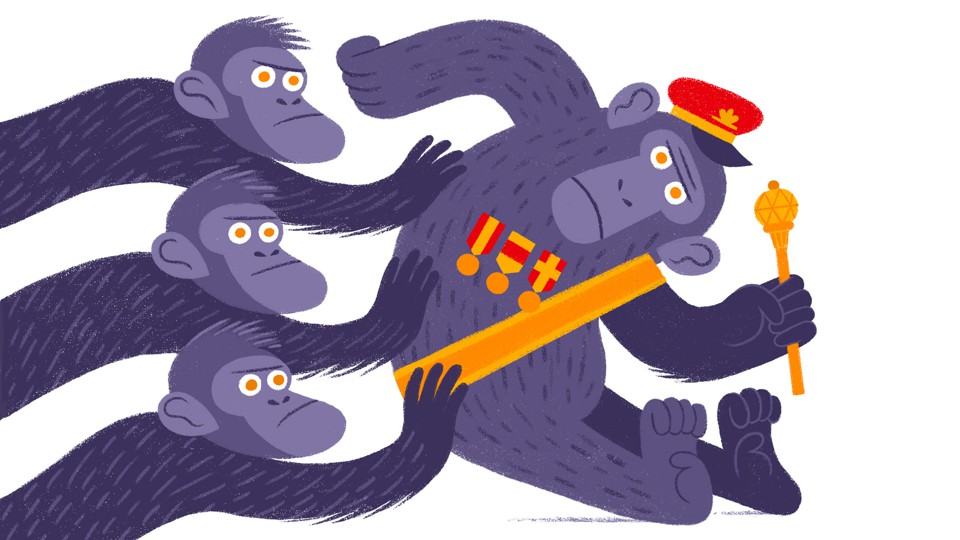
https://www.theatlantic.com/magazine/archive/2018/05/how-to-sway-a-baboon-despot/556892/ 
I was speaking with a friend the other day about science and humanism. Humanism encourages us to use science to better solve our problems and the science keeps validating taking a Humanist approach.

Diversity is a case in point. Problem solving is difficult. To do it well, we need diverse opinions. Because when we don't have the full range of options available, we end up choosing the best of bad options. 

The Atlantic Magazine had a short article about this - titled: How to Sway a Baboon Despot, which is about democratic decision making in the animal kingdom. And yes - lots of animals make democratic decisions, including ones ruled by despots - like baboons.  https://www.theatlantic.com/magazine/archive/2018/05/how-to-sway-a-baboon-despot/556892/

The 2 big take aways from the the article are this:

1) Lack of diverse options leads to bad decisions and bad outcomes for the group, and 
2) "Group decisions need not come easy—in fact, clashing perspectives may lead to superior outcomes. ...As long as animals share the same broader goal, a diversity of viewpoints does not tear their society apart but strengthens it, leading to better results for all."

When democratic decision making goes wrong, it's because there was a lack of diversity in proposed solutions. The article uses bees deciding where to make a nest as the main example, but it's clear - this is true in all species. 

The lesson? We need diversity and democratic decision making to get good results. And the key to making diversity work - is having shared goals and objectives.   Sounds A LOT like Humanism to me.

It isn't just animals who make better decisions with diverse democracy. It's Humans too. 

The same day I read the impact of democratic decision making and diversity on animal decision making outcomes. I also read an article about why democracies seem to be unable to deal effectively with income inequality.  

This is an opinion piece in the NY Times and it is well worth reading the entire thing because, it ultimately has to do with democratic decision making and the impact lack of diversity has on outcomes, which is what we are talking about here.  It is long - but worth the read. https://mobile.nytimes.com/2018/02/15/opinion/democracy-inequality-thomas-piketty.html

As a Humanist, I desire a society where everyone has the ability to thrive. This is not about equal outcomes, but about equal opportunity, which in turn requires a stable foundation on support. 

There has been a lot written about the negative impacts income inequality have on our society and on our economies. I'm not going to go back into that here and will instead, just provide a link to a couple of my articles on the subject. 

The point is - we, as a society, need to be less unequal in order for our society, economy and individuals to thrive.  How we do that - is a problem that requires solving.  We have not only not solved it, our attempts to solve it - have made it worse. 

What are we doing wrong and how can we fix it? 

The article does a good job of discussing this from a variety of scientific and sociological perspectives. The consensus is though, that poor and marginalized people aren't having their voices heard. 

I want to point out that this is not a partisan problem. It's not one party vs the other party. There are a variety of reasons why this is happening and there is not one single fix to the problem. This is what is called a "wicked problem." There are a lot of dimensions to why diverse viewpoints are not being taken into account in our democratic deliberations. There is the fact that money amplifies voices.Racism and bigotry. Propaganda and false information. Partisan/tribal thinking and more. The point is - this lack of diversity is causing bad problem solving on a wide variety of topics on a societal level.

The solution, is to make sure we not only make space for more diverse viewpoints, but that we demand that diversity. Because the lack of diversity - is hurting everyone, which is why everyone is upset. 

Taking a Humanistic approach - is not only scientifically validated, it's also a moral and pragmatic necessity. Take diversity seriously.


Because creating diverse work teams is difficult, we also need to take a scientific approach to dealing with the barriers to creating a diverse workforce - where everyone is respected. To that end - check out my training on how to use behavioral science to help with conflicts, harassment and more.

And yes - I do do group trainings.


Valuing Diversity

One of the first things companies need to do is understand that diversity is value. Yes – it comes with some difficulty, but the benefits outweigh those costs.


In order to have a diverse workforce, you have to value a diverse workforce. So – what value do you get with a diverse workforce? Better decision making.

All businesses are in the business of solving problems. Better problem solving leads to better solutions and better businesses.

How do we get better at problem solving? Improve our decision making/problem solving processes.

Diversity helps with this because instead of getting like minds together– to think about how to solve a problem, you bring in other viewpoints. Those other viewpoints may yield insights a homogeneous group didn’t think of and can’t think of.

Additionally, diversity helps ensure that stupid mistakes aren’t made because – more diverse experiences means more experience on how things can go oh so horribly wrong. We want that and should want that as it helps us solve problems more effectively.

Once we decide diversity is good and we value diversity specifically because of the input diverse people bring to a problem solving situation, we need to protect those diverse viewpoints so that they can be heard.

People who are used to dominating, are now being asked to collaborate and listen and take into account a diverse viewpoint in the problem solving process. This is bound to cause a reaction. Which is actually predicted to occur if we consider this a behavioral issue.

What we want is people to learn how to work together. This takes time, part of the process is extinguishing the old habits of how decisions are made in a homogeneous group and replacing those behaviors with a more collaborative model.

This is a change management problem coupled with a bullying/harassment problem. Behavioral science should be applied to help our teams adjust so that all voices are valued in the decision making process.


To learn more about how to use behavioral science to create change - consider taking the online course: Why is Change so Hard: https://humanistlearning.com/change1/

To learn more about how to stop bullying and harassment which is used by people to dominate decision making processes - take my online course: How to End Harassment & Retaliation in the Workplace: https://humanistlearning.com/retaliation1/


Bias, Stereotypes and Trust

How biases and stereotypes impact trust and how we can help make our workplaces more respectful and diverse.

I am going to share with you an article about some research that was done on middle school kids regarding stereotypes and trust. https://www.eurekalert.org/pub_releases/2017-02/sfri-fyo020117.php
 Kids, and people, notice when they aren’t being treated fairly and if happens repeatedly they lose trust in authority – for good reason.
"Youth of color enter middle school aware that majority groups could view them stereotypically," notes Valerie Purdie-Vaughns, associate professor of psychology at Columbia University, who coauthored the study. "But when teachers surprise them with an early experience that conveys that they are not being seen in terms of stereotypes, but rather respected, it creates trust and may set in motion a positive cycle of expectations."
The actionable intelligence for teachers is that going out of your way to express trust and that you don’t see them as a stereotype goes a LONG way towards establishing trust and that kids who experience social trust, have fewer problems.

The reason this is important to managers in the workplace is because, at some point, these kids grow up and enter the workforce. The same dynamics at play in the classroom exist in the workplace.

The big difference is that the biases are more ingrained at this point. Both on the part of the majority group seeing people stereotypically and on the part of minority groups who have spent their lives dealing with people who don’t respect them as fully human individuals.

It isn’t enough to talk a good talk about diversity.  If it were, we wouldn’t continue to have diversity problems.

In order to overcome these built in biases, we have to be proactive.  We have to go out of our way to recruit a diverse workforce. We have to go out of our way to express trust and respect. We have to go out of our way to build the relationships on which trust is built.

It isn’t enough to recruit in a diverse set of people. If they are not welcomed and respected and trusted, you will have problems in the workplace.

Fortunately, you can take proactive steps. Among those is learning about how implicit bias effects your decision making so that just maybe we can start hiring more truly diverse work forces. And we can also get training in how behaviors and corporate cultures are changed so that all of your staff can do a better job of making people feel like respected members of the team. And finally, training on how to stop harassment and bullying in the workplace, because seriously, there is nothing that screams disrespect more than being targeted by a bully and having your employer not do anything about it.

To learn more about how to help check out these courses:


Diversity – Age and Millennials

Diversity has many dimensions. It’s root is difference and how we manage differences between people.

There are so many ways humans differ from one another. Sometimes we differ because of culture, gender, race, religion, age, and economic status.

I want to focus right now on age differences as I was asked about this by a client. If you have a big enough business, you have employees that range from young 20 somethings to people of retirement age.  And the differences between the life experiences of the people in the almost ready to retire group are totally different from those just starting out.

Not only is an older person more likely to be married and own a home, they are also more likely to have grown up without electronics (aside from a tv that probably didn’t have a remote) and had an amazing amount of personal freedom in their childhood along with possible mandatory military service.

Young people just entering the workforce, on the other hand, grew up as digital natives. They didn’t have a lot of freedom as children as their parents were too afraid to let them play outside by themselves. They’ve had no shared experience like military service and they have yet to get married and have kids. (check out the research on millennials here - http://www.pewresearch.org/topics/millennials/)

What you need to know about these “differences” is that they are generalizations.  There is no stereotypical baby boomer and there is no stereotypical millennial. Yes, millennials are more narcissistic than boomers (but not by much. Whereas ~15% of boomers are narcissistic – ~17% of millennials are – which isn’t a really big difference when you think about it).

What I’m trying to say is that do not treat any individual millennial or boomer as if they were stereotypical. They aren’t. They are an individual. And as an individual, they could vary quite a bit from what the “average” person of their age group is said to be like based on the data.

As Steven Pinker states in his book The Blank Slate: The Modern Denial of Human Nature - “Equality is not the empirical claim that all groups of humans are interchangeable; it is the moral principle that individuals should not be judged or constrained by the average properties of their group.”

When faced with diversity of any kind, what you should strive to do is to treat people like the individual they are. Get to know them as individuals and don’t resort to stereotyping them just because they aren’t the same as you.

It’s this last bit that gets to the crux of the problem people have with diversity. We want everyone to be perfect for us. We expect other people to respond to us the way we want them to respond to us.

But, I’ve got news for you. The world doesn’t revolve around you and you are unique. Even within your age cohort, ethnic group, gender etc, there is a tremendous amount of diversity!  Allow other people to be who they are and stop trying to impose your ideas of who they should be on them.

If you allow them to be who they are, they may just surprise you by knowing something you don’t that will help make you a better person and your company more effective. Don’t let the lack of shared cultural experiences throw you off. These other people are still human and still want and need the same things that all humans do. To belong and to be respected.

Diversity of opinion matters

How diversity and disagreements can help you improve your life and make better decisions. This is why Humanists spend so much time learning how to think critically.


The single most important thing you can do to improve your life is to make better decisions. This is also true of our business decisions. The better our decisions are, the better our outcomes will be. This is why Humanists are always going on and on about critical thinking.

Critical thinking is the key to making better decisions. And this takes practice. But the hardest part of thinking critically is challenging our own assumptions. It is very easy to critique the thinking of others. It is much hard to critique our own thinking. 

This is why good thinkers welcome diverse viewpoints. We don’t view disagreement as a bad thing. Quite the contrary, we LOVE to argue. Most people like to have their opinions validated. It feels good to think you are right.

However, thinking you are right is not the same as actually being right. Humanists aren’t interesting in validating our opinions. What we want to do is challenge our thinking to improve our opinions. To do this we actively seek out diverse viewpoints. In a business setting, this means seeking a diverse work place. Yes, it is hard to create a truly diverse workplace because, shocker, diversity means disagreements. However, when nurtured properly, those disagreements don’t need to be antagonistic. They can be incredibly productive and help everyone do their jobs better because we are collectively doing a better job of critiquing our thinking.

Embrace diversity. It will help you improve your thinking and your decision making and that will lead to better outcomes for everyone.

Be honest - how diverse is your team or group of friends? What can you do differently to improve the diversity in your life?
Related Posts Plugin for WordPress, Blogger...