Showing posts with label about humanism. Show all posts

Constructing an Ethical Framework: Embracing Humanism for a Simpler Life

 In our quest for personal growth and fulfillment, we often find ourselves seeking an ethical framework to guide our decisions and actions. The journey towards constructing such a framework can be challenging, but fear not, for there is a philosophy that resonates with countless individuals around the world—Humanism.

In this blog post, we will explore the principles of Humanism as a powerful ethical foundation and introduce you to an online course called "Living Made Simpler," which offers invaluable guidance in aligning your life with Humanistic values.

Understanding the Search for an Ethical Framework:

Many people embark on a search for an ethical framework to navigate the complexities of life. We yearn for a set of principles that can guide us through moral dilemmas, personal growth, and meaningful relationships. While various options exist, one philosophy has emerged as a beacon of hope for those seeking a comprehensive ethical worldview—Humanism.

The Essence of Humanism:

At its core, Humanism is the applied study of what it means to be a good human being. It places value on human reason, ethics, and compassion, emphasizing the potential for growth and flourishing in each individual. Humanism seeks to cultivate a worldview that embraces compassion, critical thinking, responsibility in service of human flourishing. It promotes the idea that humans have the capacity to create meaning and purpose in life by embracing reason and acting with kindness and fairness towards others.

Why Humanism Resonates:

Humanism resonates with individuals from diverse backgrounds because it offers a framework that celebrates the inherent worth and dignity of all people. It encourages us to prioritize empathy, social justice, and the pursuit of knowledge, aligning our actions with values that promote human welfare and the betterment of society. By embracing Humanism, we can find clarity and direction in our ethical decision-making processes.

Introducing "Living Made Simpler" Online Course:

To help you navigate the path towards constructing an ethical framework rooted in Humanism, I've created the "Living Made Simpler" online course. This comprehensive course, offered by Humanist Learning Systems, provides practical tools and insights to apply Humanistic principles to your everyday life.

It was originally created as a 6 week program. it is comprised of 6 video lessons. and covers a wide range of topics, including:

  • Understanding the foundations of Humanism and its ethical implications.
  • Developing critical thinking skills to navigate ethical dilemmas effectively.
  • Cultivating empathy and compassion in personal relationships and interactions.
  • Applying Humanistic principles to social justice and ethical activism.
  • Creating a life that aligns with your values and promotes personal growth and fulfillment.

"Living Made Simpler" offers a transformative learning experience. Whether you are new to Humanism or seeking to deepen your understanding of its ethical framework, this course provides invaluable guidance and practical tools to incorporate Humanistic principles into your daily life.

Constructing an ethical framework for yourself is a significant step towards personal growth and leading a more fulfilling life. By embracing Humanism and its principles, you can establish a robust foundation that promotes reason, empathy, and social justice. Through the "Living Made Simpler" online course, you have the opportunity to deepen your understanding of Humanism and apply its ethical framework to every aspect of your life. Take this empowering journey, embrace Humanistic values, and experience the transformative impact it can have on your life and the lives of those around you.


Enroll Now

To enroll in the "Living Made Simpler" course and embark on a journey towards constructing an ethical framework rooted in Humanism, visit the official website:  https://humanistlearning.com/livingmadesimpler1/

Creating a Personal Code of Ethics: How Humanism Can Guide You

As individuals, we all have our own set of values and beliefs that shape our decisions and actions. But, sometimes, it can be difficult to navigate the complex ethical dilemmas that arise in our personal and professional lives. That's where a personal code of ethics comes in. A personal code of ethics is a set of principles and guidelines that serve as a roadmap for making ethical decisions. And, one framework that can guide you in creating this personal code of ethics is Humanism. 


Humanism is a philosophy that emphasizes the value and agency of human beings, individually and collectively, and generally prefers critical thinking and evidence over acceptance of dogma or superstition. It is a way of living that focuses on empathy, reason, and compassion. It encourages individuals to take responsibility for their actions and to strive for the greater good.

When creating a personal code of ethics, one of the key elements is empathy. Humanism encourages individuals to put themselves in other people's shoes and to consider the impact of their actions on others. This means being mindful of the needs and perspectives of others, and working to create a more compassionate and inclusive world.

Another important aspect of creating a personal code of ethics is reason. Humanism encourages individuals to make decisions based on facts and evidence, rather than emotions or preconceived notions. This means taking the time to understand the situation, analyzing the data and considering the perspectives of others before making a decision.

Finally, Humanism encourages individuals to strive for the greater good. This means considering the impact of our actions not just on ourselves but on society as a whole. It's about making decisions that will benefit the most people, rather than just ourselves.

In summary, creating a personal code of ethics can be a challenging task, but using the framework of Humanism can guide you in making decisions that align with your values and beliefs. It's a way of living that focuses on empathy, reason, and compassion and can help us navigate the complex ethical dilemmas that arise in our personal and professional lives.

Learn More: 

Want to find lasting happiness? Look no further than 'The Humanist Approach to Happiness' by Jennifer Hancock. Learn how humanism can guide you on the path to fulfillment. Order your copy today! #Humanism #Happiness #BookRecommendation"

https://humanistlearning.com/the-humanist-approach-to-happiness-book/


Note: written by Jennifer Hancock, with the assistance of ChatGPT, a language model developed by OpenAI.

Need help constructing an ethical framework for yourself?

 If you are currently on a "spiritual" or ethical journey of discover, I encourage you to consider Humanism as an option.


At some point in life, we all have to decide what sort of person we want to be. We need to figure out what we believe about life, the universe and everything. And we need to sort out our ethical framework for ourselves.

Often, we adopt what we were taught as children, but as we grow, we start to question whether what we were taught really makes sense or works for us. So we start reading and exploring to learn what others before us thought about and what approach they took to deal with the enormity of it all and the problem of existence.

My son, who is currently 15 going on 16, is asking these questions for himself right now.  I've given him a reading list of various philosophers from various traditions so he can work through this for himself.  And he does have to do this for himself.  He has to test assumptions and given wisdom to see if it makes sense for himself before he adopts it as his own.

What I know from experience though, is that most people who go through this journey - end up at something akin to Humanism. And often, eventually - Humanism.

Most philosophies and isms are people's attempts to answer the great questions in life.  That's why it's helpful to read philosophy from a variety of different standpoints.

Why people keep arriving at Humanism is because Humanism is essentially the consensus on what the various philosophies have concluded are the best answers to the big questions of life. 

Honestly, you can probably save yourself a lot of heartache, if you just read about Humanism first.  Then, as you read through the various disciplines and philosophies, you will start to recognize the common threads that run through all of them.  It really will save you quite a bit of time and anxiety if you consider Humanism as a possibility first. 

I don't say this to convert you to Humanism as there is no such thing. It's more a matter of experience as a teacher of humanism for decades now. Understanding what Humanism is - will help you get more out of all of your other readings and experiences by orienting you to look for the common human elements in all of the ethical and spiritual systems you explore as you ponder the question - what does it mean to be a good human being. 

Understanding a little bit about Humanism as a philosophy and ethical life stance and it's history will aid your personal exploration and journey through philosophy and ethical framework options by helping you understand your journey, while unique, is not unique. As long as there have been humans, there have been humans pondering the same questions you are pondering now. And I find that comforting. 

Here are some resources to help you get started: http://humanisthappiness.blogspot.com/2021/05/learning-about-humanism.html

I also offer online programs - some free and some for a fee - you may find helpful. https://humanistlearning.com/category/lifeskills/philosophy/

I do recommend one course in particular. Yes, it is for a fee, but think of this like you are purchasing a book, except, you get to ask questions of the author.  https://humanistlearning.com/livingmadesimpler1/ 


What words do I avoid in my teaching when I talk about Humanism?

A couple of weeks ago, I gave the Sunday "sermon" for the Humanists of the Treasure Coast. My talk was on the True Holy Trinity for Humanists.


In the Q&A afterwards, the topic came to how to best market humanism and specifically to language we use to do our marketing. 

The problem with Secularism:

A big part of the problem movement Humanists have is we focus so much on secularism that we forget to promote the other aspects of the philosophy. 

Secularism is important to Humanists, but our secularism is in service to our morality and ethics. The ethics come first and should be central to our outreach.

There are several reasons for this. One is that while secular is a great word, it's not well understood.  When I was the executive director for the Humanists of Florida Association, I did some market testing on promotional materials. What we found about the word secular made me shy away from it as a marketing term. 

Here is the problem in a nutshell. Most people don't know what it means, so they guess. They pull apart the word and end up with secular - must have something to do with sect. Our audience doesn't want to have anything to do with a sect, so they immediately lose interest. The very people who would normally be drawn to Humanism, are repulsed by the word secular, even though they are technically secular. They just don't know it. In marketing, it's best to meet people where they are at their level of knowledge and introduce them to something and make a good impression. The word secular creates a bad impression. It's best to avoid it.

This led to another question: what other words do I avoid.

I don’t avoid words as much as I choose to use the language of my listener or audience. How do they talk about morality?  That is the language I use.

There are no concepts I avoid. Rather – I attempt to speak the language of my audience so they can understand the concepts fully – in a way that makes sense to them. 

This applies to all my work everywhere.  If someone asks me about a concept they hold dear, I talk to them about how that concept is important, even if I didn't highlight it in my talk.

Everyone you meet is an individual

Part of my practice as a Humanist and as a Humanist educator is to recognize that all individuals I meet are individuals, with dignity and worth.  My job is not to teach people, but to empower them to be the best most ethical people they can be.  

I don't need people to be like me. I want them to be themselves in all their glory. If I can do that by helping them find their moral voices, then I count that as win. What language we use is irrelevant to me. Humans share a basic ethical vocabular in terms of what we value. How we describe and talk about those common values may differ, but I don't like to get hung up on that. What language do they use to describe the love of their fellow humans? What motivates them to act ethically? That is what matters.

Humanism in 12 languages


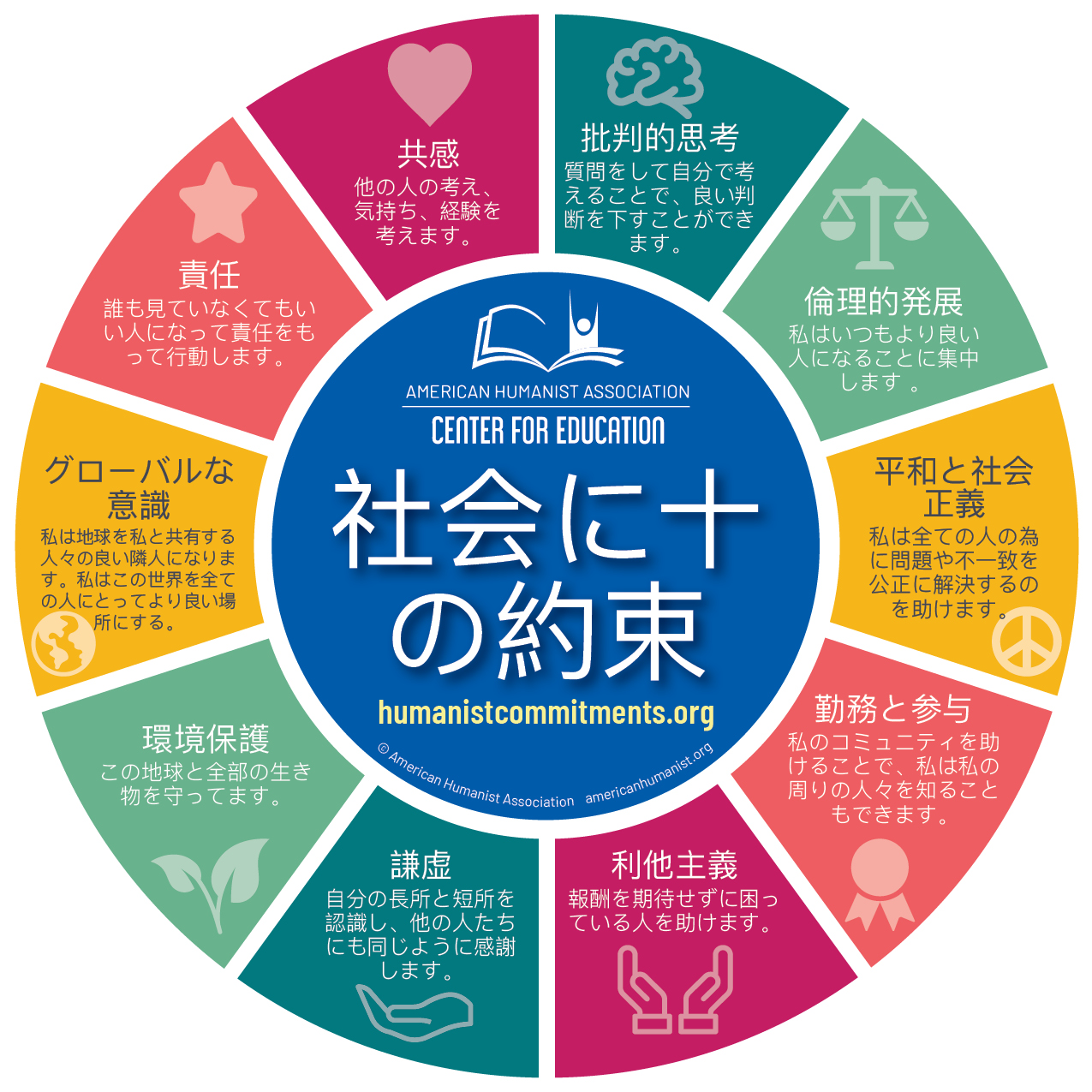
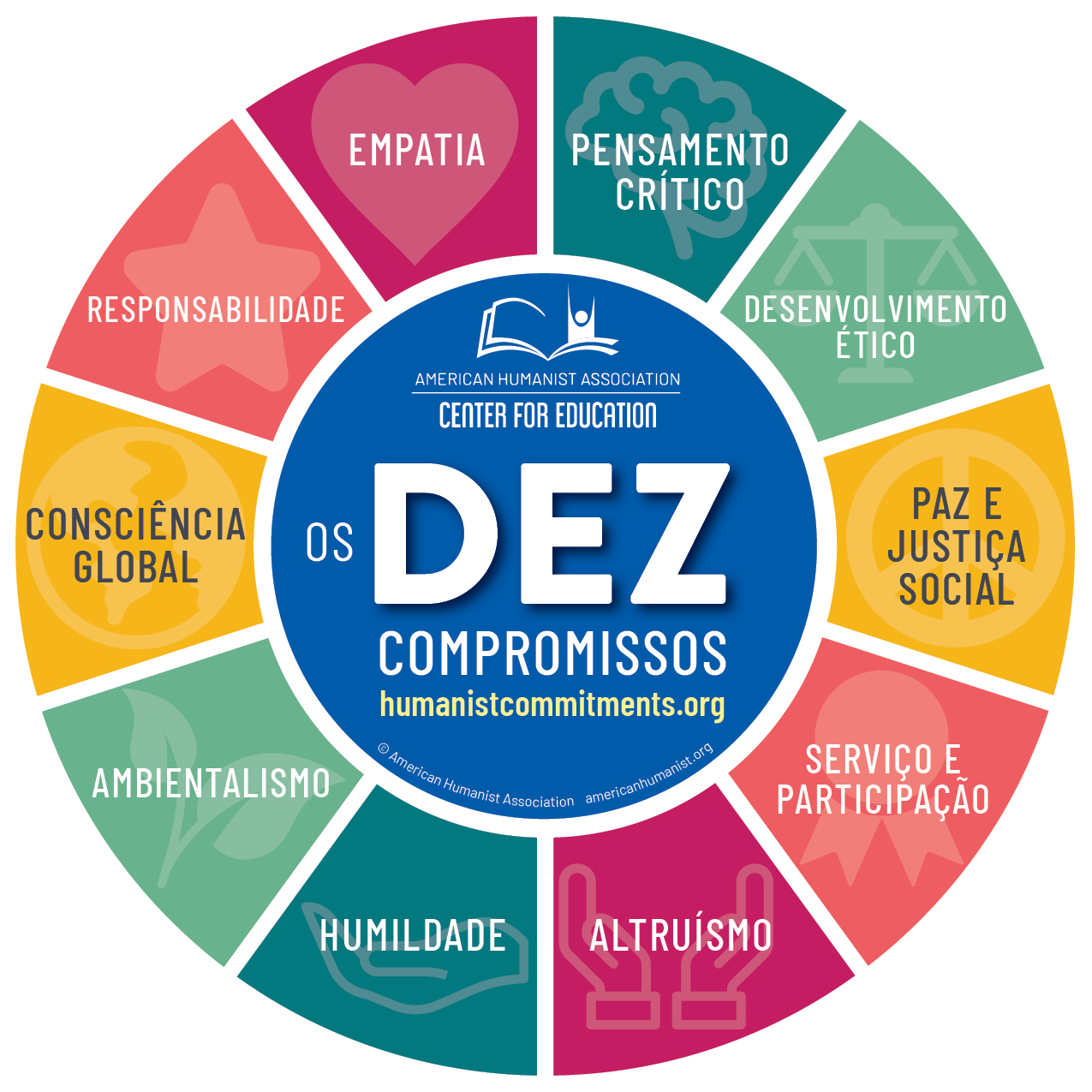
The Center for Education offers their10 Humanist Commitments art free to use and share. And the best part about it - the art comes in 12 different languages. 

Like Korean - below. 

If you have wanted to explain Humanism to others and want to cross language barriers - feel free to visit their excellent website - and download and share. 


Humanism - translated into 10 languages

 The American Humanist Association Center for Education has translated the 10 Humanist Commitments into 10 different languages.

If you want to learn more about Humanism or to help educate people about Humanism - "The Center for Education offers our 10 Commitments individual memes and “wheel” art free to use and share. The file types on this page are all high-resolution JPGs suitable for digital and print. To access the high-resolution version, right-click the image to download."

https://americanhumanistcenterforeducation.org/?page_id=19369


The languages this resource is available in includes:

English | Spanish | French | German | Portuguese | Swedish | Japanese | Korean | Russian | Bulgarian | Urdu

10 Humanist commitments in Japanese

10 Humanist Commitments in Portuguese

What's the point of being a Humanist?


As opposed to a nihilist or an absurdist or a detachment-ist – buddhist?


It's about how hard it sometimes is to live up to our ideas and to work towards positive goals. For me - she really captures the experience of lived Humanism when she says, 

"So, no, this isn’t about optimism, per se. This is more about… recognizing when you are tired, and fed up, and cynical, and hurt, and wounded, and angry–all conditions in which it seems reasonable just to stop bothering–and then to make a concerted effort to keep bothering anyway."

Being a Humanist - is bothering anyway. Mucking along and doing the best you can to be good and to do good. Despite it all.

Does this approach make life easier?  Actually - yes I think it does.  I even created an online course to help people figure out how to keep bothering anyway.
https://humanistlearning.com/livingmadesimpler1/

What is Humanism and why is it so hard to define?

This question comes up periodically.  And by periodically - I mean all the time. Why? Because people are always in the process of discovering (or rather re-discovering) Humanism.

So - here are a couple of old essays of mine to help you out.

First? What is Humanism?  Is it a religion? A  philosophy or what?

http://sumogirl.com/sumowp/what-exactly-is-humanism/

To quote myself:
"Ultimately how Humanism is classified isn’t all that important unless, of course, you are a person with an agenda that depends entirely on whether Humanism is a religion or not. And if this describes you, you need to get a life.  … My Humanist perspective is that it doesn’t matter what we call it. What matters is that we are all striving to be ethical, compassionate responsible people. "


Second: A really good definition of Humanism:

http://sumogirl.com/sumowp/definition-of-humanism/

To quote the article which quotes progressive living magazine:
"Humanism is an anti-authoritarian philosophy that emphasizes the importance of reason and the indispensability of both evidence and compassion for others in the formation of values. Contemporary humanistic morality judges acts primarily on the basis of their affect upon other human beings. Humanists believe that the purposes of life are found in the meeting of human needs -intellectual, emotional, and spiritual-and in the fulfillment of human capabilities, mental and physical."


What are the main elements of Humanism?

http://sumogirl.com/sumowp/main-elements-of-humanism/

And again - for those with no intention of linking through to the actual article this list is from the Amsterdam Declaration:

1) Humanism is ethical
2) Humanism is rational
3) Humanism supports democracy and human rights
4) Humanism insists that personal liberty must be combined with social responsibility
5) Humanism is a response to the demand for an alternative to dogmatic religion
6) Humanism recognizes the transforming power of art – and the humanities
7) Humanism is a life stance

Elements of Humanism

I recently gave a talk to a Humanist group in Tallahassee.  We discussed the elements of Humanism and why they are included in the definition.

The American Humanist Association defines Humanism as a progressive philosophy of life that, without supernaturalism, affirms our ability and responsibility to lead ethical lives of personal fulfillment that aspire to the greater good of humanity.

Humanism is Progressive


We think we can do better - and that we should do better. We can always make progress and should never stop trying to make things better.

Humanism is without supernaturalism

This is more pragmatic than theological. We want solutions that actually work so we look for evidence to prove that things work. As my friend Edgar Mitchell once told me - there is no such thing as supernaturalism. If something happens - it is by definition, natural. There is no need to ever appeal to supernaturalism. People who do - just aren't willing to admit that they believe something that has no factual basis to support it.

Humanism is about Human Agency - we have the ability to make the world better.  


You don't have to be a victim of fate, you can do something to make the world better.


Humanism is about taking responsibility to make the world better. 


You are the change you want to see. Do it - be it and don't wait for others to make things better. It's your responsibility.

Humanism is about living an ethical life


The way to make the world a better place - is to be a better person.

Humanism is about personal fulfillment

 Life is to be lived. You have this one opportunity. Don't waste it. To paraphrase Albert Camus - if there is a sin in life, it must surely be hoping for another life while ignoring the implacable grandeur of this one. Live Life Fully!

Humanism is about working for the greater good of humanity. 


I lost count of how many times I used the word - "better" in this post.  Make the world better. Be a better person. All of this combines into helping the greater good of humanity. We strive to be ethical - not just for ourselves, but because being ethical contributes to the greater good of humanity. The idea that it's us vs the world is a false dichotomy and a dualistic way of viewing the world. We are the world. When we help the world, we are helping ourselves.

So live life fully, love other people and leave the world a better place. 


The meaning and legacy of Humanism

Did you know there are debates about Humanism? What it is? Why it matters?  There is even apparently a high profile debate about the definition of Humanism that I was told really was important as it was influencing a lot of people.

I was not even aware this debate was happening. It certainly wasn't influencing me. And the people I influence and meet - never asked me for my take on it either. So in my corner of the world of Humanism, this debate was non-existent.

But I was given a link to the discussion - which is quite collegial. I read it - and I loved it! And am sharing the link here:

https://secularhumanism.org/2018/04/cont-the-meaning-and-legacy-of-humanism-a-sharp-challenge-from-a-potential/

Basically - a guy who I've quoted before in my recent post about free-will and Humanism - http://humanisthappiness.blogspot.com/2019/06/free-will-and-humanism.html  defined Humanism in a way that a philosopher who specialists in Humanism at Carnegie Mellon University didn't like.

When I read the debate - I found I agreed with both of them and that I thought they were talking past each other. Or rather, one of them refused to accept that the other was talking about.

Yuval Harari defines Humanism correctly. So does AP Norman. So - what gives? How can they both be right.

Humanism isn’t just the modern movement. It also refers to people who study the humanities and renaissance scholars etc.  This is an ongoing problem we are always going to have because we can’t change history. The term Humanism refers to a lot of different things.

It is usually enough to say – we are talking about movement Humanism (with a capital H) and not academic humanism (lower case h).

I also think Yuval’s critique of Humanism both capital H and lower case h is valid. Movement Humanism is constantly evolving for exactly the reasons Yuval points out. When we find out we made a mistake – we attempt to correct it.

It’s a great dialogue.   I don’t see why it should cause any fear that our movement is being maligned when he is doing the exact opposite.  Pointing out potential inadequacies.  The way I view these sorts of conversations is 2 fold. 

1 – when someone has these critiques – it means they are interested and aligned with the philosophy of Humanism (capital H) and are allies.  Like when people worry that Humanism is a form of speciesism.  They get it. And they are right to be worried about speciesism. I am too – as a Humanist.  We are aligned.  That gives us a basis for collaboration.

2 – the number of people engaged in this debate is super small.  Most of humanity is totally unaware it’s going on and are not influenced by it at all.  Instead of worrying about the small number of people who might get the wrong impression because they conflate humanism with Humanism, understand that Humanists will always have to distinguish ours philosophy from the other forms of humanism and that shouldn’t freak us out. We should instead welcome those conversations and use those other uses of humanism as a way to explain and educate people about how we practice our Humanist philosophy.

In other words, we should be focused on educating the masses instead of worry about an argument 10% of the population is attending to.

How can humanism affect people's lives?

Humanism is a personal philosophy of life that without supernaturalism affirms our ability and responsibility to lead ethical lives of personal fulfillment that aspire to the greater good of humanity.

I can only speak to the benefits I personally received from practicing this philosophy.
  1. I feel connected all the time. I am biologically related to all life on earth and chemically related to the universe.
  2. Additionally - I view all of humanity as my brothers and sisters and related family. Everyone I meet, I am inclined to like - because I view them as part of my family. The result is I am at ease with people I meet and I don’t live in fear of other people. I just enjoy their company - whoever they are and for whatever length of time I am in their presence. The level of contentedness and connectedness this gives me is - really comforting.
  3. I feel satisfied and like I am a success in life, because - most of the time, I live up to my values and ideals and because I feel so connected to people and the universe - I just - feel stupid happy contented bliss - most of the time, even when things aren’t going well. And no - I don’t take drugs - this just appears to be an after effect of feeling so connected.
  4. I think my problem solving is improved. By rejection supernaturalism entirely - I can focus on finding practical solutions to my problems. I also don’t spend any time waiting on supernatural interventions. If something is wrong, I need to fix it - because - if I don’t, who else will?
  5. I don’t experience interpersonal problems in the same way as other people do - I don’t think. Because I view people as family members, I approach disagreements - not as conflicts, but as disagreements that can be rationally resolved. And because I am not in fight/flight mode with people I disagree with - I just - don’t get into conflicts with people.
  6. When people are in conflict with me - I almost never notice it. It’s just not a lens I view interactions through anymore. So - when people are in conflict with me - they end up having a 1 sided fight, because - I don’t fight them. And when I finally do realize that they were trying to get me to fight them - I laugh. Because it’s silly to fight over nothing. And it’s almost always over nothing.
My conclusion is - Humanism helps me to lead a happy fulfilling life that aspires to the greater good of humanity. The effect it has had on my life is extremely positive. So positive, I do believe it is a superior way of living.

If you want to learn more about Humanist life skills and approach - consider taking my living made simpler course: https://humanistlearning.com/livingmadesimpler1/

Or get my book: The Humanist Approach to Happiness - https://humanistlearning.com/the-humanist-approach-to-happiness-book/


Project Human

Capitalizing Human. Making it your primary identification. A statement of Humanism. 

Whenever I get edited, editors try to put "Humanism" as a lowercase "humanism."  I insist on it being capitalized - as you would capitalize Christianity, or Islam, or Buddhism.  It's a proper identity and should be treated as such.

The group - Project Human - feels the same way about the word, "Human."  And I agree. Human should be our primary identity - that's why I am a Humanist.   Here is a video about turning Human into a proper noun. 


And a link to their website: https://www.capitalizehuman.org/

Talking about Humanism - in all it's forms

I had the pleasure of speaking with Damien AtHope - who is an axiological atheist, which means - he's an atheist who is primarily concerned with values. And - the values he lives by - are Humanist values.

We spoke for about 1 1/2 hours about a lot of things. Art, Science, Our journeys to Humanism. Our hopes for the future and more.

Check it out.


Leo Igwe - On Humanism

Video of Leo Igwe - on Humanism - really powerful discussion on why we need to be courageous and willing to take responsibility for our own lives.

Leo Igwe works to end a variety of human rights violations that are rooted in superstition, including witchcraft accusations, anti-gay hate, caste discrimination and ritual killing in Africa. I have corresponded with him for years - this talk - is wonderful. He talks about why Humanism is important for human progress.


If you want to learn more about Humanism as a philosophy:

To learn more about how you can help promote Humanism worldwide - visit: http://iheu.org/


What is Humanism?

All paths lead to Humanism. Well, most of them anyway.

Humanism is a very organic philosophy. What I mean by this is that people figure it out on their own. They don’t need to be explicitly taught this way of being. All it takes is a little rational thought and a desire to be good and to do good in the world in the absence of religion and most people will come up with a philosophy of their own very similar to what we now call Humanism.

When I was growing up, we didn’t have a word for it. We just called it being a good person. It wasn’t until I was an adult that I realized what my parents had taught me had a name.  My experience isn’t entirely unique. More and more kids are being raised without religion.

My favorite Humanist Books

This may come as a shock, but I am not the only Humanist educator out there. Shocking, I know. Here is a list of some of the books about Humanism I think you should read if you are interested in learning more about Humanism.

(You can get more information on these books and other books about Humanism here: https://humanistlearning.com/category/shop/humanism101/?submit=View)


Of course – I also recommend my books:


7 Principles of Humanistic Leadership

Humanistic Leadership is an ethical philosophic approach that is at once: compassionate, reasonable and strategic.

Humanism as a philosophy is about doing good to be good. And that’s not easy to do because our behavior impacts others. We don’t live in a vacuum. And when we are in a leadership position, we have even more responsibility to do good, not just for ourselves, but for our team as well.

Being good is not easy to define because to be good requires so many different interrelated skills. So here is a list of 7 principles of humanistic leadership that will help you, as a leader, make better decisions, have more effective interpersonal relationships and feel more fulfilled.

1) Humanistic Leaders treat people with respect. Other humans are autonomous beings. They aren’t robots you can program. Understand that even if you pay them, they have volunteered to help you in exchange for that pay. They can quit anytime.  Respect their time and their effort.

2) Humanistic Leaders are compassionate. They never forget that the people they are working with and for are real people with real strengths, real weaknesses and, most importantly, real emotions.

3) Humanistic Leaders are ethical. They don’t just give lip service to their values. They actually live them and lead by example. No one wants to follow a hypocrite.

4) Humanist Leaders encourage their team to be the best that they can be. We all have limitations. But that doesn’t mean we can’t contribute to the best of our abilities. Humanistic Leaders look for ways to help people participate.

5) Humanistic Leaders are reasonable. They are willing to listen to dissenting views because they want to base their decisions on reality and not on assumption.

6) Humanistic Leaders are strategic. They review all their options, consider the  pros and cons of each solution and choose the one that will give them and their team the best chance of success.

7) And finally, Humanistic Leaders value service to others. Making the world a better place means making it better for the individuals who inhabit the world. Making a living and making the world a better place are not mutually exclusive. A humanistic leader seeks to do both.

To learn more about the Humanist approach – consider taking
my Principles of Humanistic Leadership Online course at: https://humanistlearning.com/principles-of-humanistic-leadership/

Or my personal development program:   Living Made Simpler – which discusses how to actively practice compassion and use critical thinking to make better decisions so that you can be the person you want to be. (https://humanistlearning.com/livingmadesimpler1/

Time Management

Time management techniques of a solopreneur – with big dreams.

I am a solopreneur because I am committed to being there for my family when it’s family time.  So – I have to schedule my day and not cheat my family. Otherwise, it defeats the purpose of running my own business.

To do this – I have to choose between must do tasks and it would be nice to do tasks. Yeah – lots of it would be nice to do tasks don’t ever get done. And that’s ok – because the must do tasks do get done.  For instance, right now – my focus is on content creation. I MUST get my CA edition of my workplace bullying program done. Can’t sell it if I don’t have it.  So – publicity efforts – like dong the tv and radio shows I really enjoy doing, are taking a back seat at the moment. And that’s ok. I will get back to them once the bulk of the bulk of the course content is created.

I organize my week based on tasks to do.  Mondays and Fridays I have to do client paperwork for my online courses. Monday is registration day. Friday is certificate of completion day, Wednesday is following up day.  Tuesday is a short day because my son has therapy and is out of school early. So that’s a writing day in the morning -or it’s when I schedule client calls.  Wednesday is recording day, that’s when I record video lectures, lessons etc. Thursday is client calls and writing and marketing.

My months are also similarly scheduled.

  • Beginning of the month – affiliate nurturing.
  • Middle of the month – blog post writing and column writings.
  • End of the month – newsletters.


Putting everything in a recurring schedule helps me to keep organized and ensure that the must do tasks do get done. Doing things like blog posts in bulk helps me to not be constantly distracted through the month. I do 2 month’s worth of blog posts in a couple of days and that frees my mind to work on other content for the rest of the next 2 months.   It also helps me to not get distracted when I see something I want to write about. I make a note of it and put it in my calendar to show up on my first day of blog writing. When that day comes around – I look through all my notes and decide what I want to write on. I am never at a loss for ideas.

OH – and in a similar vein – having a yearly content calendar – for themes I am going to address  - my marketing – specials etc are all tied to that calendar. It is very helpful to me for my organizing.  I know what I am promoting when. I can preview it for my affiliates and fans to get them excited. I’m not just making it up as I go along.

I have also automated most of my social media so that I can set them at the beginning of the week and then not have to check on it during the week – it just happens.  Same with mailing list autoresponders. Set them up and allow them to happen.

Yes – I still spend way too much time on Facebook – but who doesn’t. 

The hardest thing for me is actually calling potential clients when it’s time to do so. I always end up enjoying it and feeling good about it – but I’ve realized, I need help, so I’ve recruited a few commission only sales folks who believe in what I’m trying to build and so – that will get done with some more regularity because I’m at the point where my lead flow has outpaced my ability to follow up and nurture the leads properly.

My advice for the time strapped. Take some time to organize daily, weekly, monthly and annual calenders so that you know what to do when so that things don’t fall through the cracks.  This scheduling also helps you to automate what you do or give it to a virtual assistant to do. So – get help when you need it and be creative and generous about how you pay people.

Magazines and Learning

Why we still need magazines.

I love the internet. I’m pretty good at searching things out that I want to learn. But I still subscribe to a couple of magazines. Specifically the New Yorker and The Atlantic. I didn’t choose these. I was given gift subscriptions by someone (either my mom or dad – I’ve never been entirely sure since no one has told me – hey – I gave you a subscription – do you like it? – which makes me think it was my dad). 

Anyway – I love these magazines and as I was reading the New Yorker the other day I realized something important. Magazines help me learn about things I didn’t know I needed to know. The article in question had to do with the hunting of elephants for ivory and the possible extinction of the species and how this is tied to the funding of terrorist networks like Kony. (see: http://www.newyorker.com/magazine/2014/07/07/save-the-elephants)

And this is why I think magazines are still incredibly important. This is not an article I would have even thought to seek out or look for. I have blinders on. I’m doing research on specific subjects and that’s what I look for. I have a limited amount of time and I try to be efficient. But what this means is that I also am not exposed to issues and concerns outside my area of interests unless someone brings it to me to pay attention to.  And this is what a magazine – an actual paper magazine does for me. And yes, I do feel bad about the trees that died to help me have my magazines, but I hate reading long articles online – so whatever.

The same thing happens when I read the Atlantic. I’m exposed to reporting on things I had no idea were important, but clearly are.  I gain a deeper understanding of the interconnectedness of the issues and problems I am concerned  about. I learn things about science in my area of concern that I didn’t even know I should be paying attention to.

To me, healthy learning is broad based. We live in an interconnected world. I knew about elephant poaching, but had no idea how it was connected to criminal networks or how the money was being used.

I strive to be a citizen of the world and while I love the ability to find information by hopping online, the value of having others curate knowledge for me to introduce me to ideas and concepts I hadn’t even thought about is immensely valuable. And to fill that gap in my knowledge, magazines do a wonderful job. 

To continue to learn new things we have to be exposed to new things. Subscribe to a magazine and see what you have been missing. Here are my 3 favorite magazine subscriptions.


Real Life and Minecraft

Humanist philosophy of life when considering how Minecraft is like real life?

My son is addicted to Minecraft. One day he asked me what would it be like if Minecraft were real. So we went to YouTube to find a video on real life and Minecraft.  This is what we found.

And it’s really profound.  Minecraft has no story – no purpose – just like real life.  You can do anything you want. The purpose of what you are trying to accomplish in Minecraft is whatever you decide to do.  My son uses it to build replicas of famous monuments and forts and farms and trading posts and temples and libraries. Right now he is obsessed with Alexandria so he’s working on a lighthouse and a library and some underwater structures.

Does any of this matter in real life? No. When he logs off or deletes his account, it will all be gone.  Just like in real life.  Whatever we do will have no effect on the ultimate outcome.  Except, what we do does impact the people we are playing this game of life with.

To paraphrase Nullitron - Life is a sandbox game. You can do whatever you want and eventually, you will die or quit the game.  While you are there, enjoy it. Don’t worry about the time when you won’t be playing it anymore. And remember, while you might not be playing it anymore, countless others will, after you are gone. So try to make it a game where everyone can have fun.


Related Posts Plugin for WordPress, Blogger...