Showing posts with label business ethics. Show all posts

Embracing Humanistic Ethics: Overcoming Workplace Cynicism

My son is 18. He's still in high school but starting to think about entering the work world. He's cynical. Extremely cynical. He's absorbing messages about worker oppression and corporate exploitation. While I'm glad he knows what he doesn't want, he seems to think ALL workplaces are bad. And this simply isn't true. Not all workplaces are oppressive, some are, but most of the ones I've been in have been good places to work overall. I've worked with truly excellent people over the years. But this does mean that employers who are trying to do a good job - need to make sure prospective employees know this, because if my son is any indication, the next generation is not going to be willing to tolerate explotation in the workplace.


The Reality Check

I understand the concerns fueling workplace cynicism. Discussions about worker oppression are vital, shedding light on issues that need urgent attention. However, it's equally important to acknowledge that not all workplaces are exploitative. Let's challenge the stereotype and explore the reality of creating environments that prioritize humanistic ethics.

We need to find a way to eliminate bad workplaces and ensure that workers at all levels of society are treated with dignity and worth.


Defining Humanistic Ethics:

Humanistic ethics are the bedrock of creating a workplace that values individuals and their well-being. It encompasses fair treatment, transparent communication, and a commitment to fostering a collaborative and empowering culture.

All humans have dignity. Most humans want to contribute to their society. No human wants to be treated like dirt or that they don't matter. Young people want a better society. Those of us in positions of "power" need to make sure we help them create that better society.

Why Humanistic Ethics Matters:

Research consistently shows that companies embracing humanistic ethics experience higher employee satisfaction, increased productivity, and a more positive workplace culture. It's not just a moral imperative; it's a strategic advantage.

Contrast with Oppressive Practices:

To truly appreciate the impact of humanistic ethics, let's compare it with oppressive practices. While oppressive workplaces breed discontent and burnout, humanistic companies thrive on collaboration, innovation, and long-term employee loyalty.

Creating a Healthy Workplace

Proactive Measures:

Companies can take proactive steps to create a healthy, balanced workplace:

  • Implement employee engagement programs by making sure their employees are included.
  • Foster transparent communication
  • Ensure fair compensation and benefits
  • Provide opportunities for professional development

Collaboration Over Exploitation

Collaborative Culture:

A workplace built on collaboration prioritizes the collective success of its employees. It encourages open communication, idea sharing, and a sense of shared purpose. Mostly - it encourages employees to work together to get the work of the organization done. This requires inclusion and the treating of all employees as valued partners.

Success Stories:

Consider companies that have successfully transitioned to a collaborative, humanistic approach. The positive outcomes for both employees and the organization demonstrate the tangible benefits of prioritizing people over profit.

Overcoming Cynicism

Individual Empowerment:

Individuals can overcome workplace cynicism by actively seeking out companies with humanistic values. By aligning personal values with workplace culture, employees contribute to a positive work environment.

Changing the Narrative:

It's time to shift the narrative around work and employment. Let's focus on the potential for positive change through collective efforts, steering the conversation toward solutions rather than just highlighting problems.

Conclusion

As we navigate the complex landscape of modern work, let's hold onto hope for a future where workplaces are characterized by collaboration, fairness, and a genuine commitment to humanistic ethics. By fostering open dialogue and embracing a proactive mindset, we can contribute to a collective shift toward healthier and more fulfilling work environments.

Call to Action

I invite you to share your experiences and thoughts on creating positive workplace environments. Let's spread the message of humanistic ethics and encourage a broader conversation about the future of work. Together, we can shape a workplace culture that empowers individuals and fosters genuine collaboration.

Why are ethics so important?

Why are ethics so important? Because you can't make good decisions without them. 


Thinks about this. What is a good decision? Or a good solution?  Without defining what "good" means in the particular situation you are in, you cannot answer that question.

All good decision making requires the active application of ethics to decide between options. There is ALWAYS some metric being used to define good. Whether we are talking about a good hire, or a good customer or a good solution. 

If we don't actively and explicitly discuss what we mean by good, we a) have trouble creating consensus and b) often end up with bad results because we used bad ethics without questioning them.

Whenever I am on a team having a disagreement, my first effort is to ask questions. What is a good outcome? Or an ideal outcome? And most importantly - why. 

For instance, I was at a tower company, a good tower to the marketing team is a tower they can market. A good tower to the maintenance team was a tower that didn't require a lot of maintenance. A good tower to the financial team was a tower that brought in more cash flow than debt. 

Until we talked about the various differences in how the groups were defining good, we couldn't get consensus on this question. Once we did get clarity on the various versions of what good means, we could.

Now, I know what you are saying, but Jennifer, those aren't- ethics, like we think of ethics. But they are. They are closely related to them. 

Once you start discussing what good means, you can start bringing in the more moral aspects of ethics. Do this help or hurt the community? Does it help or hurt people in general? What about the climate?  These are all valid ethical considerations that should be integrated into decision making, both on a personal and a professional level.

So, stop worrying about whether you can discuss ethics. You are already. Or should be already. And don't be shy about bringing in moral metrics in addition to the business cases for what is good. Doing so will elevate the discussion. Engage people in the problem solving effort and make it collaborative. 

As always, I do have courses to help you learn this. My courses provide certificates of completion and are approved by HRCI and SHRM for continuing education credits.

Reality Based Decision Making for Effective Strategy Development - https://humanistlearning.com/realitybaseddecisionmaking/ - 1 hour business

Principles of Humanistic Leadership https://humanistlearning.com/principles-of-humanistic-leadership/ 2 hours 

Or become a certified humanistic leadership professional - https://humanistlearning.com/certified-humanistic-leadership-professional/


Do codes of conduct help people behave ethically?

 Whether and how do corporate codes of conduct for employees and codes of ethics for members of trade associations help organizations prevent or address crisis situations caused by their employees or members?

Short answer: Yes, but only if you use them.

Codes of conduct don’t prevent ethical problems from arising. They don’t stop unethical people from behaving unethically. What they do provide is a method to determine whether something is ethical or not and how to ethically deal with a breach of ethics.  Used correctly, a code of conduct is a code of ethics. If there is a problem people should invoke the code and ask, what is the ethical thing to do here. What is the ‘good’ outcome.  It is only possible to have an ethical discussion if there is some agreement on what constitutes good.

In order to be useful, codes of conduct have to be used. Not as a bludgeon, but as a way to focus a discussion on what is ethical and what is good and what to do about things aren’t are neither ethical nor good.

I am the founder of Humanist Learning Systems and a board member for the USA chapter of the International Humanistic Management Association. I am an ethical philosopher who teaches people how to apply their ethics in their daily lives and in their businesses.   

https://humanistlearning.com/


Elements of Value

 I talk a lot about how to integrate ethics into your work, whatever that is. I firmly believe it helps us all make better decisions when we do integrate our ethics.


The biggest challenge though, is what set of ethics. Most of us live and work in a multi-cultural environment. How can we be sensitive to religious and cultural differences in values and still, integrate ethics in our collective decision making. 

The answer? Use a secular set of ethics. It really doesn't matter which list you use. All lists of ethics do is help jump start conversations about what it is we value and why. It's ok that people value different things more than others. It really is. It's in the dialogue that understanding and collaboration and agreement on how best to move forward can occur.

If you ignore this aspect of decision making, you can end up making some really bad decisions and people won't feel as motivated or connected to the decision as they would if they understood the moral imperative of the decision whatever that is. 

There are several lists you can use. The good news is that there actually are common human ethics that most people share. I like the ones that don't treat ethics as a hierarchy.  The image above is the American Humanist Association list of 10 Humanist commitments done as a wheel. The wheel makes it easier for participants in a discussion to invoke their favorite ethic or an ethical value they think applies and discuss it in conjunction with the other values.

My friend Elizabeth Castillo shared with me Bain's list of 30 Elements of Values. There is a really cool interactive graphic for this at their website and again, this list can help your team or group discuss which values they think are applicable in a way that is inclusive of everyone. https://media.bain.com/elements-of-value/#   Here is a link to a talk she did on this topic: http://humanisticmanagement.international/rethinking-resources-a-path-to-more-humanistic-management/

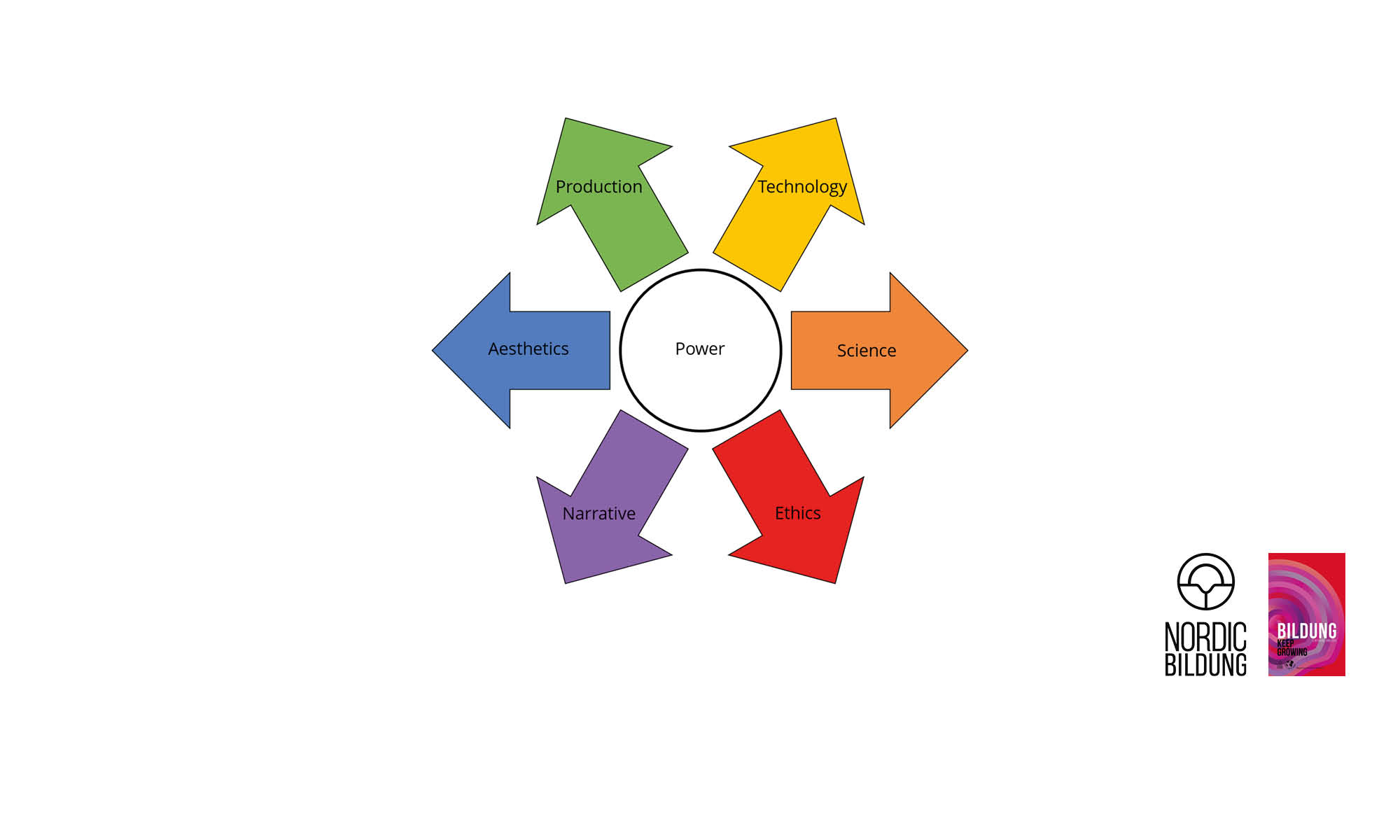
Another great resource is the Bildung Rose as created by Lene Rachel Anderson. These are integrated ethics that help with decision making and ethical judgement. And again, it's in a rose form because the idea is to balance the values. Here is a link to her talk on this which in turn, links to her website: http://humanisticmanagement.international/using-the-bildung-rose-as-a-strategic-diagnostic-tool/

Moral Independence and the Bildung Rose Model

 I got to interview Lene Rachel Anderson of the Bildung Rose Group about her moral model, the Bildung Rose. 

Bildung is the German idea of self cultivation.  It's a model of human moral development.  The Bildung Rose is a tool developed by Lene Rachel Anderson as a way to help us all think about the moral interconnections between different aspects of society, culture and corporations.  In other words, it's a really cool way to think about applied humanistic management. 


Here is a link to the video and to the resources Ms. Anderson talked about during our interview: http://humanisticmanagement.international/using-the-bildung-rose-as-a-strategic-diagnostic-tool/

My takeaways:

Basically, our moral development as humans moves from childhood, where we are largely emotional beings to our teens where were become rational beings to adulthood where, ideally, we become morally independent beings. 

It is when we become morally independent that we get TRUE freedom. Before then, we are limited by our emotions and the limits of our reasoning. Think of becoming morally independent as a state of enlightenment where are emotions and our rational selves are fully integrated and we can think independently of others about what is moral and not be swayed by immoral people. Freedom!

The Bildung Rose is a really helpful to me for organizing and integrating my thinking by helping me to explicitly list all the various things I should take into account when engaging in moral reasoning.   Here is a link to the website and the rose: http://bildungrose.com/  She explains it in the video which is linked above. 

The cool part her model was the fractal nature of the rose she uses to illustrate the tool. This can be you as an individual, you in group, the group in community/company, the community in state, state in country, country in world.  At all levels, the elements of the rose are in play. The challenge is, to balance them. 

What helps integrate the elements of the rose is the bottom part, narrative and ethics. It is what helps us want to make sure our thinking is inclusive and holistic. And this in turn, helps us create better outcomes and better more holistic solutions and yes, this is directly applicable to workplaces and problem solving in a business context.

The other thing I liked is that she is sure that when talking about ethics companies should bring in philosophers to help lead these discussion.  So – bring in me!


Rational, Responsible and Reasonable Ethics

 Wouldn’t it be nice if every decision we made was rational, responsible and reasonable?  Of course it would. The problem is that figuring out what the rational, responsible and reasonable thing to do isn’t always easy. And despite our good intentions, getting a group to agree on the best course of action is even harder to accomplish. 

The challenge is how to integrate your ethics into your decision making in a way that helps you make better decisions that will reflect your values and allow you to be the sort of ethical, compassionate and responsible leader you’ve always wanted to be without getting into arguments with others.

Step 1: Create a list of ethics you value most. You can get this list from your faith tradition or from the 10 Humanist Commitments. https://americanhumanistcenterforeducation.org/?page_id=19369

Note:  Most people regardless of backgrounds - value the same things. Just understand that in a secular workplace - you must focus on the shared common human values and not on personal religious values like - obedience to God.  Focus on the common public values and not on your personal religious specific values. The religious reasons why you value these things is a personal matter - that you value them - is a public matter as it tells others what to expect from you.

Step 2: Sort the values based on what you think is most important.  Think of this as creating a priority list on how to break ties when more than one value is in conflict with another value. Which ones win out?  Studies on global ethics find compassion is highly rated - as is personal responsibility and honesty for instance. The point is to understand which you think is most important. 

Step 3: Start actively talking about - what good outcomes are - based on your chosen public values.  Is this solution compassionate? Responsible? Honest? How can you maximize the good that comes out of a decision and minimize the harm?  This is the actual practice of using your values explicitly in your decision making. 

Step 4: The final step is to make sure- you are making your decisions based on - accurate information.  This requires humility - which is hopefully - one of your values.   If you make decisions based on bad information - your decisions will be bad - not good. To make sure your decisions are good - you have to make sure you have good accurate information - which means - accepting that what you think you know - may not be so. And being willing to correct yourself when you make a mistake.  Learning how to determine what is true and what isn't - is an important life skill.

Want to learn more:

I have online courses that will teach you how to do this better. The first is:

Reality Based Decision Making For Effective Strategy Development - https://humanistlearning.com/realitybaseddecisionmaking/

Or consider taking one of my certificate courses in Applied Humanistic Leadership - https://humanistlearning.com/category/businesscourses/professionaldevelopment/certificateprograms/


Building Trust - a benefit of a well run whistleblower program

A company that runs whistleblowing software for companies to use - surveys their customers regularly.  One of their findings is that the system builds trust.  Here's how.

First the link:

https://acfeinsights.squarespace.com/acfe-insights/2019/4/22/new-survey-building-trust-the-main-benefit-of-a-whistleblowing-program

From the article

"The key purpose of any whistleblowing system is to enable companies to detect and act on misconduct before it causes too much financial and reputational damage."

The reason companies who take whistleblowing seriously - increase trust in staff is because - people who are unethical are exposed and fired before they can do too much damage. with unethical people not infecting the workplace, the remaining workers are freed up to trust each other because - they can  - because the people they work with are - trust worthy.

The work I do mostly centers on ending bullying and harassment, but according to their survey most of what whistleblowing systems catch is fraud and financial crimes. There are good reasons to put a whistleblowing system in place.  The challenge - is to make it work so that staff do trust the system.

Their advice?  The whistleblower must receive anonymity. This means - staff in charge of investigating the allegations - don't actually need to know who the whistleblower is - to validate whether the allegations being made are true or not. What matters isn't who blew the whistle. What matters is whether or not the allegations are true.

Given the increase awareness we all have about the importance of whistleblowers, we would all do well to remember that.

The second part of the system is to have good people who are empowered to investigate allegations and processes in place to handle reports.

I would add - finally - you need upper management committed to ethical business practices so that when their whistleblowing team tells them they have a problem - they act to get rid of the offender rather than protect them.

What I can help with is training on how to create behavioral training systems to help you better respond to allegations that are made: https://humanistlearning.com/category/bullyingharassment/

How to build a thriving work culture

The key to creating a thriving workplace culture - is to be specific about what the values of this - thriving culture are. What are the values you want people to exemplify in their work and with each other?  This is why Humanistic Management is so important.

The number 1 tip – is to integrate ethical questions into every discussion.  What is the moral and right thing to do here? What is a good – and ethical outcome of this situation?

When people talk about workplace culture – they are really talking about morality and ethics. Which is apparently missing – or we wouldn’t be talking about culture.

One way to get an ethical workplace culture – is to make talking about what is ethical and good – part of the normal business practice and you do that – by asking the question – what is the moral thing to do.  Whether it has to do with helping a customer or figuring out how to get energy for your company, make sure to talk about ethics.


I teach humanistic business management and am the author of the new book – Applied Humanism: How to create more effective and ethical businesses. http://humanisthappiness.blogspot.com/2019/08/my-new-management-book.html


My new management book

I published a new book for Business Expert Press edited by David M. Wasieleski, Professor of Management & Business Ethics in the Palumbo Donahue School of Business at Duquesne University. 
The book is called: Applied Humanism - How to create more effective and ethical businesses. This book provides a short introduction to the philosophy of humanism and discusses how and why it is being applied to business and why it is so effective when you do so.

Review:

Chris Laszlo - of the Weatherhead Institute - has already read it and said,
 "I just finished reading your new book, Applied Humanism. I loved its clarity and straightforwardness. In many ways the writing is deceptively simple: the concepts and their applications are universal in appeal yet subtle in their implications for living and working in today’s world."
You can’t understand humanistic business management unless you understand what humanism is. This book provides a short introduction to the philosophy of humanism and discusses how and why it is being applied to business and why it is so effective when you do so. Humanism helps us prioritize human value as important. It supports positive interpersonal relationships and collaborative and respectful decision-making. Since all businesses are in the business of solving problems, good problem solving is essential to good business.
Humanism has already transformed many other disciplines including psychology, medicine, nursing, and more. Additionally, humanism is foundational to the practice of human resources, without which businesses cannot operate. It is important for business managers to understand the philosophy fully so they can understand how to not only manage people more effectively, but how to operate their businesses in a way that helps the communities in which they operate. This book will provide the primer they need to create more effective and ethical businesses.
This book can be purchased at amazon as a kindle or paperback book: https://www.amazon.com/Applied-Humanism-Effective-Ethical-Businesses/dp/1949991423/
If you are interested in using the book in a course please visit Business Expert Press and request a desk copy: https://www.businessexpertpress.com/books/applied-humanism-how-to-create-more-effective-and-ethical-businesses/

The book is divided into 4 sections

  1. Introduction to the philosophy of Humanism (Philosophy)
  2. Applying Humanism to the Business of Business (Integrating Ethics into Decision Making and Interpersonal Relationships)
  3. Problem Solving Like a Humanist (Strategy and Decision Making)
  4. Case Studies – Applying Humanist methodology to problems liked Diversity & Inclusion and Harassment problems in the workplace.

What is evil – business edition

To be evil is to be profoundly immoral. It’s not just about lapses in judgement, it’s about intent. Not caring who you hurt or that you hurt others.

In business, as in life, there are people who are profoundly immoral. They use their businesses to enrich themselves and hurt others.  These are not good businessmen. They are “evil” immoral businessmen.  They are the people who give capitalism a bad name so that we now associate capitalism with exploitation.

It doesn’t have to be that way. Most people are basically moral. Some people are super moral. Most people go along with the flow. Many people are opportunistically immoral but only a small number are profoundly immoral.

We need to be aware of how we, as humans, respond to the leadership around us. It is well known that most employees mimic the behavior of their bosses. The boss sets the cultural expectation and employees set out to meet it.

If a boss bullies, the staff bullies. If a boss steals, the staff steal. This doesn’t make the copy cats profoundly immoral, they are just adjusting themselves to the cultural expectations of the organization they find themselves in.  They themselves may be moral, but their sense of right and wrong is adjusted based on the group they are in. Some research to understand how group think works.  http://www.psysr.org/about/pubs_resources/groupthink%20overview.htm

Before you think – couldn’t happen to me – it could and it probably has. After all, if you were brainwashed would you even know it? Most of the time, brain washing and group think is only obvious to an outside observer. It is the rare individual who doesn’t succumb to peer pressure and group think maintaining a sense of self to the point they can stand against the group and the pressure the group exerts to maintain the faulty views they have.

Bad bosses and bad morals lead to bad decisions. It benefits us all to make good decisions and to do that, we need to get rid of people who are profoundly immoral who are steering us off course.

Good leaders take care to make sure that they don’t fall into group think traps. Not just because it’s the right thing to do but because they know how easy it is to get manipulated into doing bad while thinking you are doing good.

The main thing we all can do to defend ourselves from becoming victims of group think in favor of a profoundly immoral individual is to be skeptical.  Play devil’s advocate with yourself and others.


Verifiable Business Ethics

Do your business ethics result in veritably good outcomes?

My friend August Berkshire said, “When it comes to deciding what is ethical behavior, all actions should be based on verifiable consequences.”  I think this is a very good rule to live by.

Ethics are our values. They help us make decisions by helping us to define what a good or bad outcome is. If we don’t based good or bad on – the outcomes, then we risk doing bad things for good reasons.

One of the reasons Humanists focus so much on science based problem solving and reality based problem solving is because we want to make sure our actions are good, not just in intent, but in outcome.

When business leaders talk about metrics, they are talking about verifying outcomes. All I ask is that you add a moral metric to your decision making as well. Is this outcome good, not just in terms of money made, but for the people doing the work and the customers as well.

To learn more:


Meaning & Purpose in Business

If you want to have more meaning and purpose in your business life, start by thinking about your values.

Ethics and values are critical to understanding meaning and purpose.  Your values help you figure out what it is that matters to you. When you know what matters to you, it becomes easier to make decisions in support of your values. This is true whether you are talking about your personal life or your professional life.

In the day to day hustle of just getting through the day, it is easy to lose sight of what you value. This is one of the reasons why people struggle with work life balance, relationships, and satisfaction and engagement at work.

At some point, most of us need jobs, mostly so that we can afford to have shelter, food and medical care. But what happens when the only jobs available cause harm to others or are exploitative?

I’ve known people who have left high paying jobs, because they didn’t want to be involved in making weapons. It just wasn’t worth the money to them anymore.  I’ve also known people who stayed at jobs that treated them badly because they needed the money.

Work is moral. Our choices, to either support or enable bad behavior or businesses that run counter to our values impacts the sort of world we live in.

The point of Humanistic Business Management isn’t just to encourage better treatment of the humans working for businesses. It’s also about what businesses do for business and in the course of conducting business.

Is the product or service net beneficial to humans and the world in which we live? Or is it harmful?  Does the company acquire the resources necessary to create the products and services in a comprehensively ethical way or not?

Think of humanistic business management as being concerned with three levels of business simultaneously. It is concerned with the problem being solve, how the problem is being solve and ultimately the impact this business has on all the people impacted by the business (workers, employers and clients).

Do you currently feel like your work has meaning and purpose? If not, what do you plan to do to change that?

To learn more consider taking: https://humanistlearning.com/workplacemeaningandpurpose/

Protecting your reputation

When being a good person isn’t enough.


I consider myself to be a good person. Like everyone, I have my moments where I’m not the kind compassionate person I am normally, but those are the exception, not the rule. Our reputations in the workplace impact how we interact with our co-workers and what sorts of promotion opportunities we are given or if we are given them at all.

To make matters worse, in every walk of life there are people who will try to destroy your reputation. For whatever reason they just decide that you are a problem for them and they either spread rumors or lie or bully or demean. All of these tactics have the same goal, to get other people to not trust you or look up to you so that the bully can get access to the resources that would normally go to you. They now go to them.

It isn’t enough to be nice in these situations. Yes, you do have to be nice, but being nice doesn’t mean not protecting your reputation.  But how you do that will impact how other people perceive you.
If you fight back, you are just as bad as the bully.

If you do nothing, you are meek and weak.

The sweet spot is to stand up for yourself professionally.  You can do this in a way that makes it clear you won’t tolerate bad behavior, but that you aren’t the problem and you aren’t contributing to the problem.

When people attack our reputations, it is startling. We aren’t sure whether other people believe us or the person smearing us.  When I counsel people on how to get through this they are amazed that I tell them they don’t have to defend themselves for smears. Standing up for yourself doesn’t mean getting into an argument about whether or not you are horrid. You aren’t, so you don’t need to defend that.

What you need to do is make sure that you don’t cocoon yourself. If you are attacked directly have something prepared to say that is polite but makes it clear that rumor mongering isn’t tolerated. Something like – in this office we treat people with respect. And smile and make eye contact. It’s now the other person’s move. You haven’t attacked them, just reminded them what a professional interaction is like.

If they are accusing you of not getting things done, start covering your patootie. Put out memos of what you understand the verbal agreements to be. And then follow through.  It won’t take long for the people around you to notice that you are behaving and the other person is not.

Finally, don’t assume that just because your co-workers don’t stand up for you that they believe the bully. People have been conditioned since childhood to keep their heads down around a bully. When you stand up for yourself, people will notice. Trust that they can see what you can see.

If you want to learn more – consider reading my book: The Bully Vaccine or taking my online video course – Ending Harassment & Retaliation in the Workplace.

Order Out of Chaos: Business Ethics and Priorities

Business Ethics and Priorities: a lesson in humanistic management.


In a previous post I discussed how business ethics and human ethics. http://humanisthappiness.blogspot.com/2015/10/business-ethics-are-human-ethics.html  I want to expand on this concept here.

It isn’t enough to have a set of ethics and values. You have to live by those ethics and make decisions consistent with those ethics to be an ethical person. How you choose to act matters.

Deciding how to act and what to work on is where things get complicated. This is especially true in business.

I’m an entrepreneur. I have a lot of demands on my time. In order to be effective, I have to choose what I work on and what I don’t work on. The ONLY way I can make such decisions and have those decisions help me and my business and my customers is if I have my priorities straight. And the only way I can have my priorities straight is if I have my ethics straight.

I can’t create order out of chaos unless I have a firm grasp of my ethics. My ethics dictate my priorities.  In my case, my family comes first, then helping others through my business. What I am looking for is balance.

I think the thing people have trouble with is that they think of ethics in black and white terms. Either something is good or something is bad. Those questions are easy to decide. Where morality requires extra thinking is when we are forced to choose between the greater of two goods or the lesser of two evils.

What causes problems in our personal and professional lives is when we are confronted with a variety of tasks, all of which are good. How do we choose?  Of what do we do when all of our options are bad?

The chaos in our lives almost always occurs when we are confronted by these greater of two goods or lesser of two evil situations and we chose not to choose.  Some people just can’t say no to a good request. So they become overwhelmed by the demands placed on them. They aren’t capable of saying no or prioritizing between the greater of goods. They have chosen not to prioritize their lives. And they live with the chaos that results.

We also get stuck in chaos limbo overload when all our options are bad. So we choose to do nothing. And instead of working our way out of the bad situation we find ourselves in – we live with a status quo that sucks.

Not choosing is a choice. Not prioritizing is a choice. If you want to create order in your life, you have to step up to the plate and start making decisions, even when the decisions are hard. Do your best. Set your priorities as best you can based on your ethics and see what happens.  It’s very rare that a decision can’t be undone if you change your mind later.

What I can tell you is that based on my personal practice, making choices helps me stay sane. I rarely know if the decisions I made are the right ones. It’s more that they are right for me in that moment. What I do know is that despite the chaos around me, I feel centered. Most of the time. And that’s at least something.


Business Ethics are Human Ethics

The rules are pretty simple really. Treat other people fairly. Don’t cheat, steal, lie or cause harm to another person.


Most people play by these rules. They are good rules.  If other people are honest in their dealings with you, things are pretty good.

The reason we have to keep clarifying what is ethical and the reason we have to discuss it is because some people like to cheat to gain an unfair advantage. They view life as a competition and compete. And that’s not an entirely bad thing.  A competitive streak helps us strive to be better and to do better.

But even if we are just playing a game of Candyland, even the most cutthroat game of Candyland (and yes my family plays by our own rules - http://stuffjenlikes.blogspot.com/2012/07/hancock-house-rules-candy-land.html), we still have rules we have to follow.

The rules make sure everyone is treated the same and has the same chance of success. People who cheat rob others of the chance to succeed. It does real harm. Well, not if you are playing Candyland, but real harm if it’s in business. You get my point.

Ethics only really becomes complicated when people bend the rules a bit to see if they can get away with a little cheating. If caught, they argue, well, it wasn’t exactly against the rules, even if it was against the spirit of the rules. We as a society then have to employ lawyers and judges to judge and rule whether what happened was technically against the rules or not. (I don’t entirely understand the lawsuits involving the NFL at the moment, but my husband assures me, it’s about this sort of skirting the edge of the rules to gain an advantage sort of behavior by all parties.)

What I want to encourage you to do, as a human being, is to understand this: business ethics are human ethics. If you would consider it unfair if it happened to you, it’s unfair and therefore unethical, even if it’s technically legal.

And no, I do not respect those who bend the rules to their advantage. Just as I would consider such a person a cheater if I was playing a board game with them, I consider them a cheater and unethical if they employ such rule bending tactics in the world of business. Such behavior robs other people of the opportunity to succeed.  If you can’t win by playing fair, then maybe you don’t deserve to win.

Ethical Interactions

A true leader is someone other people want to emulate. Treating other people with respect is step one.


There is a lot of discussion about ethical leadership.  We want our leaders to be ethical. But what does that really mean?

Ethical leaders are people who make ethical decisions, certainly. But it’s also about how they interact with and treat other people.  And this is really the big secret about ethics. Ethics isn’t about how we should behave. It’s about how we want other people to treat us.

If people are honest with us, it makes our lives easier. If they consider us as someone worthy of basic justice, it makes our lives easier.  If they treat us with respect, it feels great because we know, they are less likely to lie, cheat or steal from us.  Ethics is about us, and our goals dreams and desires and how WE want to be treated.

When you understand this, you begin to understand how important it is to extend the same sort of respect you want to others.  And yes, this is a lot like the golden rule. Treat others as you wish to be treated. But it goes deeper than that.

The reason to make sure your interactions with other people is ethical is not just because you should. It’s because these other people have a choice. They are autonomous and want to be treated with respect to and ethical people don’t tolerate unethical behavior for very long. They will not want to hang out or do business with you if you yourself are not ethical! Plus treating other people ethically also makes you feel good. Being ethical is something you do for you because it’s how YOU want to be treated. I really don’t understand why people choose otherwise.

To make sure your interactions are ethical, start by considering whether you are approaching other people with respect.

Ethics are grounded in respect. Every human rights document and Humanist manifesto starts with a foundational statement that every human is worthy of dignity and respect. This is not just a catch phrase. It actually means something pretty important. Every person you meet, everywhere in the world is a real person and they are worthy of the respect that you would give to any fully autonomous human. When you get this, it changes everything.

When we don’t consider other people as fully autonomous, we tend to see them through the lens of our own needs and wants and that’s not only not very respectful, it’s also not very effective and it can causes us to put our own needs, wants and desires above the other persons. And that is what leads us to behave unethically.

In contract, when you recognize and respect the autonomy of other people, your expectations for them change. They are no longer someone who either helps you or hurts you. They are someone you are hoping will help you and not hurt you. This no longer about you – it’s about them. This slight shift in focus is what real respect feels like. And it has a profound impact on how you treat other people and how you are treated by them in return.

When you view someone with respect, you see yourself in them. You are them to a certain extent and the thought of hurting them by being unethical becomes unthinkable. This is the truth that all the different variations of the golden rule try to capture.  It’s about recognizing and respecting the reality of the human you are interacting with and treating them accordingly.


The High Cost of Being Unethical


Why pretending that you don’t need to prioritize ethics is hurting you.


I’m pretty lazy. I don’t like to do things that cause me more work.  This is one of the main reasons why I prioritize being ethical.  It saves me a lot of grief. I avoid scandal (unless someone else draws me in against my will). I avoid mistakes that were easily avoided. Plus, being responsible for my actions makes me work harder and I feel like I get more done. My ethics don’t allow me to excuse myself for not doing what I’m supposed to do.

All these benefits also transfer over into the workplace.  A study by the Josephson Institute reports on the cost of unethical behavior in the workplace is eye opening (see: http://josephsoninstitute.org/pdf/Report_HiddenCostsUnethicalBehavior.pdf)

Here are a few of the costs associated with unethical workplace behavior:

• Lost sales
• Costs associated with legal fees resulting from scandals and problems
• Employee fraud (estimated at $600 billion/year)
• High employee turnover is pretty expensive
• Costs associated with intentionally sabotaged projects
• Costs associated with poor problem solving resulting for poor communication and withheld information

So the question we need to ask ourselves is – is allowing our ethics to lapse for expediency really expedient?  I don’t think so. It’s like anything. There is always a cost associated with your actions. Choose your actions wisely, prioritize your ethics, and make your life a little bit easier and better as a result.

Related Posts Plugin for WordPress, Blogger...